
It is widely believed that there are no new canyons left to explore in Zion. It is true that most canyons, even the most obscure, often show some sign of passage (e.g. ancient webbing). However, there are many routes that remain undocumented for any number of reasons – perhaps they are difficult to get to, or they are in sensitive areas or contain important wildlife habitat and should not be disturbed. This is a story of one of these special places, one that I’ve been wanting to tell for almost two years now. Let me start by saying that there is no beta in this post and the route will not be made public for reasons that you will learn about below.
The story begins in the fall of 2024 when Max started looking into unknown canyons on the east side of Zion. Max spends a lot of time staring at satellite photos and topo maps of areas of interest, looking for new targets to explore. He had been tipped off about one particular drainage in Zion that seemed like an interesting target, beginning with a long rappel and featuring several separate technical sections before ending in what looked to be an amazing overlook.
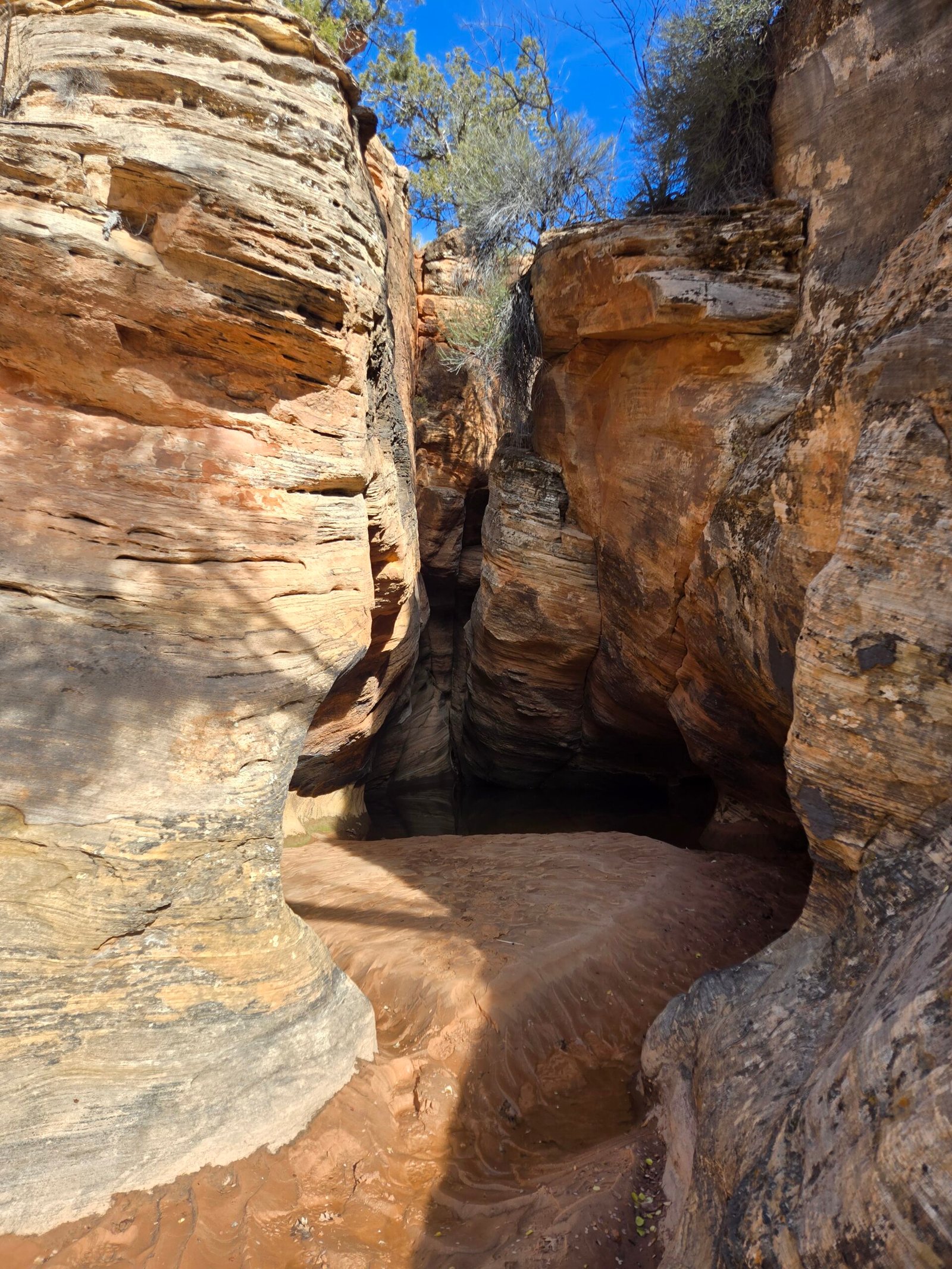
It is often wise to “scout” a new route before descending it: ensure the approach works as intended and the exit is viable, as well as develop a sense of what kind of teammates and tools will be needed. Our opportunity to scout came in December of 2024, when our friend Shawn unexpectedly dropped by for a few days of canyons. We invited Iris to come along on this cold day when we were definitely not planning to get wet. We brought ropes and harnesses just in case but were mostly interested in getting into the canyon to get eyes on the first rappel sequence and see if we could make it down to the overlook.
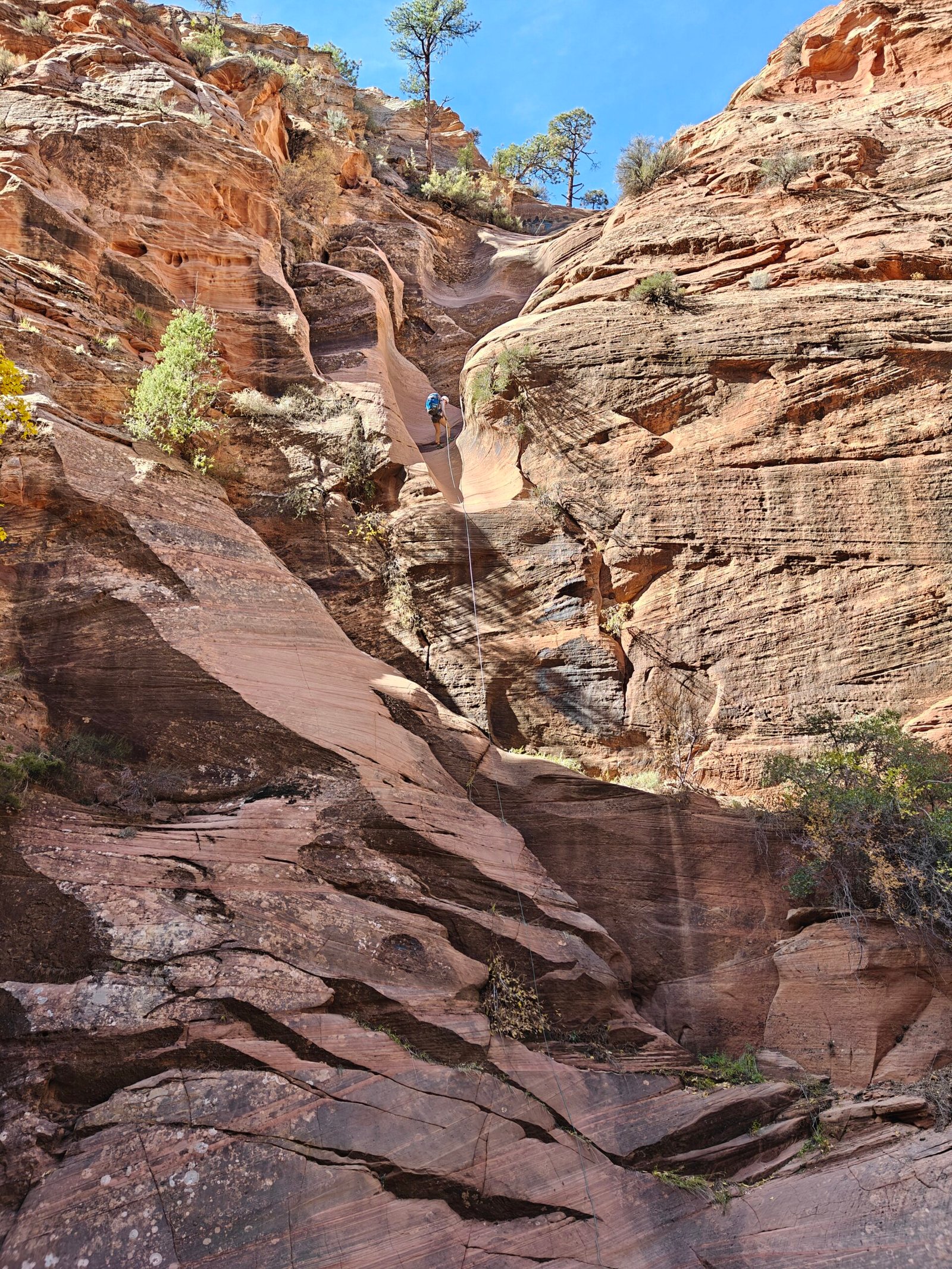
After a couple hours of hiking through stunning Zion backcountry, we approached the first rappel, which we know now is about 230 feet from the anchor. However, at the time we had no idea of its length, nor could we see the bottom. It certainly looked more like a 300-foot rappel from the top. It was also possible that we would wind up in deep water in the slotted section below the drop. We decided to hike around the rim to get a better view and see if we could make our way down into the canyon to walk up to the rappel from the bottom.
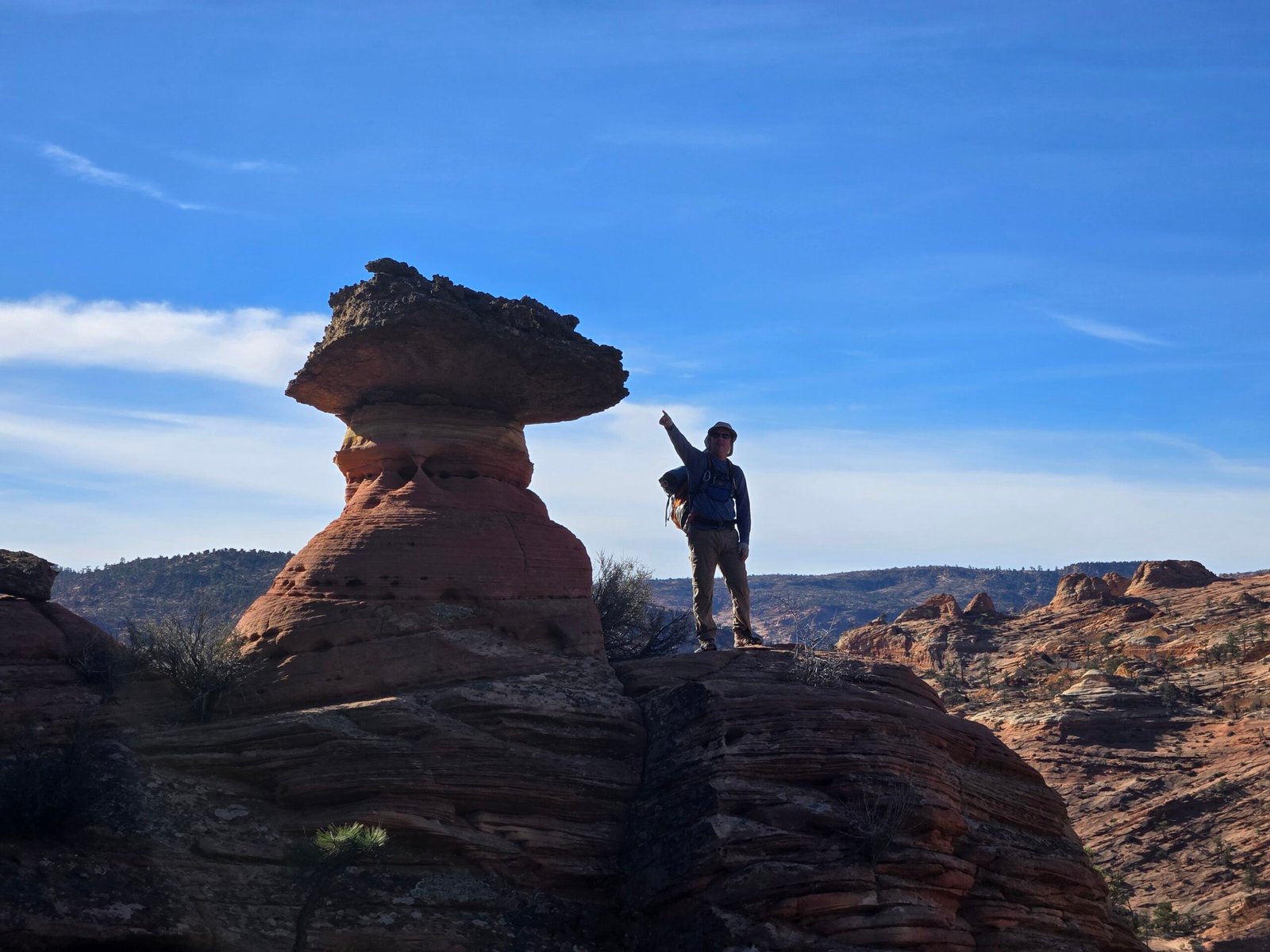
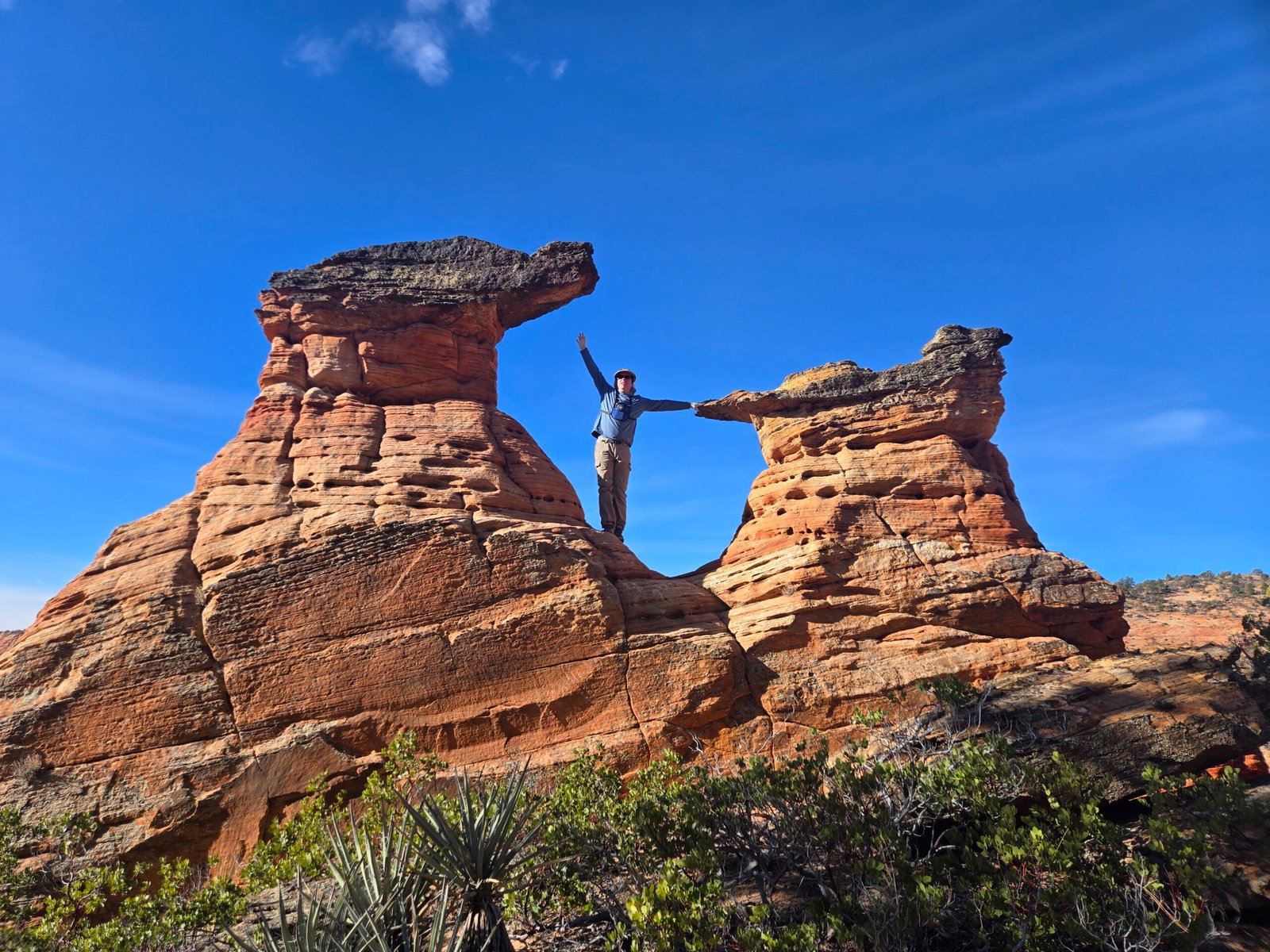
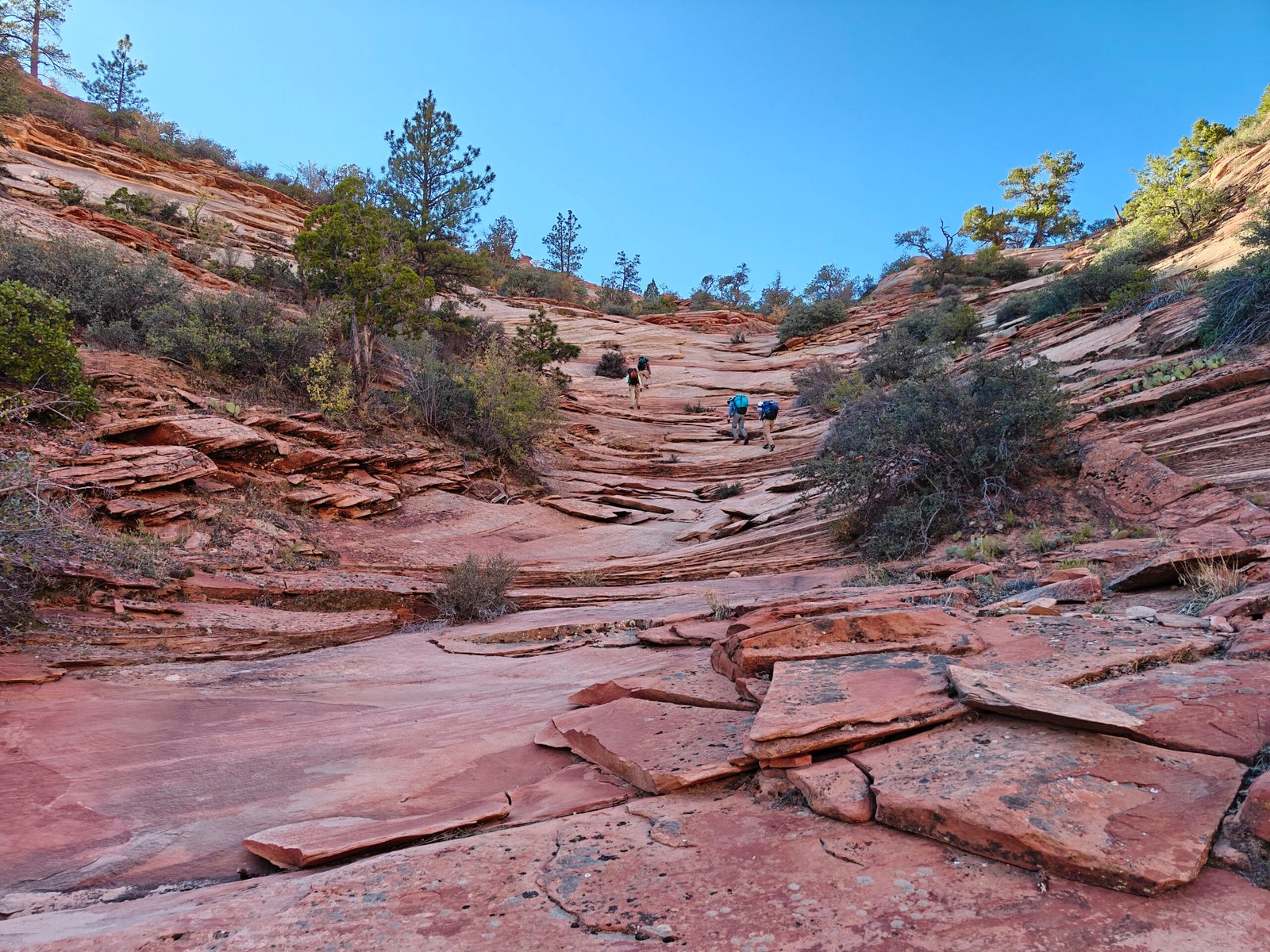
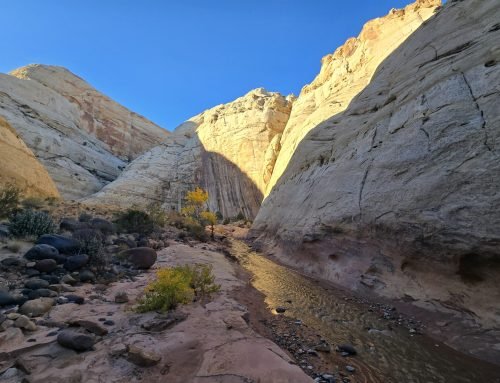
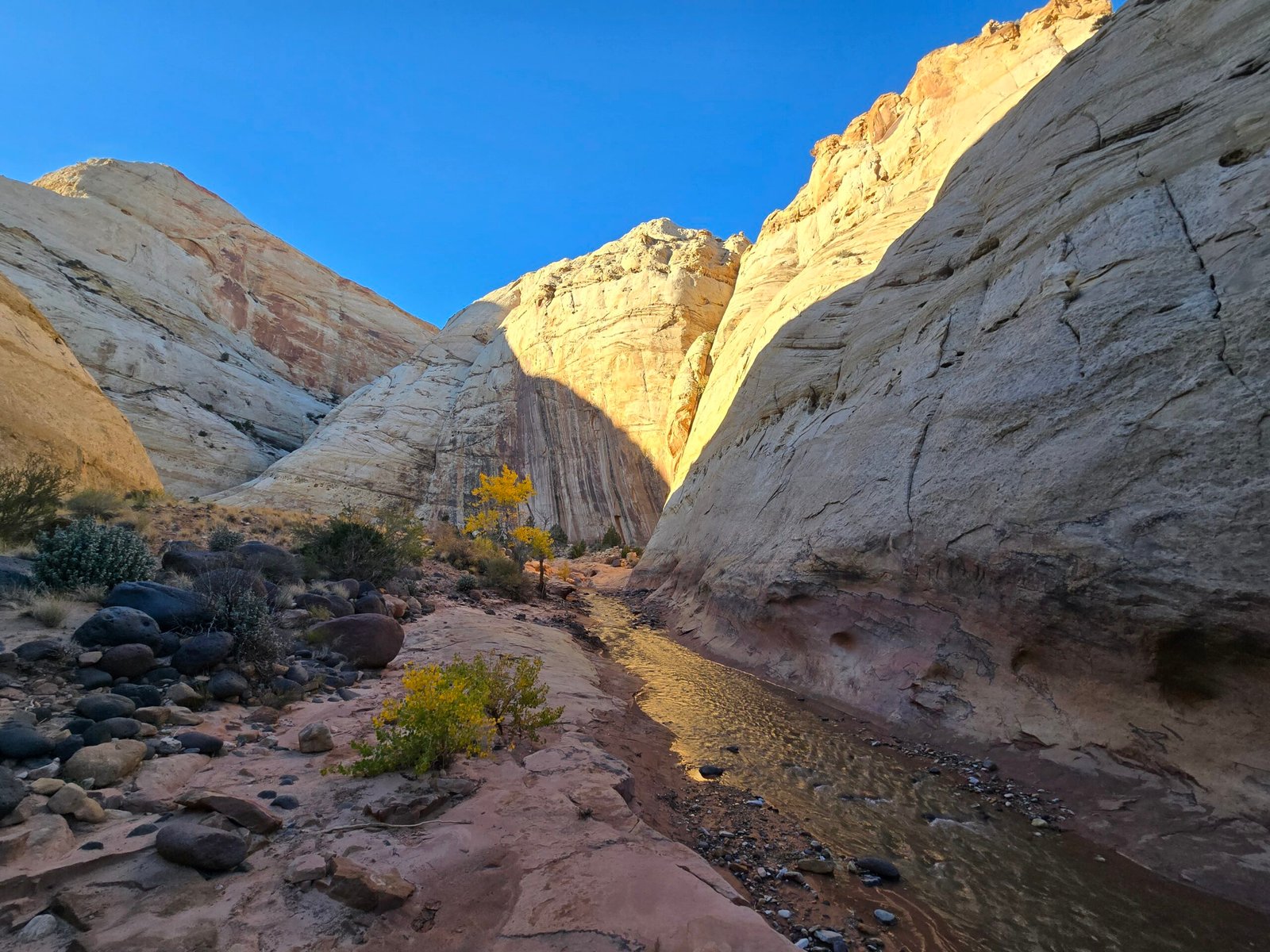
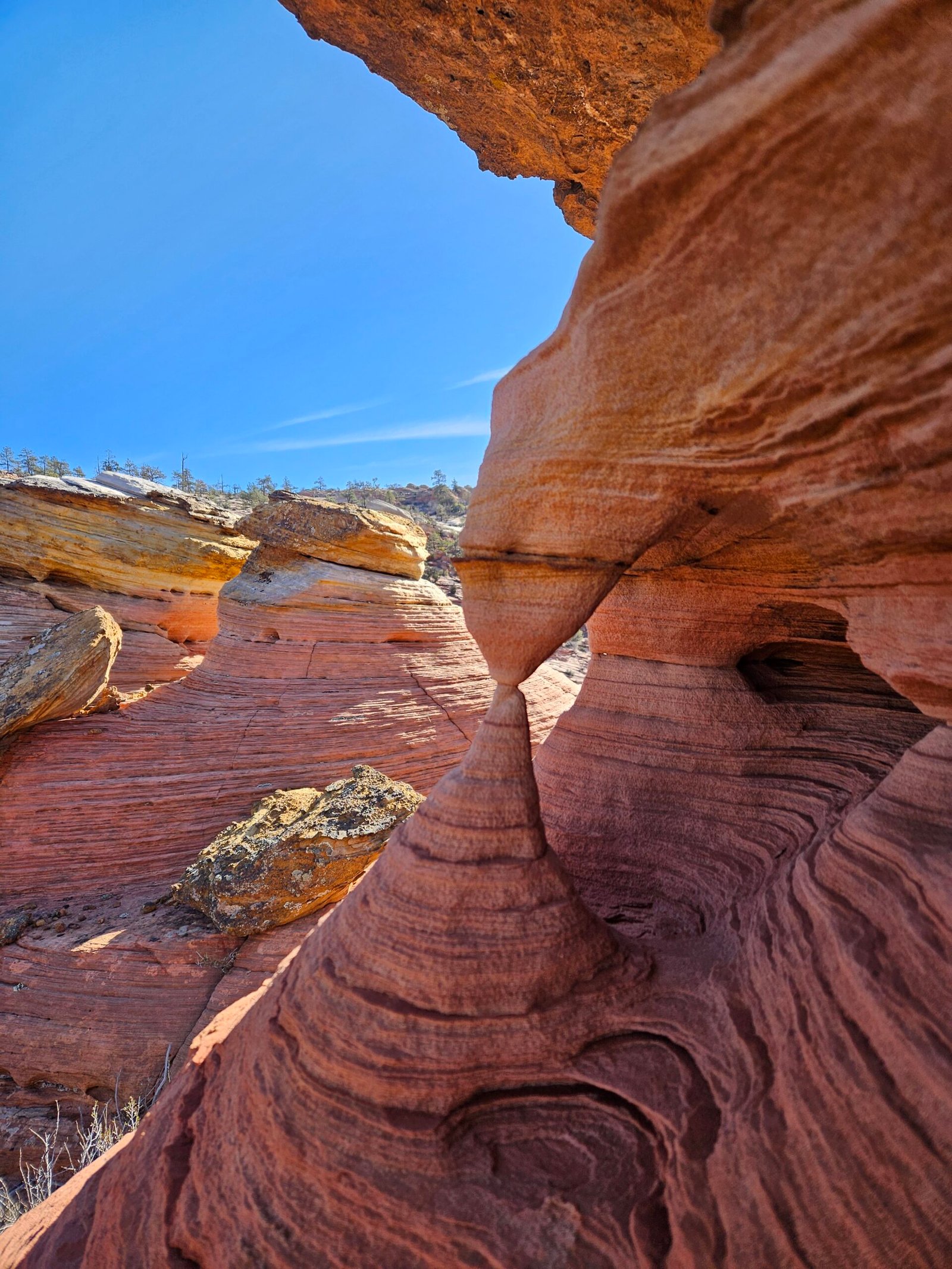
This part of Zion features miles of steep sandstone terrain in the beautiful reds and whites that are so distinctive of the park. We found our way around the rim and encountered some cool hoodoos along the way. When we got eyes on the rappel from the side, it did indeed look very long and potentially like it might even have two stages to it. We proceeded along the rim, hundreds of feet above the canyon floor, and eventually found a way down using some steep but manageable ledges. We dropped our packs, ready to explore upcanyon and see how far we could make it. And that is when we noticed a multitude of huge mountain lion tracks in the sand. Even more concerning were the tiny mountain lion tracks next to the large tracks. Apparently, we had wandered into a mountain lion den with a baby on board.
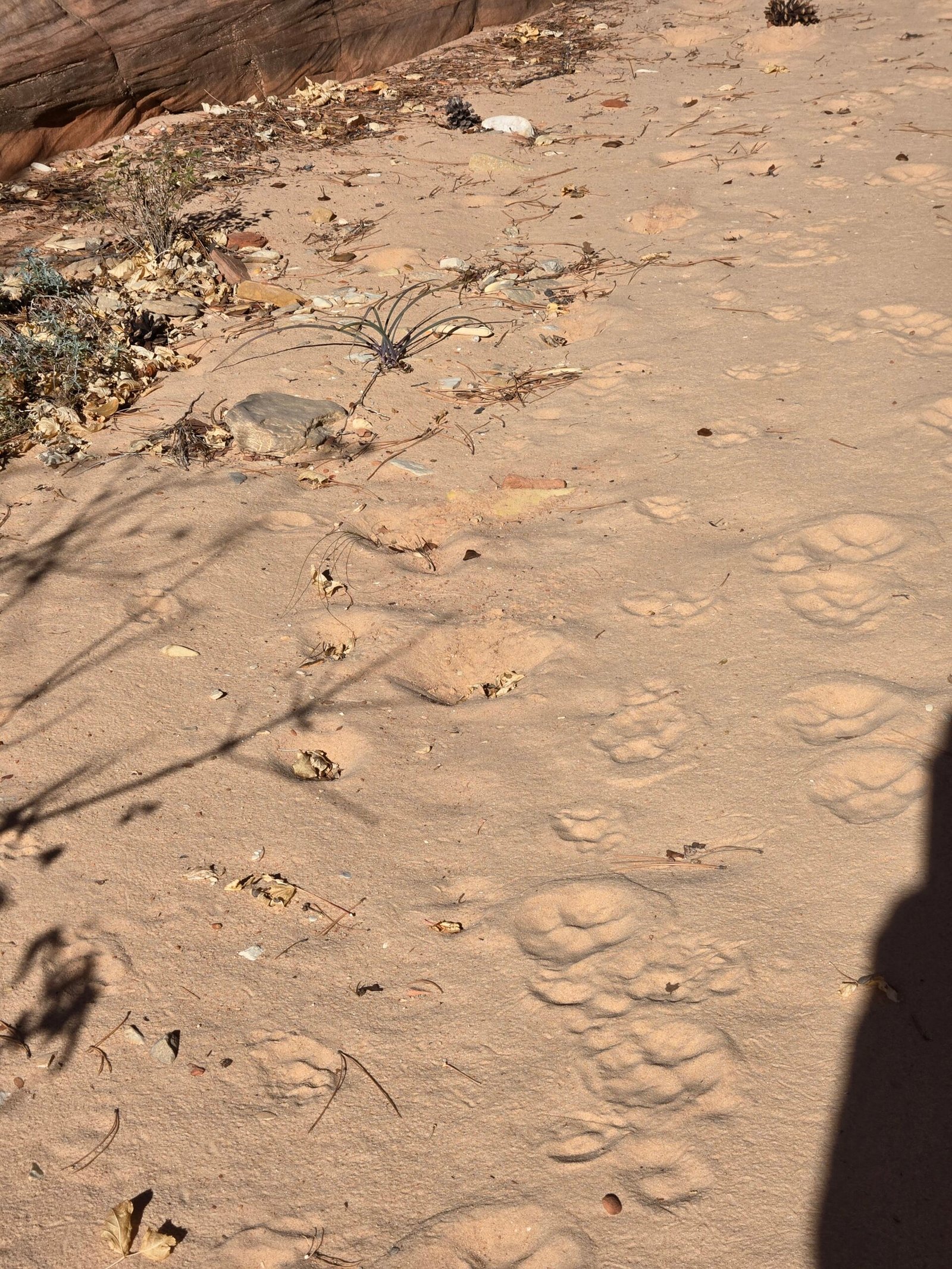
We paused for a brief discussion and weighed our options. Our advantages were having a medical professional and a park ranger, with a total of four people who could make noise if needed. Our disadvantages were heading into a possibly constricted space with a mountain lion mom and cub. We also didn’t want to disturb a lion family unit. So we decided to proceed slowly, cautiously and as a pack, making noise when visibility was occluded. The first thing we ran into almost immediately was a bloody vertebra perched on top of a rock. The bone was fairly large, perhaps belonging to a desert bighorn or a deer. We held another consultation and decided to move forward a few more feet. This was truly getting into uncharted territory for all of us.
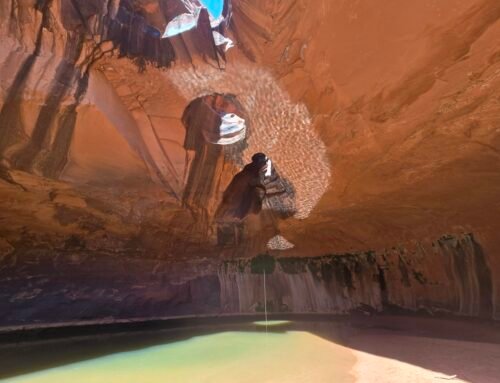
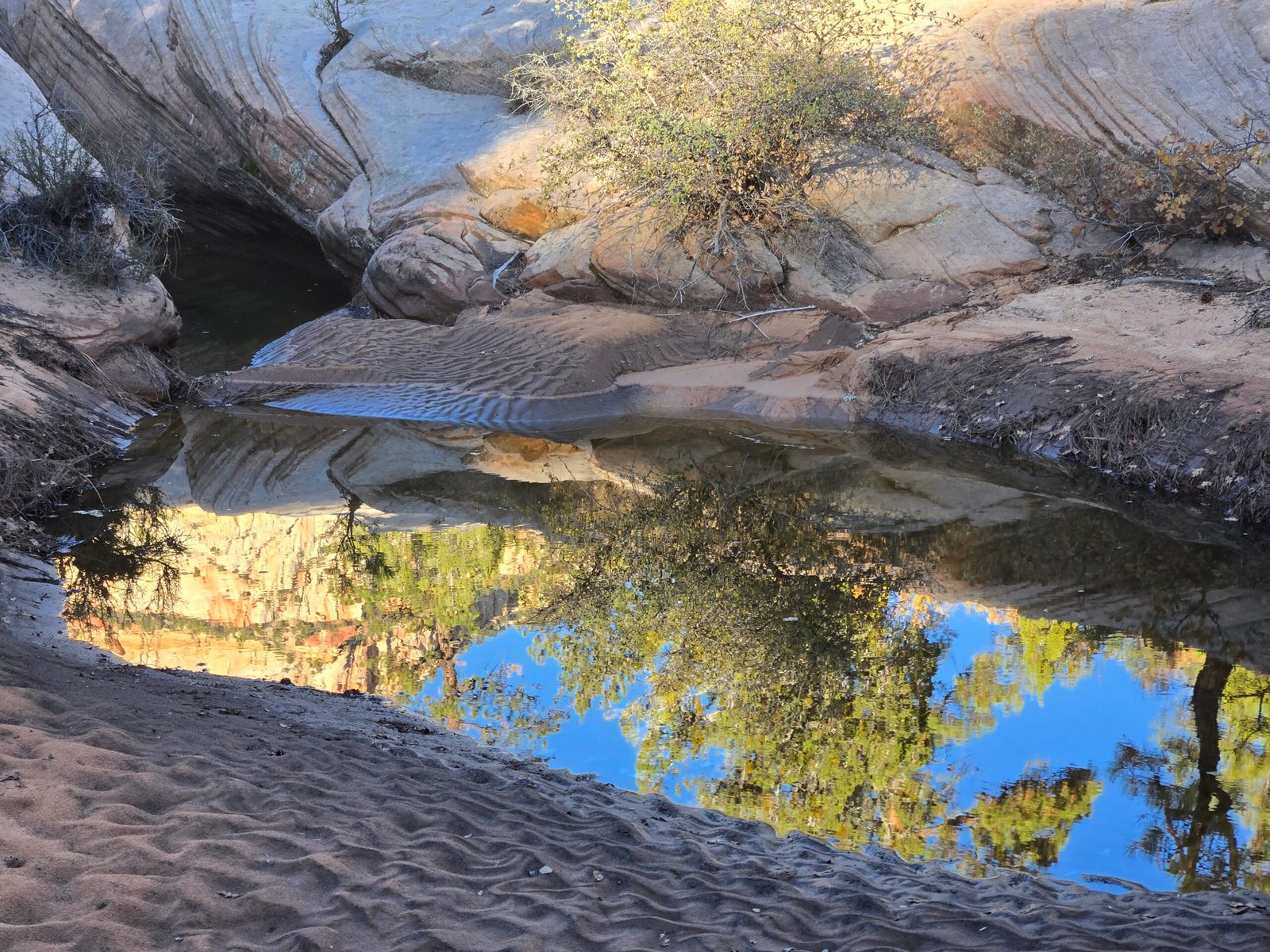
Let me set the scene for what came next. Imagine an open canyon floor, composed entirely of fine sand, surrounded by tall, red sandstone walls, with lots of vegetation to hide in, nooks and crannies to seek shelter in with a number of potholes full of relatively clean water. It’s the perfect place to raise your mountain lion cub. As we walked into this area, we realized that the sand floor of the canyon was in fact documenting a murder scene. We could see where prey had been dragged and struggled and where the cats attacked it. It was all right there in front of us. We were so captivated analyzing the scene that we did not notice the fresh half-eaten young bighorn right at our feet until our team doctor pointed it out. As you can imagine, we were incredibly freaked out by this find, especially by that prickly feeling of being watched by a predator. With the canyon narrowing up ahead of us and no other way out, we decided to high-tail it out of there pretty fast, hoping that we did not in any way disturb the mom or drive her off her kill. Iris documented everything for the park wildlife rangers who had just started a mountain lion monitoring program.

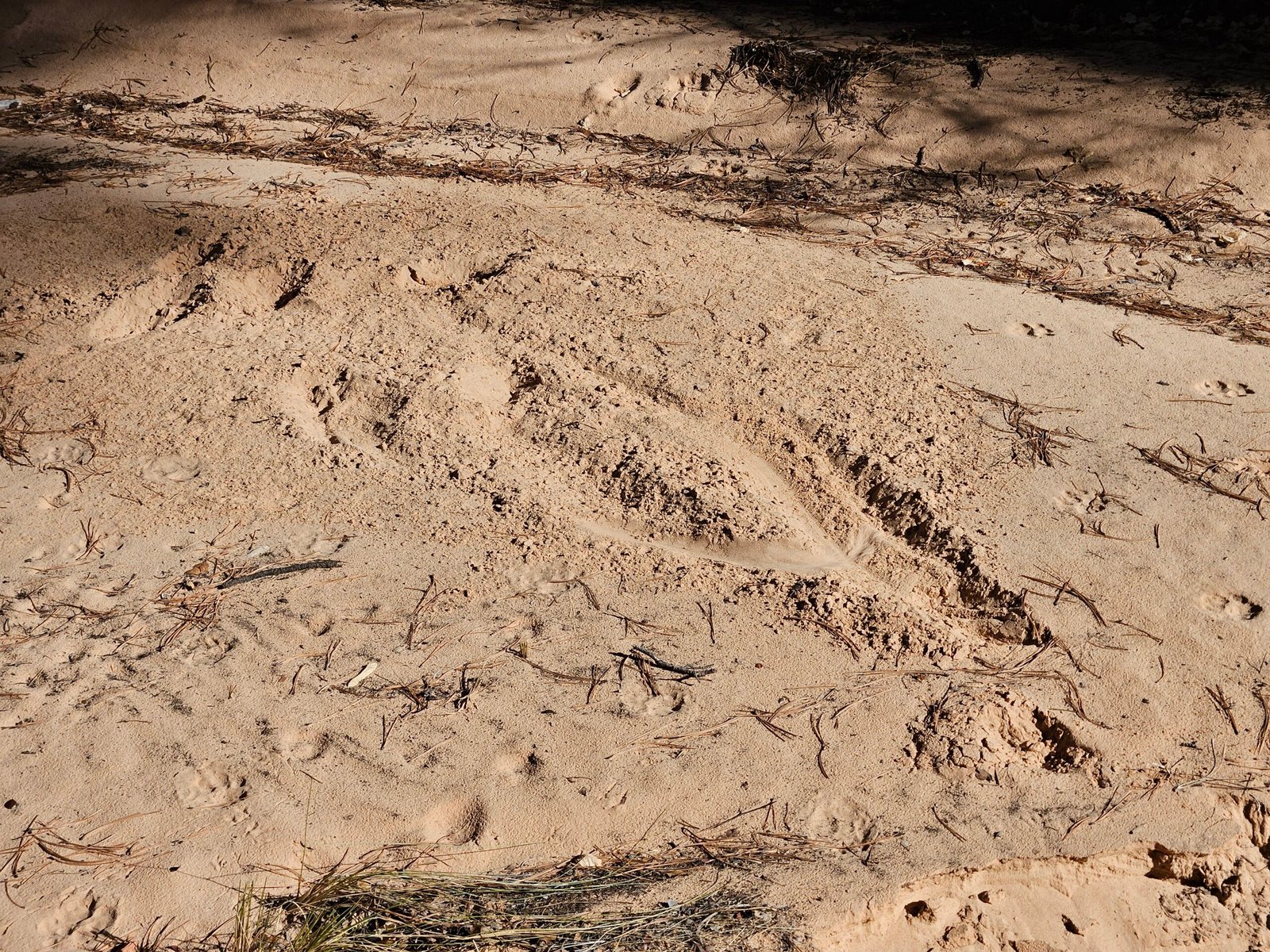
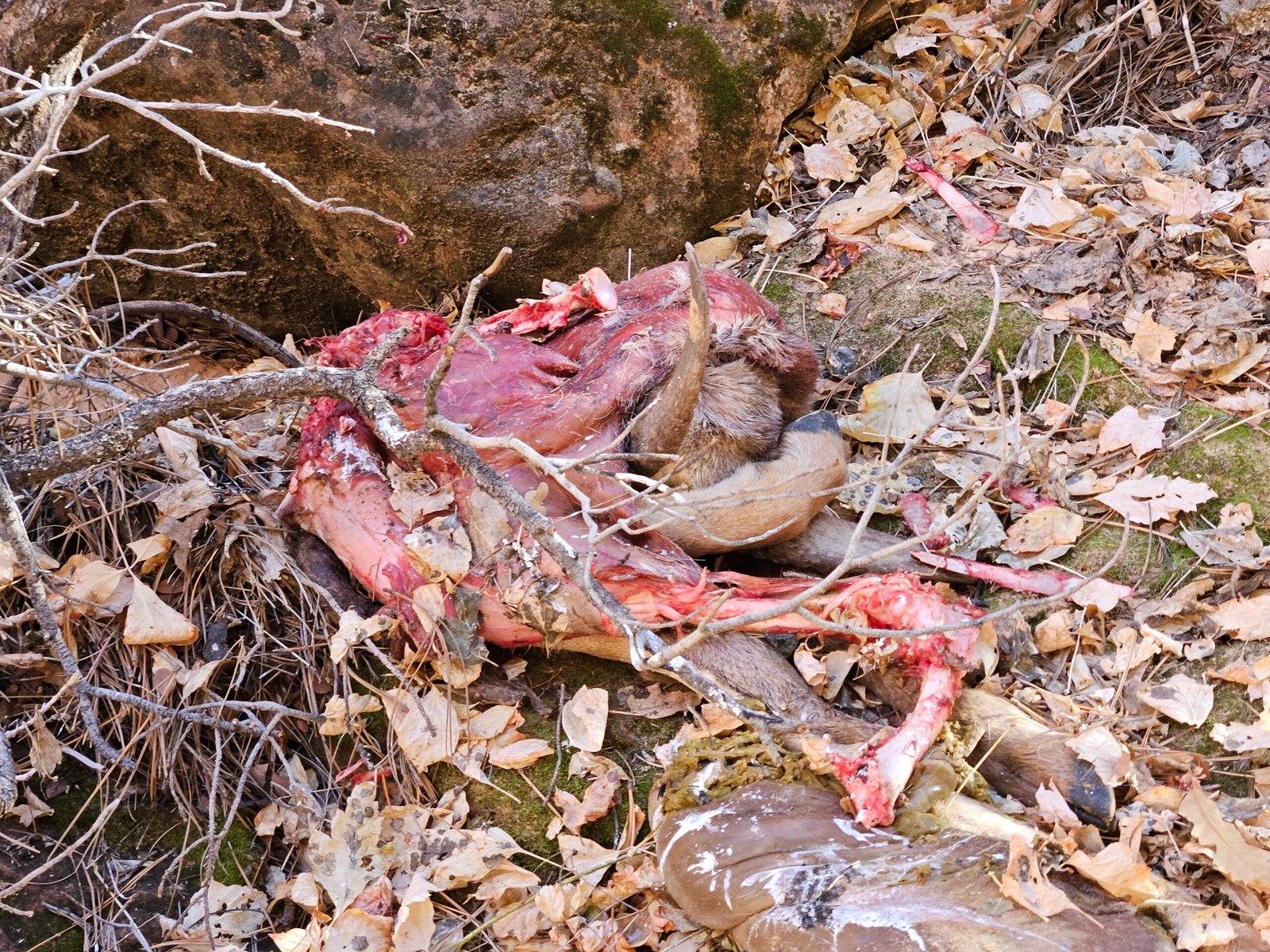
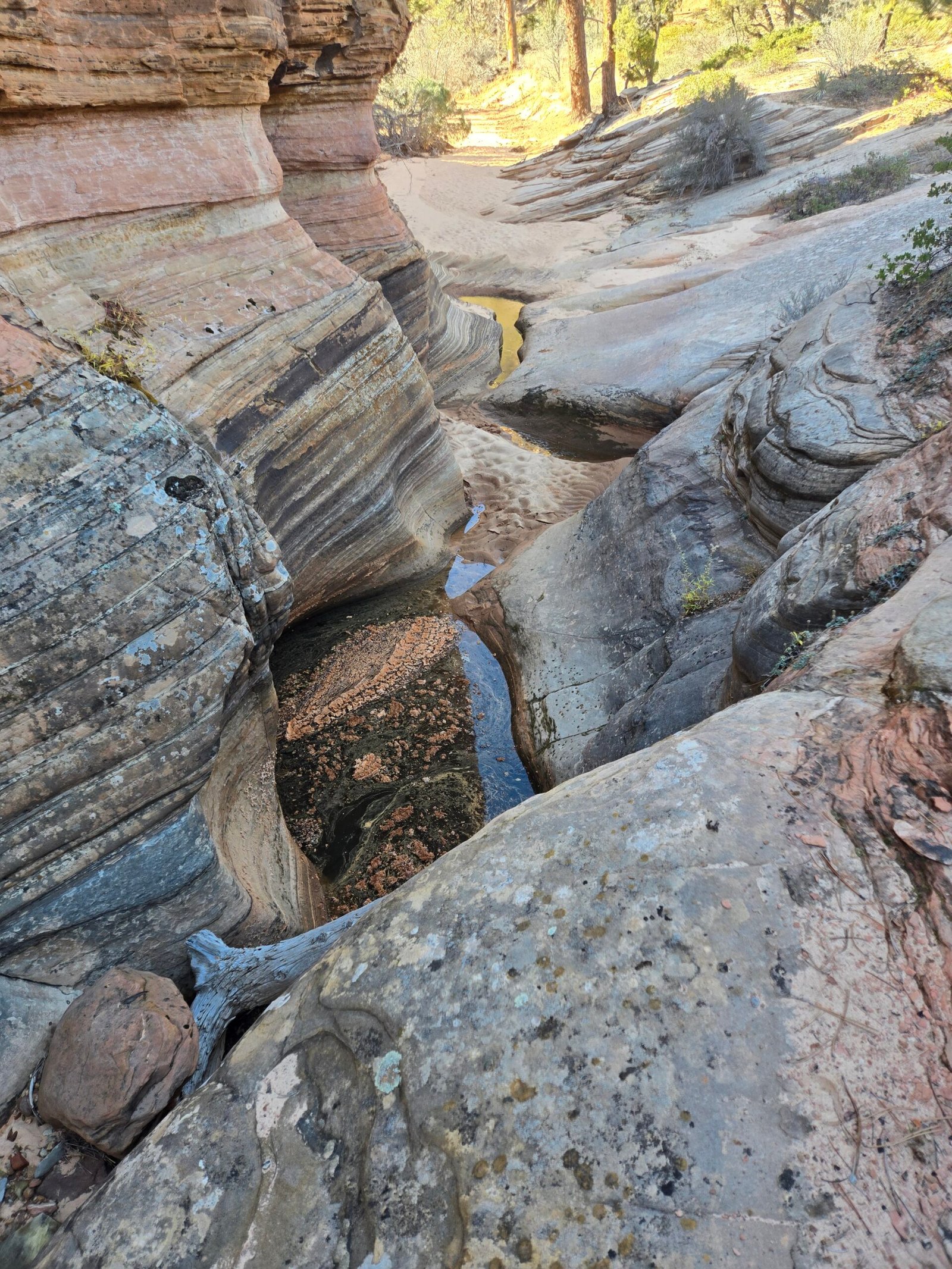
We hastened back to our discarded backpacks and decided to continue downcanyon to explore down to the next section of canyon, which involved a stretch of narrows. The mountain lion tracks continued as the canyon opened up and understanding dawned on us when we observed huge game trails left by herds bighorn sheep running right through this spot of the canyon, using it as a thoroughfare possibly to access water in the potholes. The mountain lion mama had set up her den in the perfect spot so she could ambush dinner as it ran by.
We briefly contemplated the narrow slot before us, and determined that it was narrow, deep and consisted of full potholes of various shapes and sizes. It was possible that we would need to bring bolts to get down this section in the future if there were no available anchors. We walked around the slot and found our way down to the last technical section, which we bypassed, leading to an overlook with beautiful views of a river flowing below. Judging from the copious amounts of deer and sheep droppings left on the overlook slab, it appears to be a favorite spot to catch views.
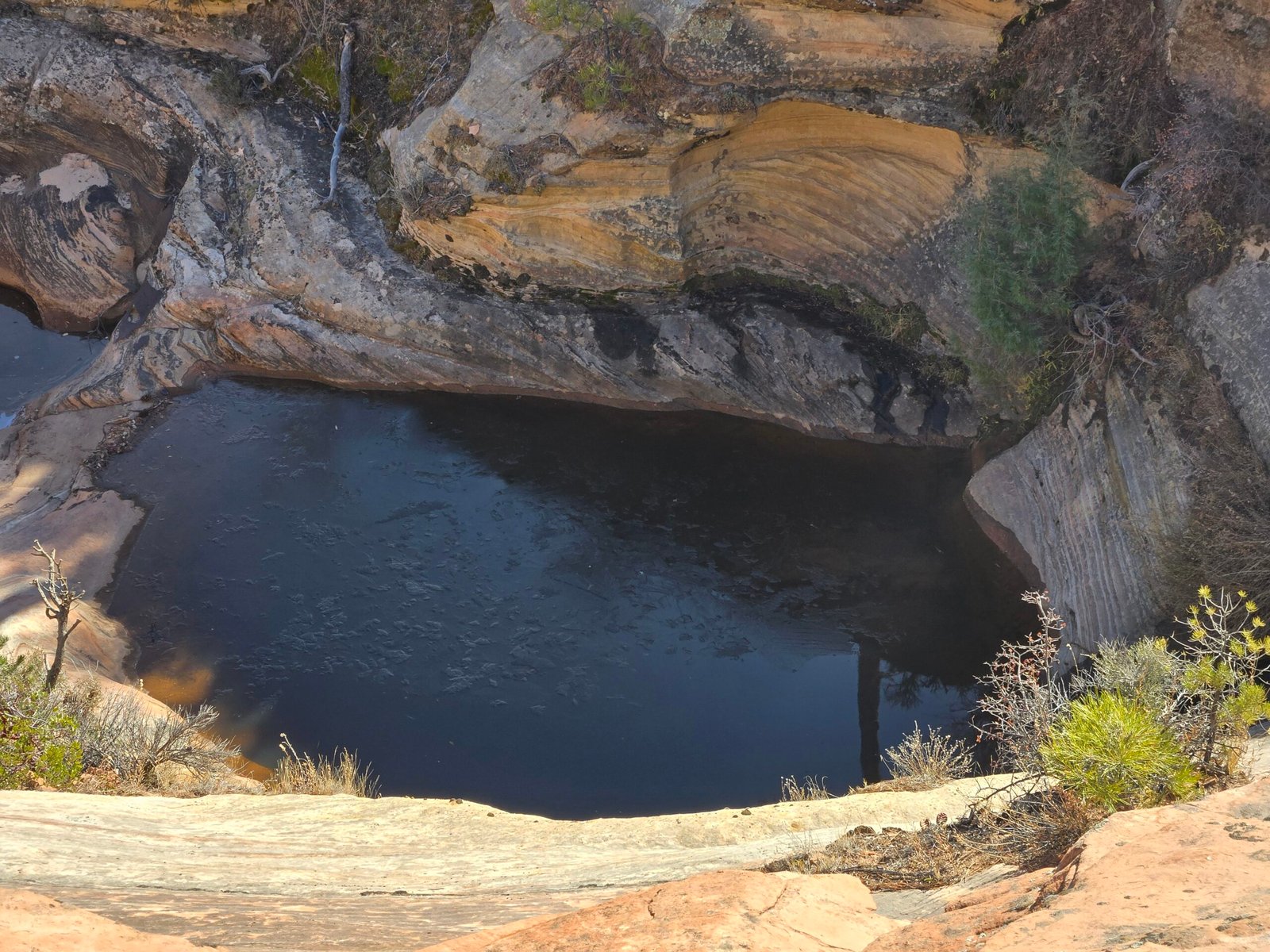
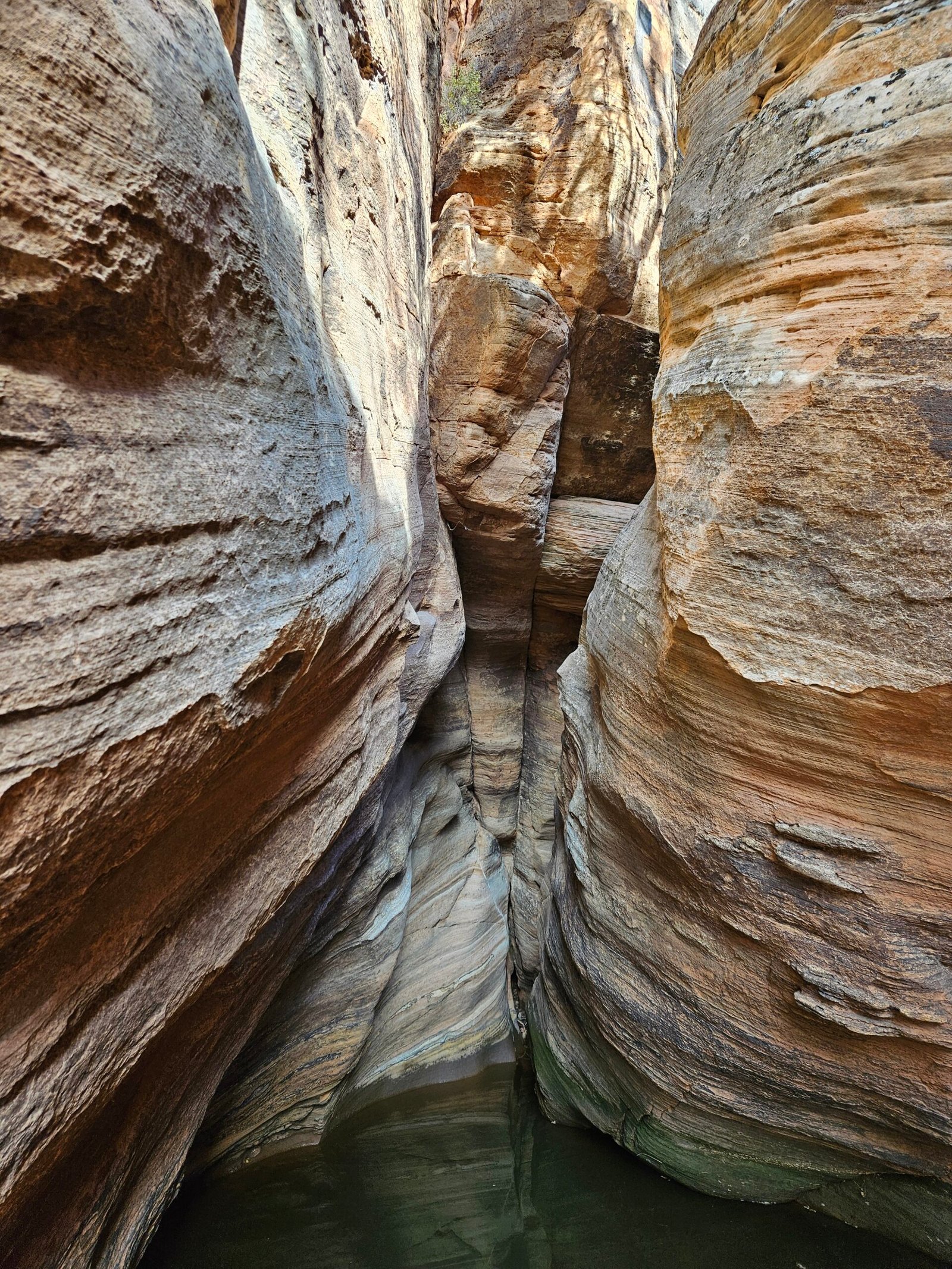
After reaching our goal, we began the long hike back. As we climbed back up, we found a collection of old bones bleaching in the sun, which added to the ominous atmosphere in the canyon. We returned to the spot in the canyon near the sheep highway and unanimously decided on the canyon name: Forbidden. The exit route that Max had chosen was steep and direct but manageable. We made it back to the car before sunset with a lot to process.
We subsequently found out from Iris that the wildlife ranger was so excited by our find that he went out to look at the kill the next day and found it had been further devoured. He also greenlighted us descending the canyon: we learned that mountain lions have large territories and do not usually spend more than a few days in any given area, so they would likely move on soon. However, clearly, the canyon provides very important wildlife habitat and should not be disturbed needlessly.
It was almost a year later that the stars aligned and we were able to put together a fantastic team of experienced first-descenders to finally get into Forbidden and see its secrets. For full disclosure, we told everyone the mountain lion story in advance. At the end of October of 2025, we met up with Eric Hardwick, Rick Kent and Kate Hensel and went back to the canyon armed with ropes, wetsuits, sand traps, a bolt kit and our canyoneering gear. Lidar had measured the first rappel at over 200 feet, and we were hoping that was correct as no one wanted to carry a 300-foot rope all day.
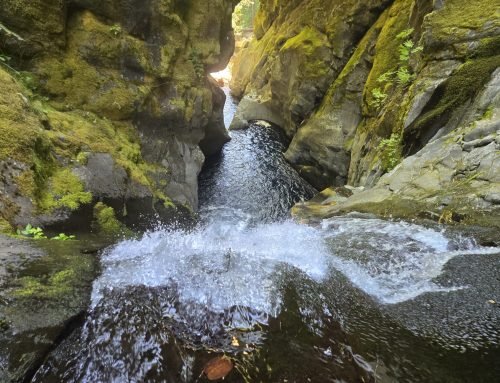
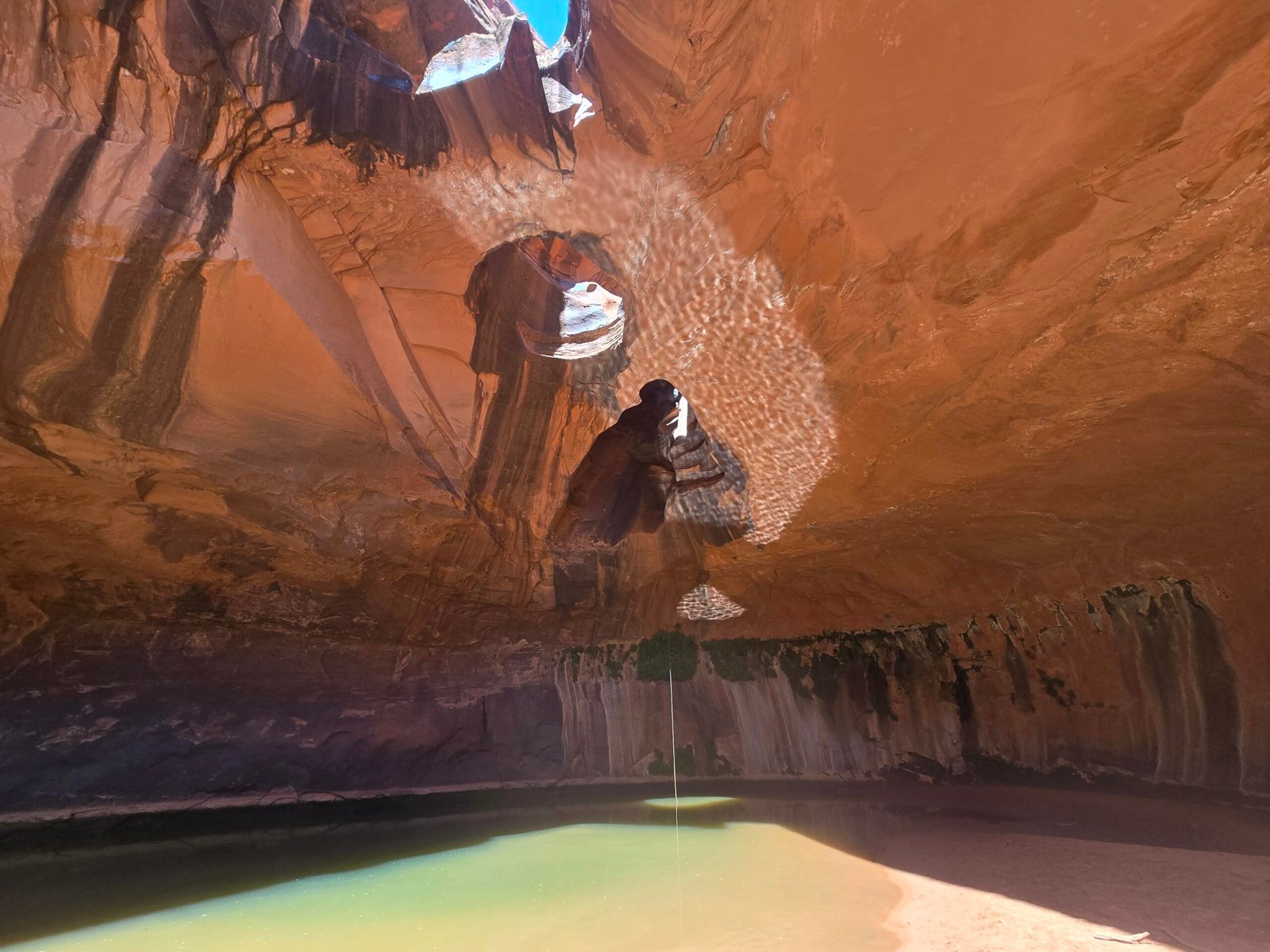
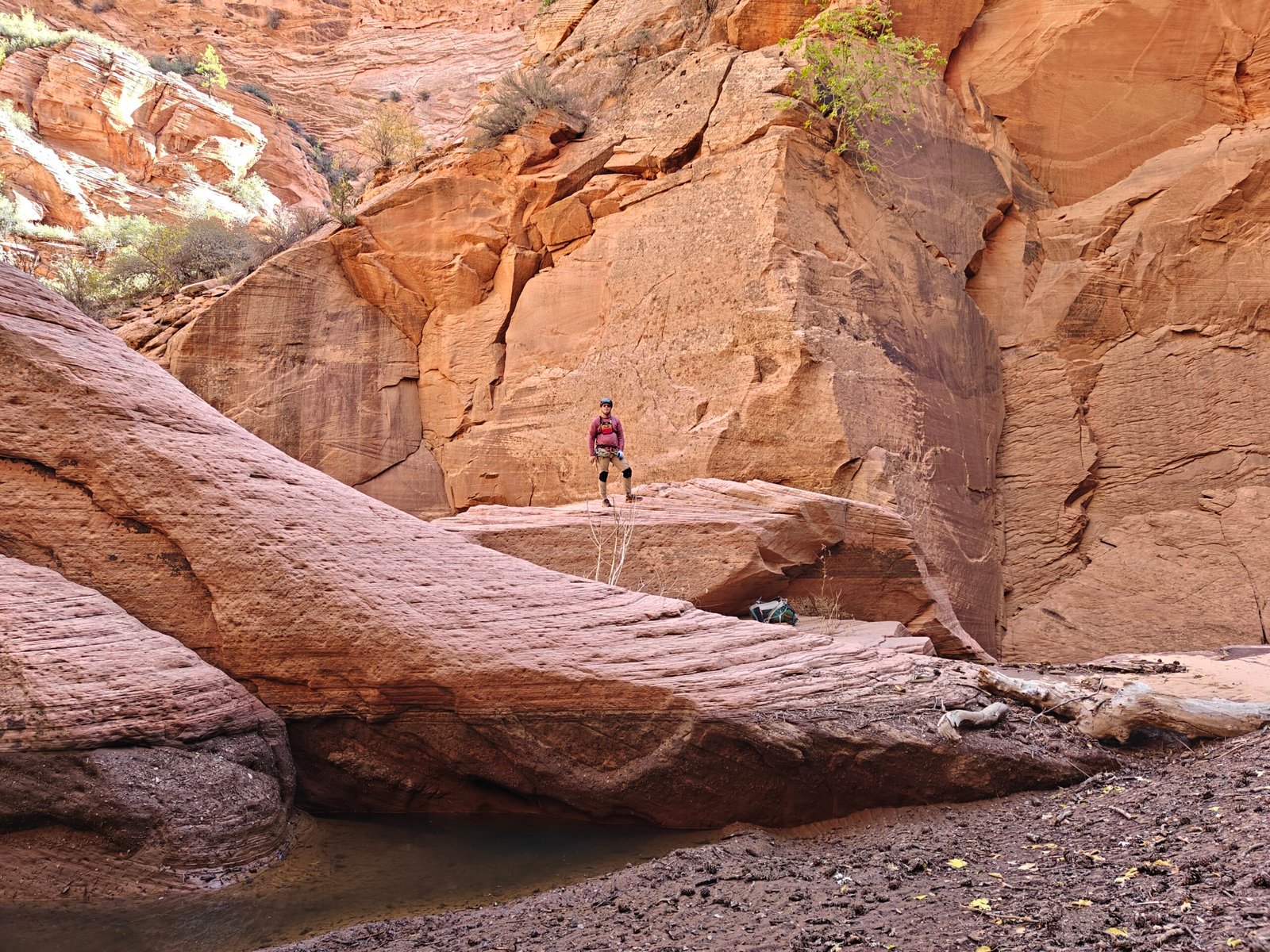
The first rappel went very smoothly. We decided that we could leave the rope at the top and pick it up on the way back as we were returning along the same route. We tied a shorter rope around a large tree and then were able to use a pothole below the anchor to connect a longer rope and rappel to the bottom. We landed on a dry platform next to a deep and beautiful sculpted pool that could be avoided by climbing down a narrow crack. We emerged on a ledge next to another drop off. An extremely deep and very full pothole occupied the vast majority of the ledge, with a tricky traverse around to avoid the water. We found some ancient webbing on a tree in this section, leaving us disappointed this was not a true first descent. From the ledge we rappelled awkwardly through thick brush down into a slot that contained some ankle to knee-deep water but could definitely hold more in wetter conditions. Then we emerged through a narrow stemming corridor into the area with the mountain-lion den we had visited a year earlier. It was blissfully free of any large prints of any type, relieving our anxiety. The sheep game trails were likewise not present, showing that bighorn have large and probably seasonal migratory patterns within the park.
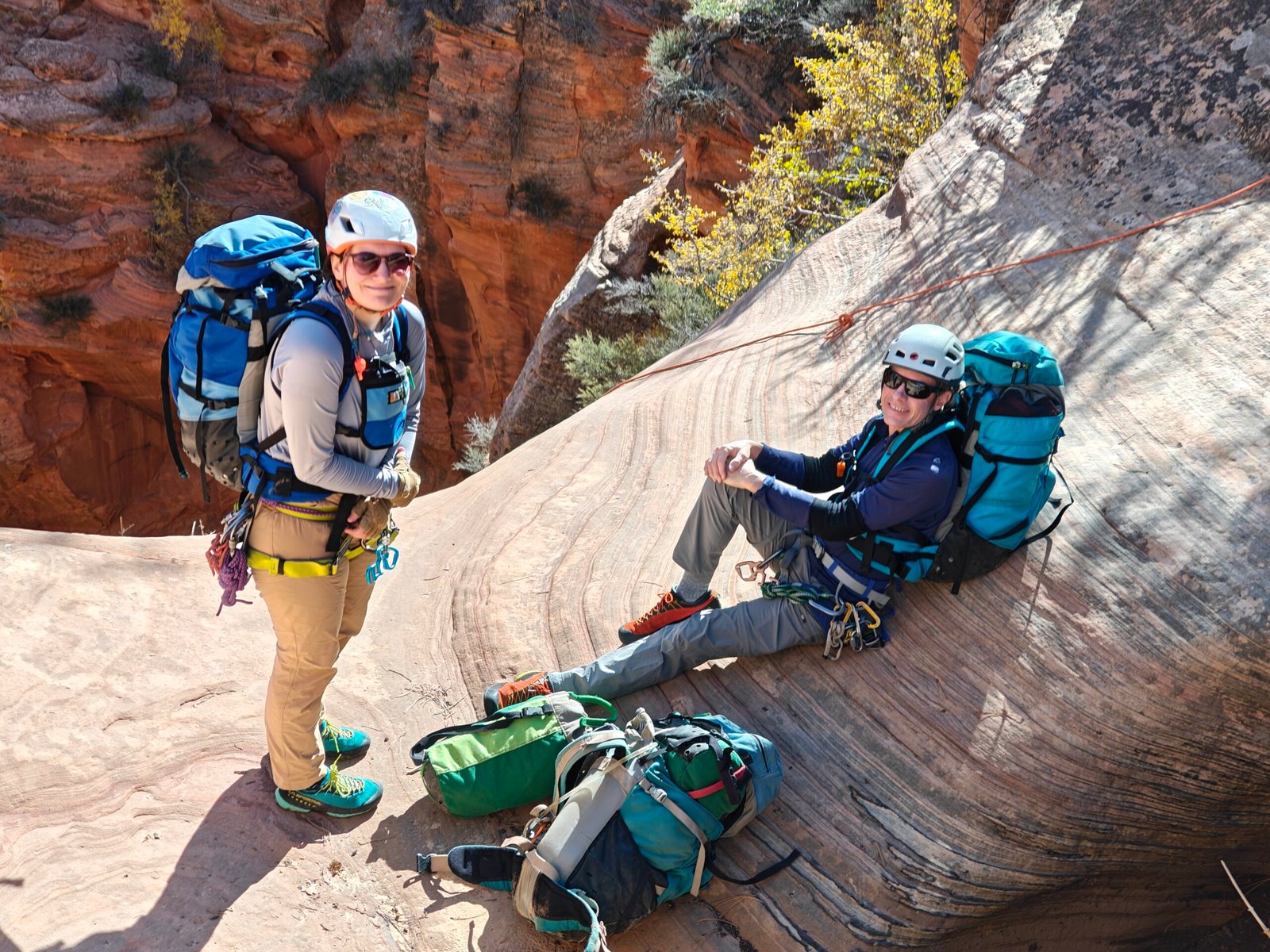
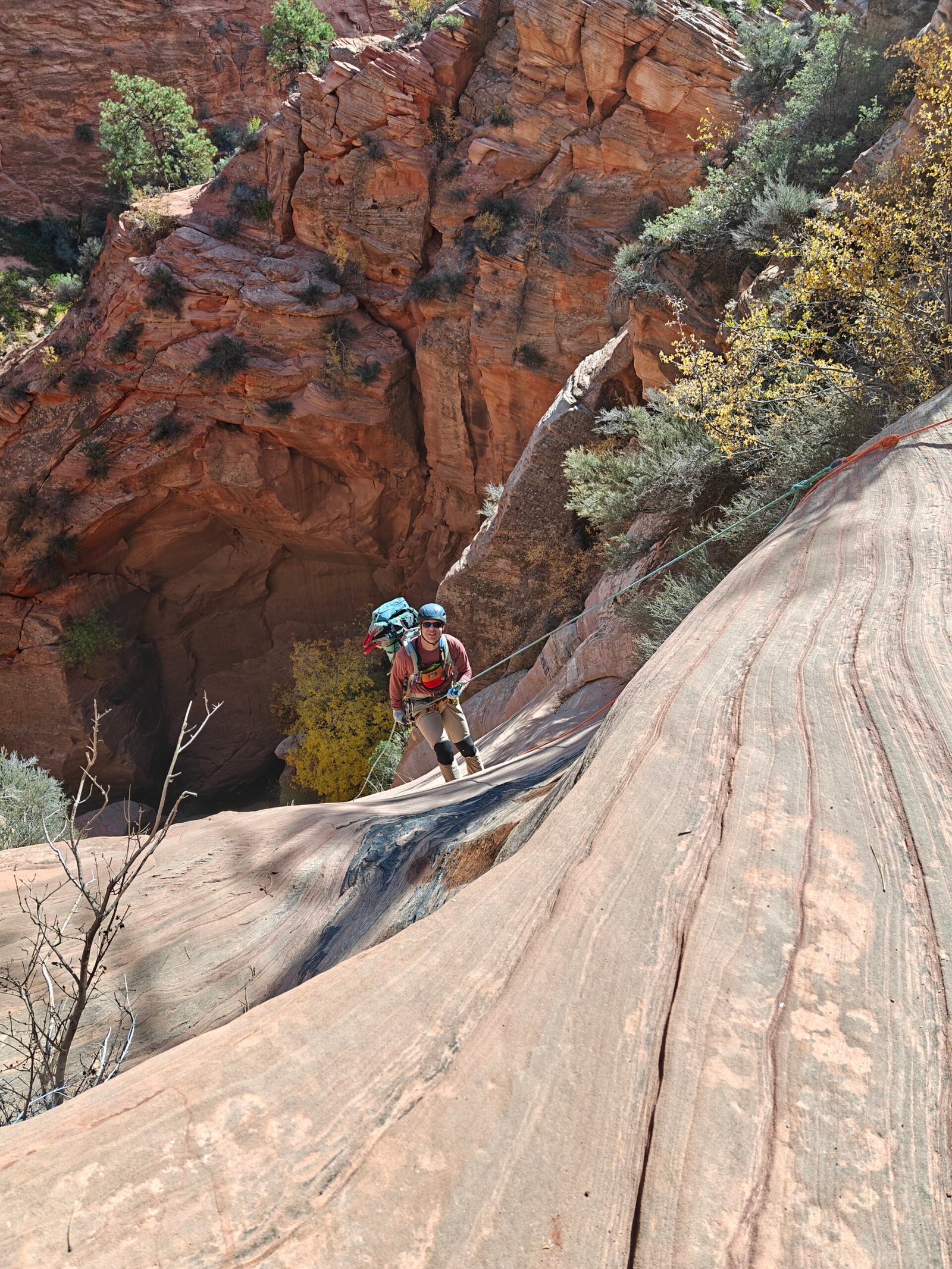
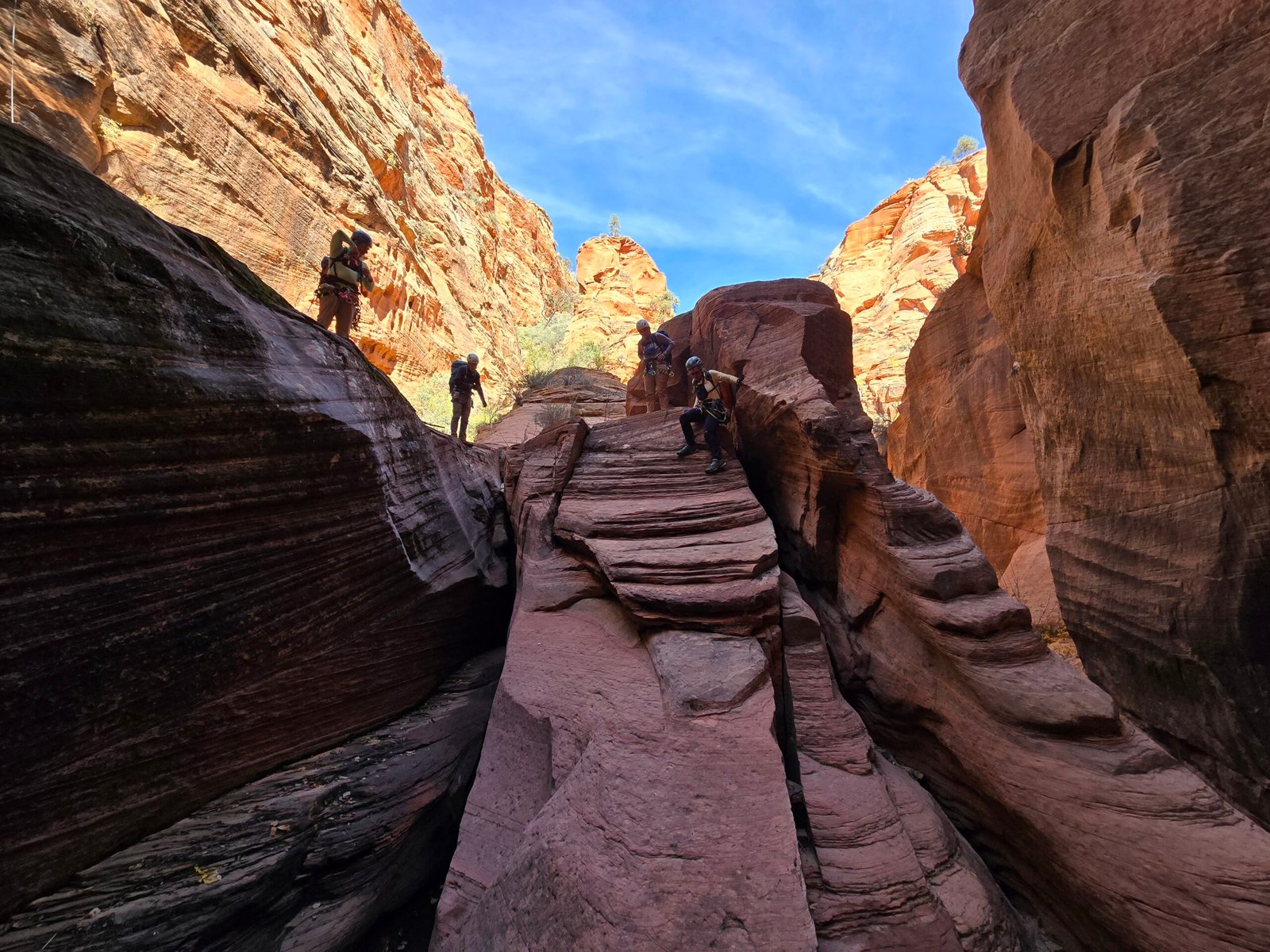

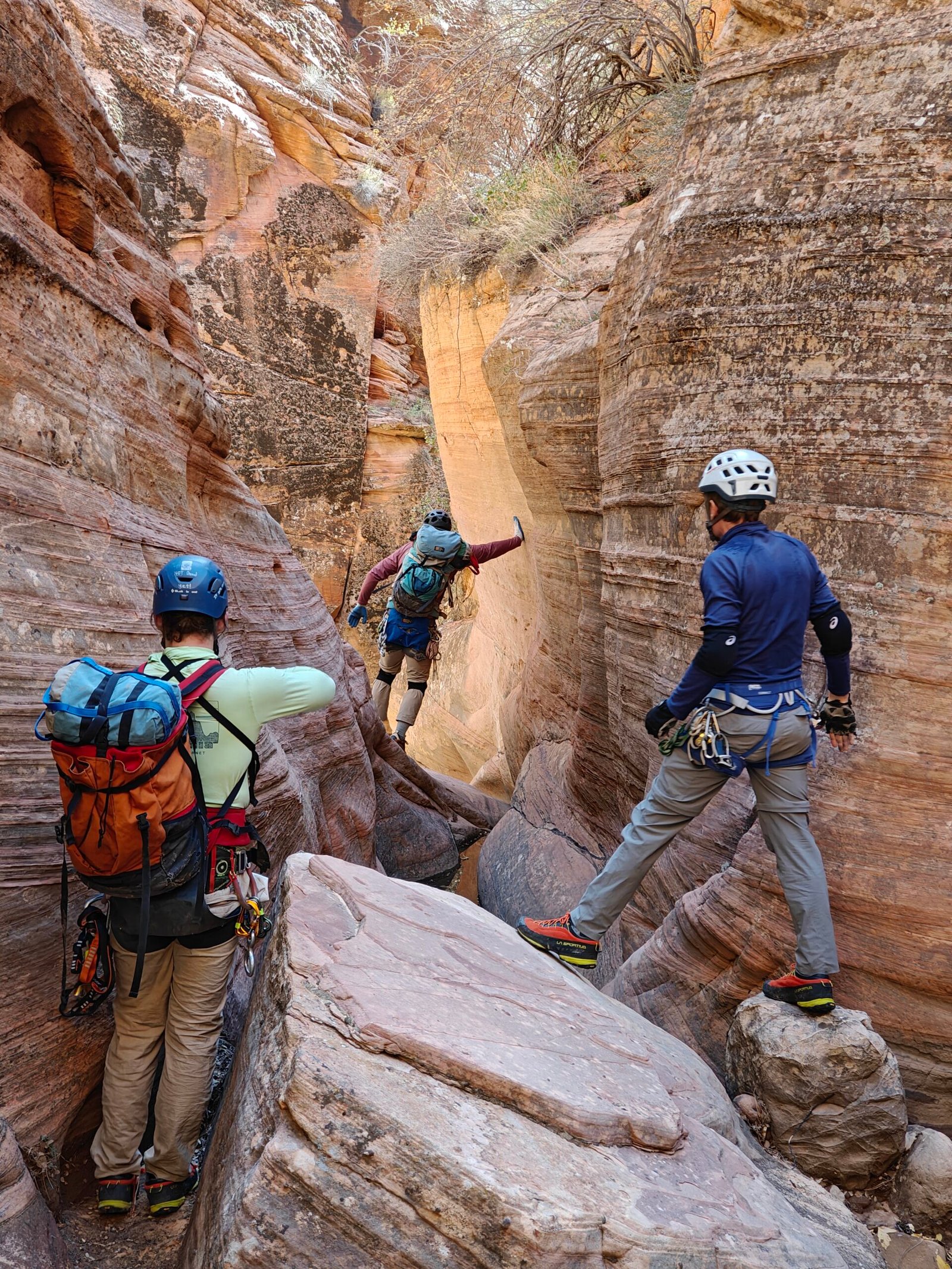
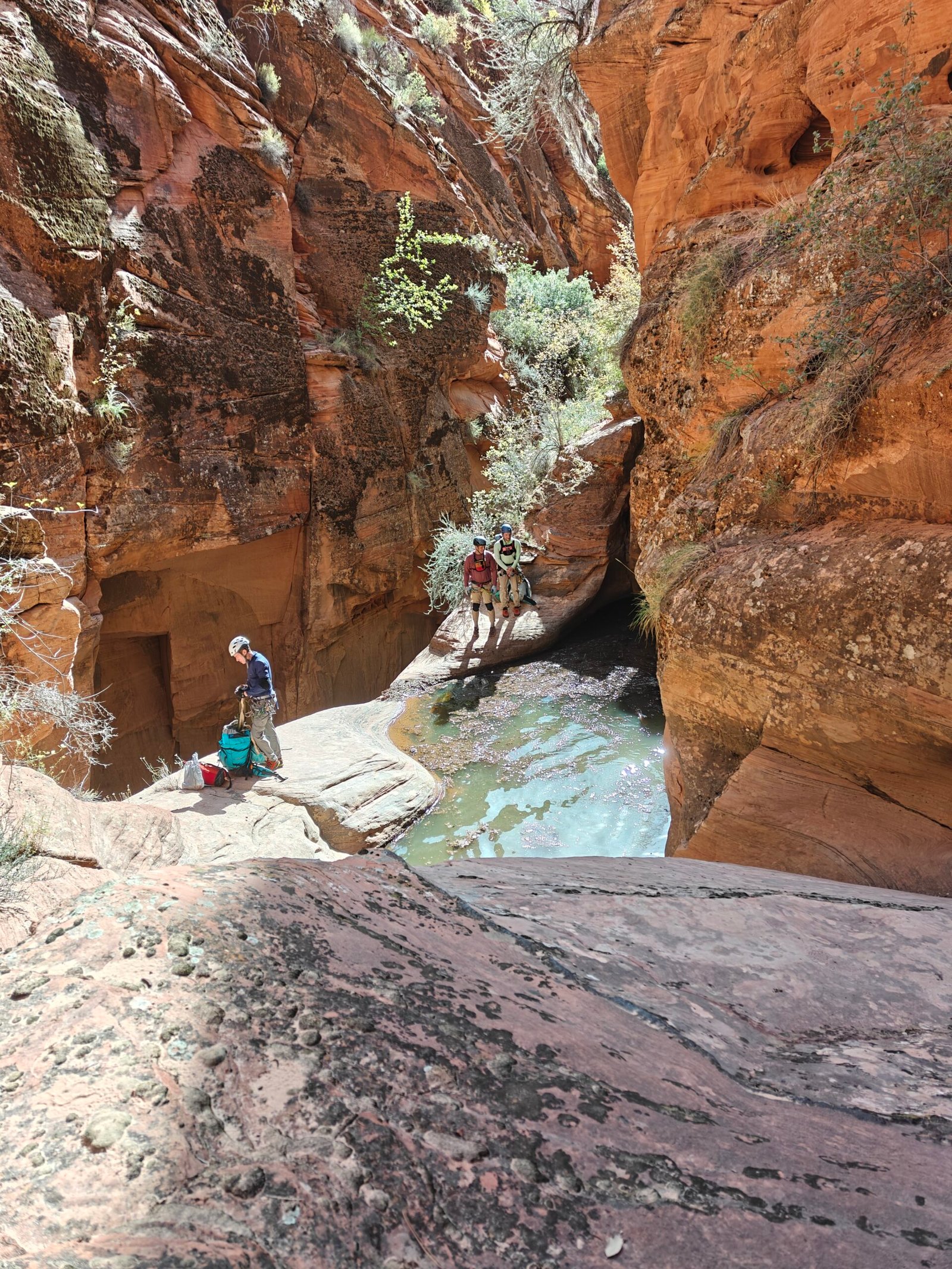
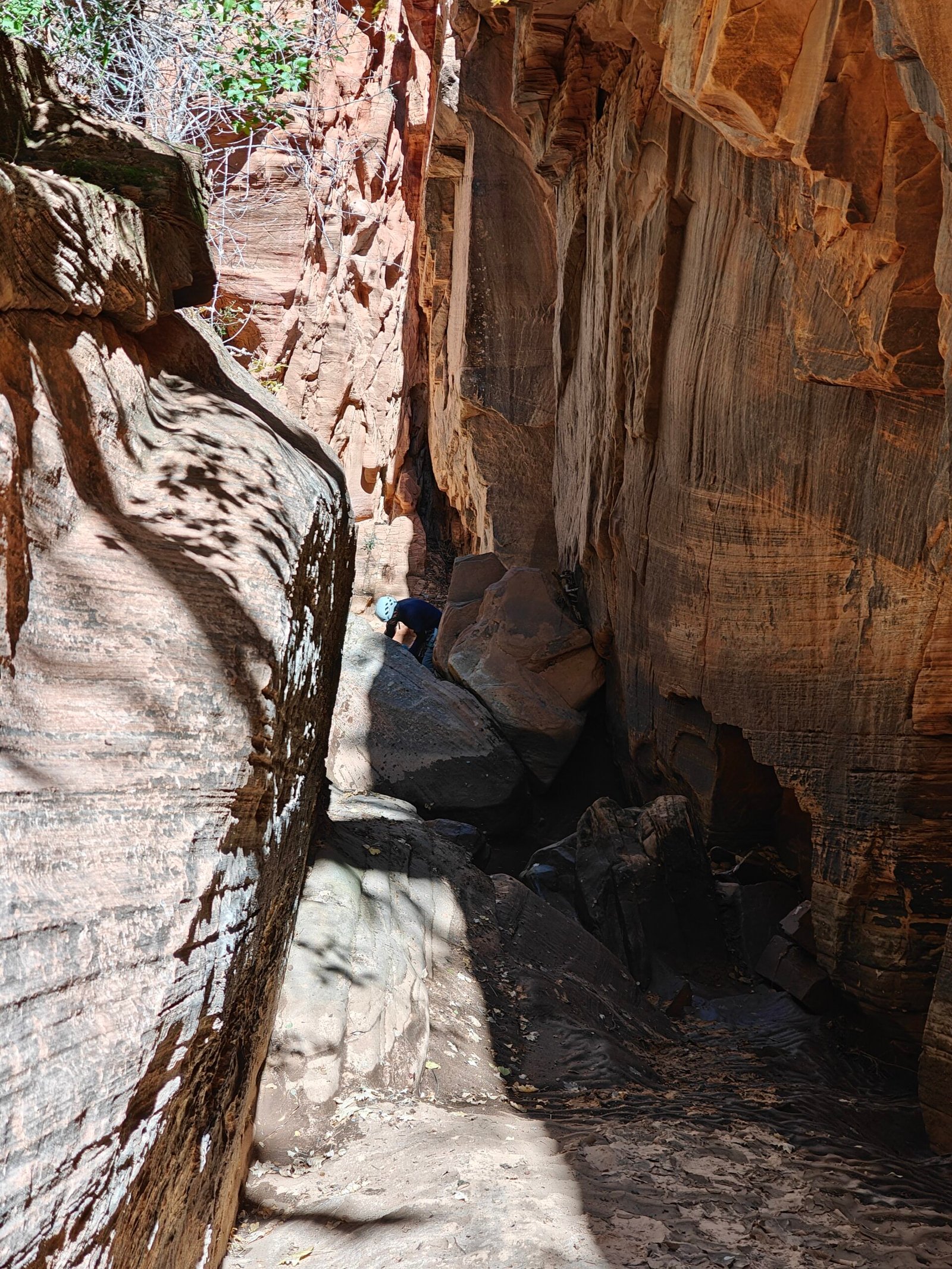
At the first section of narrows, we had some decisions to make. We definitely wanted a rim team to support the team inside the wet narrows in case they needed an anchor to get out. Rick and I volunteered to head up the rim team, not wanting to get too wet, while Max, Kate and Eric suited up and headed down into the wet unknown. Rick and I were able to follow them from above but couldn’t see anything due to the narrowness of the slot and the unsteady rim terrain. We found a good spot to sit at about halfway through and tried to listen to the voices. All was going well until we heard a shout and what sounded like an entire swimming pool full of water gushing down. Apparently, Max had broken a small dam which was holding back quite a bit of water and it all flowed down into the subsequent potholes.
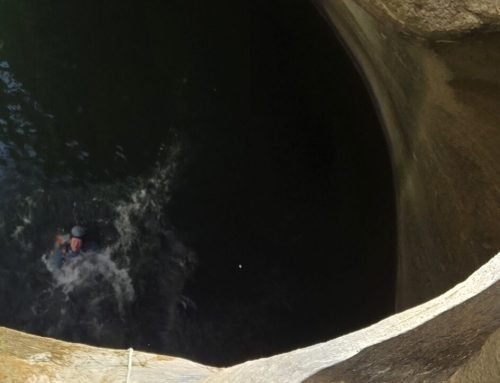
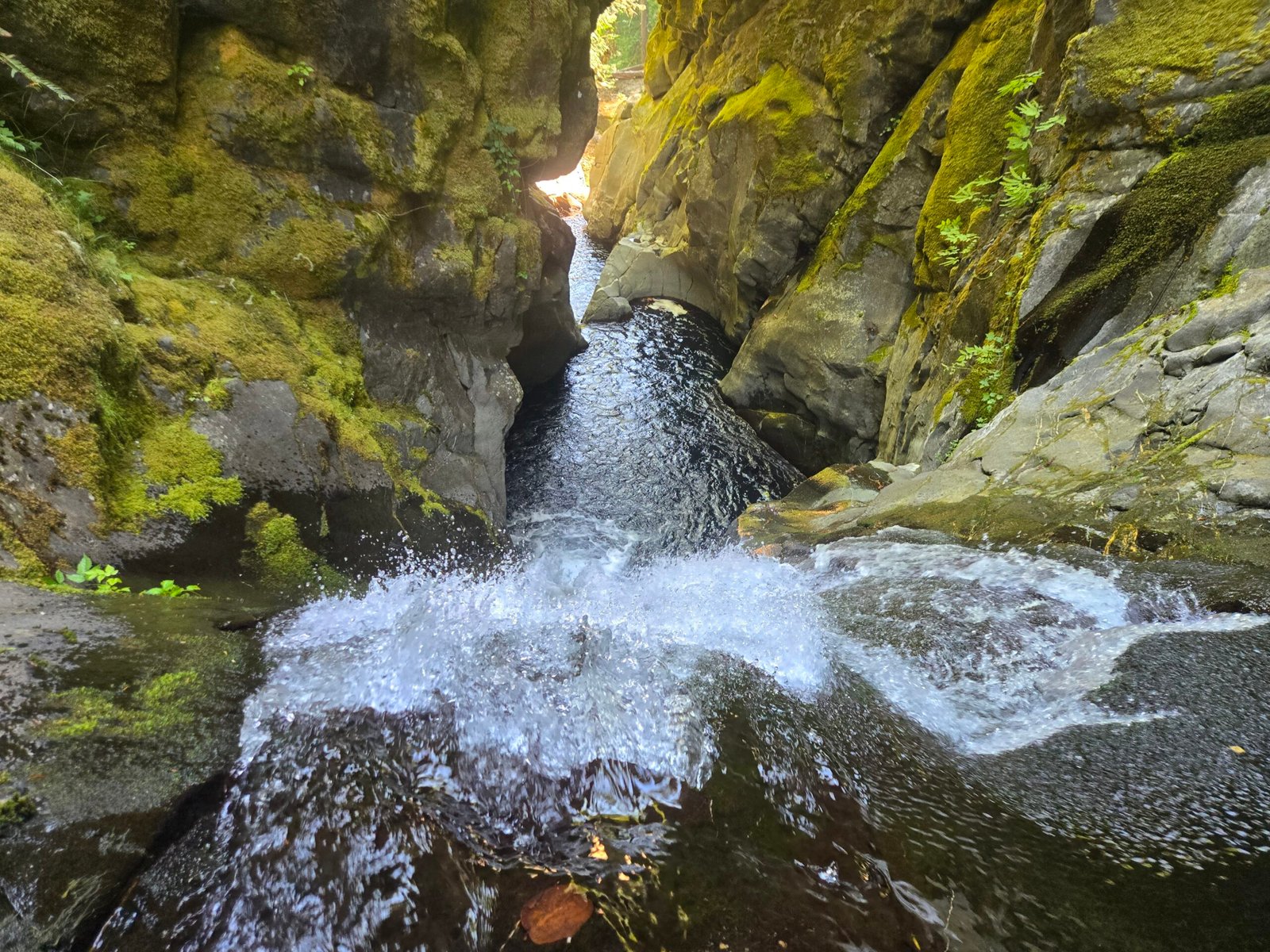
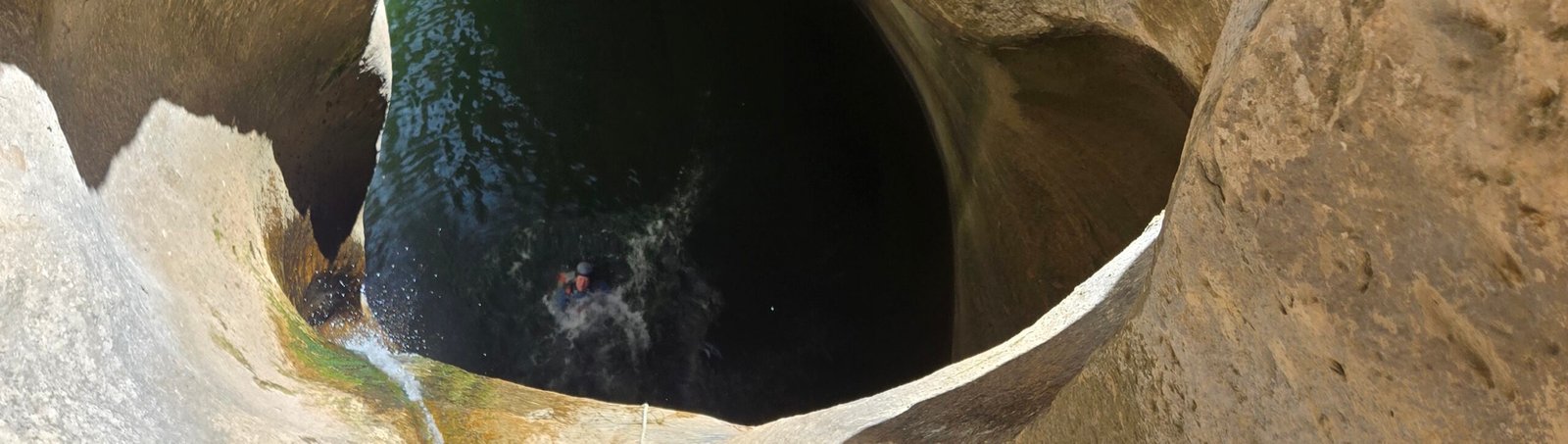
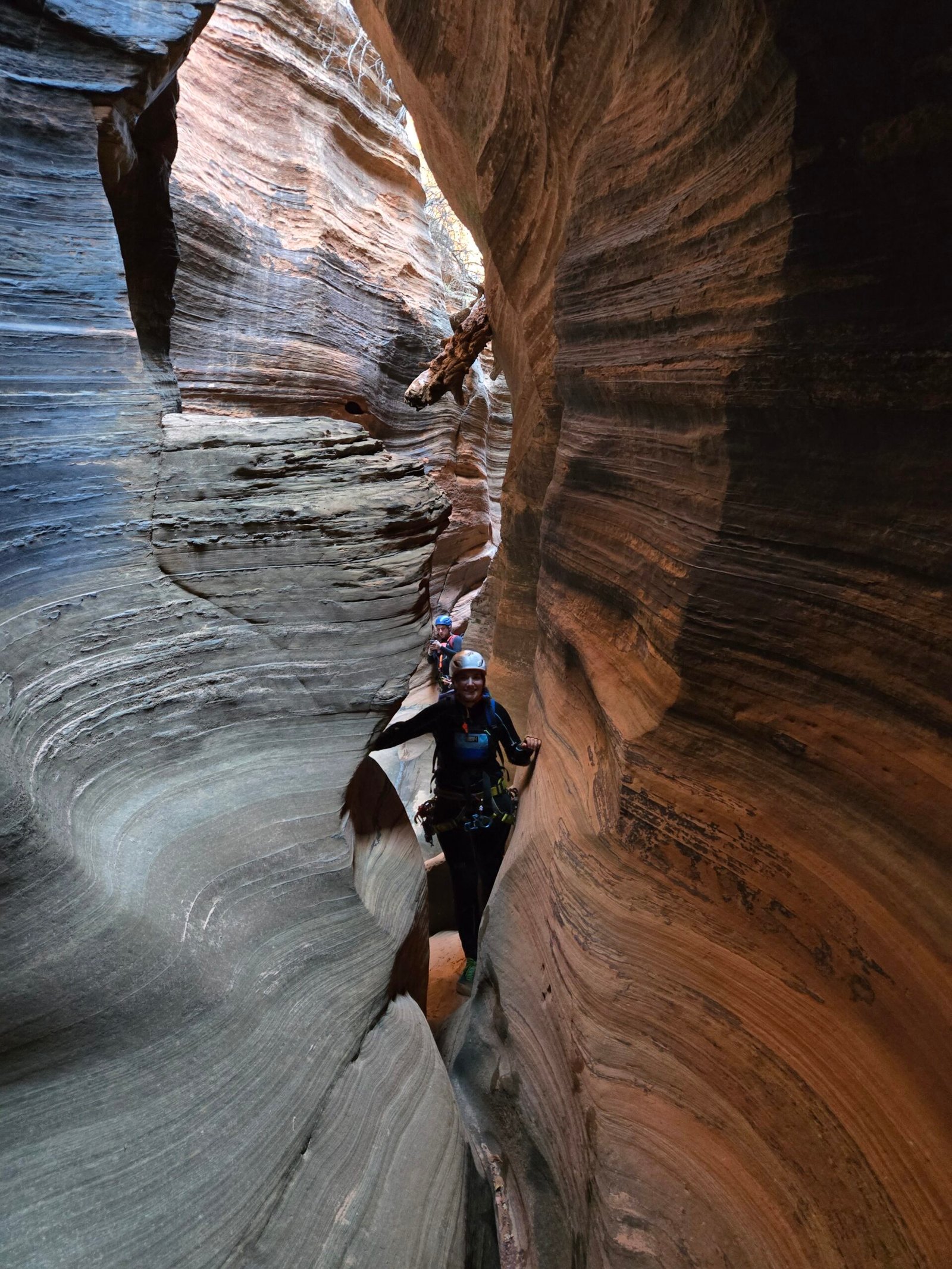
In the canyon, the descent team found a delightful section of waist-deep to swimmer pools, nestled inside beautiful narrows accented by downclimbs and a few pothole escapes, manageable with some teamwork. Near the end of the narrows, the team encountered a slightly tricky situation. They were at the top of a pothole with no anchors present and an awkward 15-foot drop into the next pothole. Eric provided a meat anchor to Max and Kate, who confirmed that the water was deep enough to jump into. However, Eric was not comfortable jumping at that angle, so Rick and I sprung into action. The rim of the canyon where we were located was very unstable and chossy. We found a line that looked decent and Rick meat anchored a rope down to Eric, who was able to rappel down. Soon, the team emerged from the narrows and downclimbed or rappelled the final two deep potholes in the narrow section.
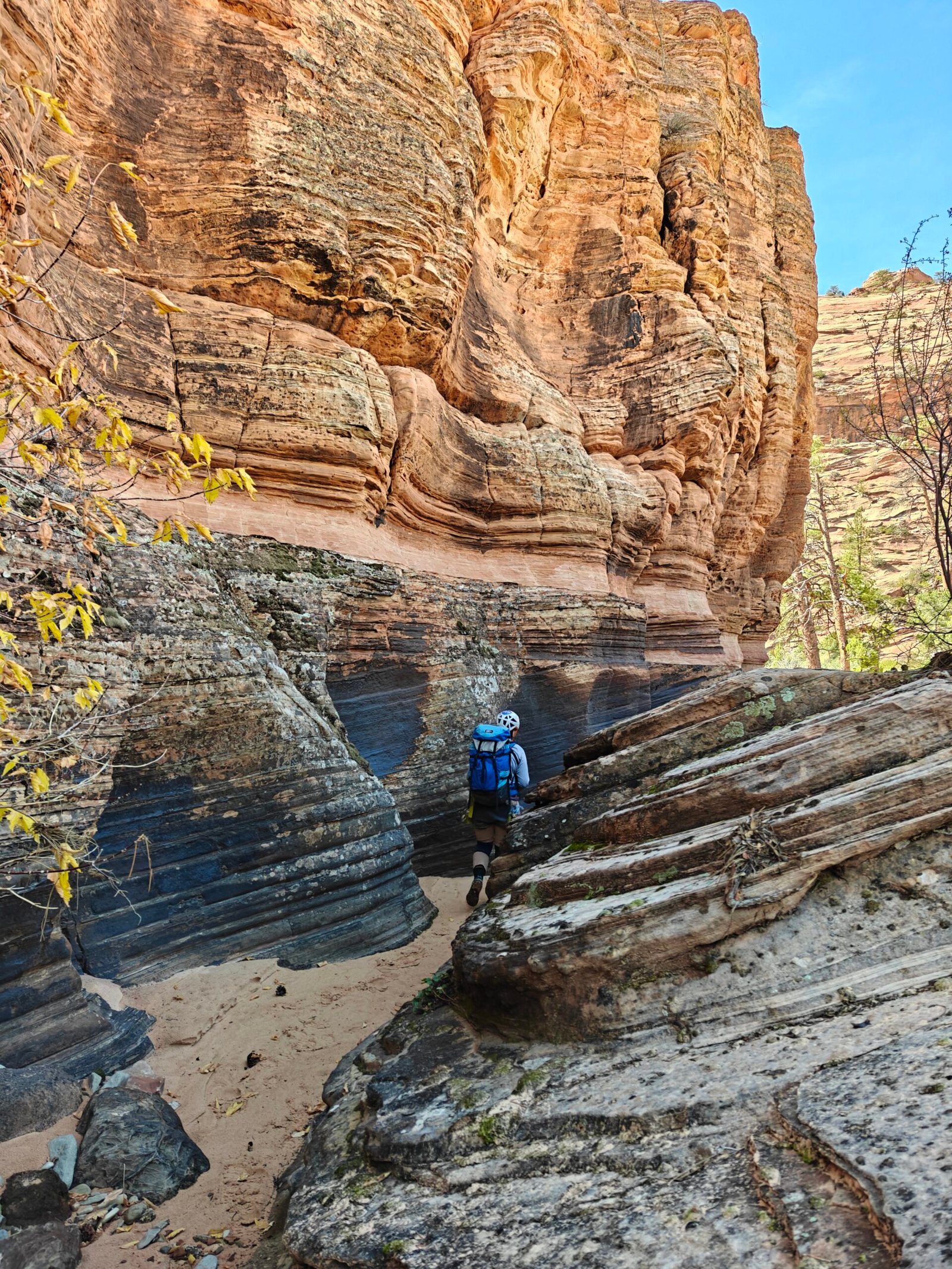
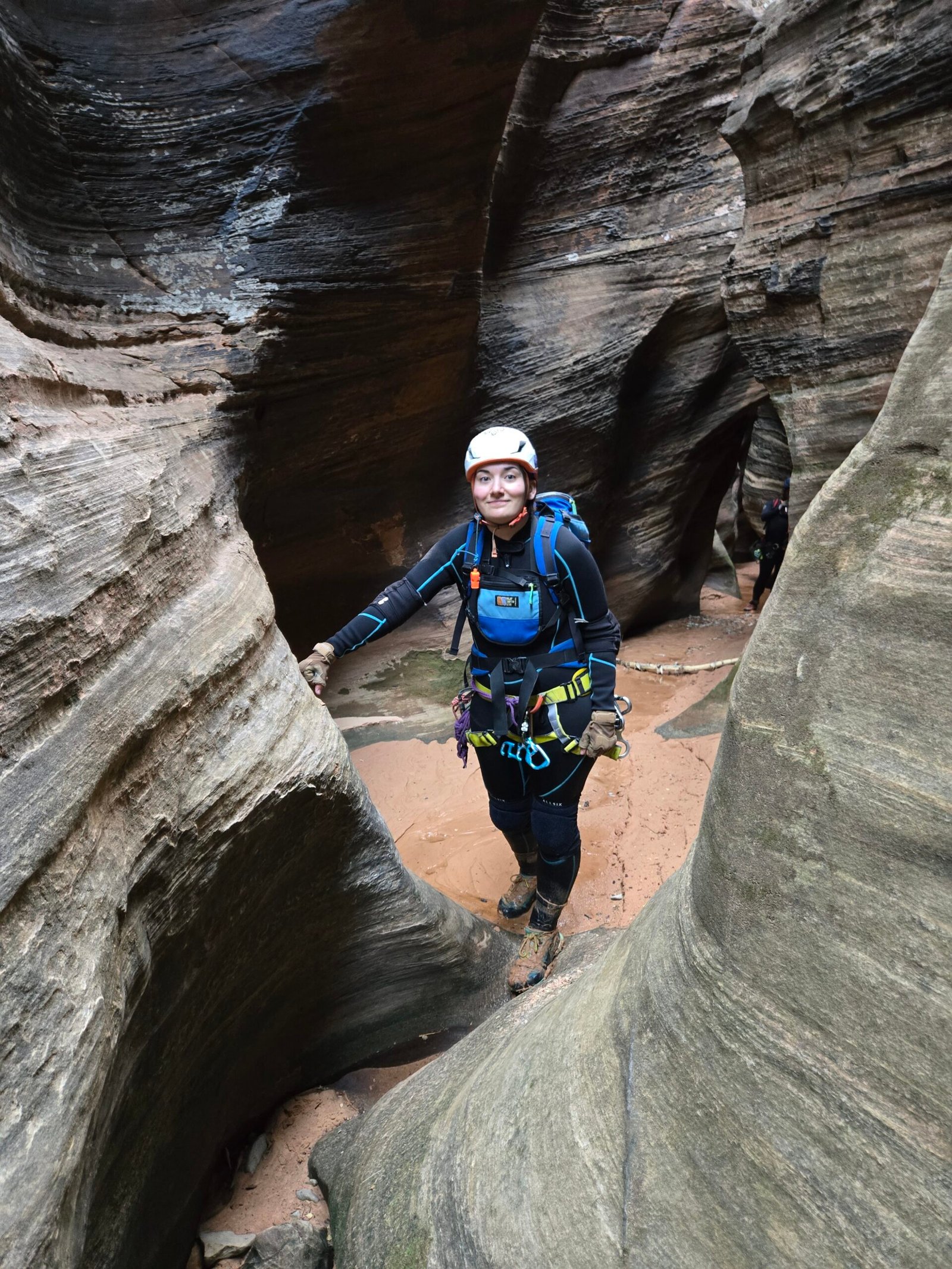
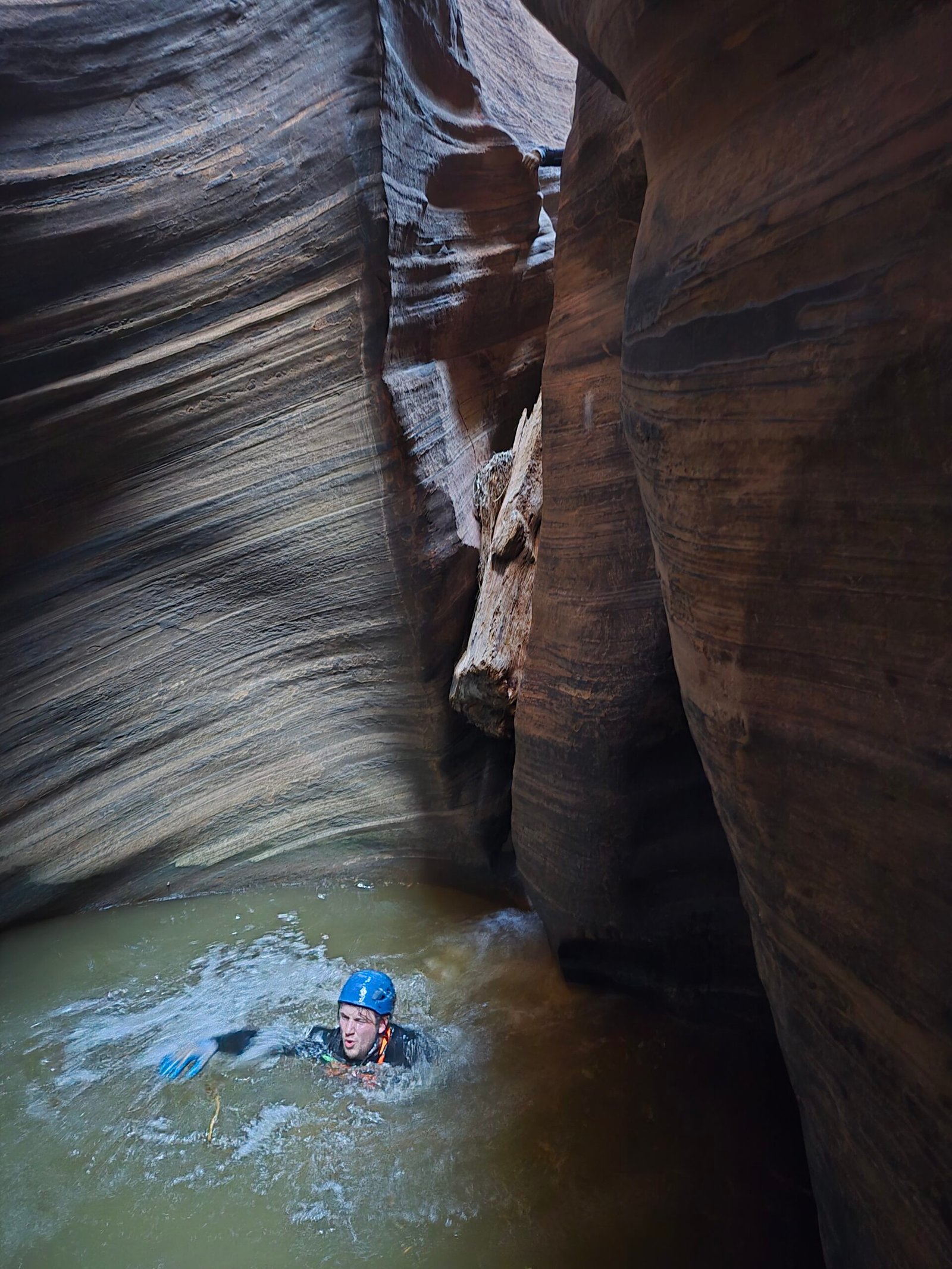
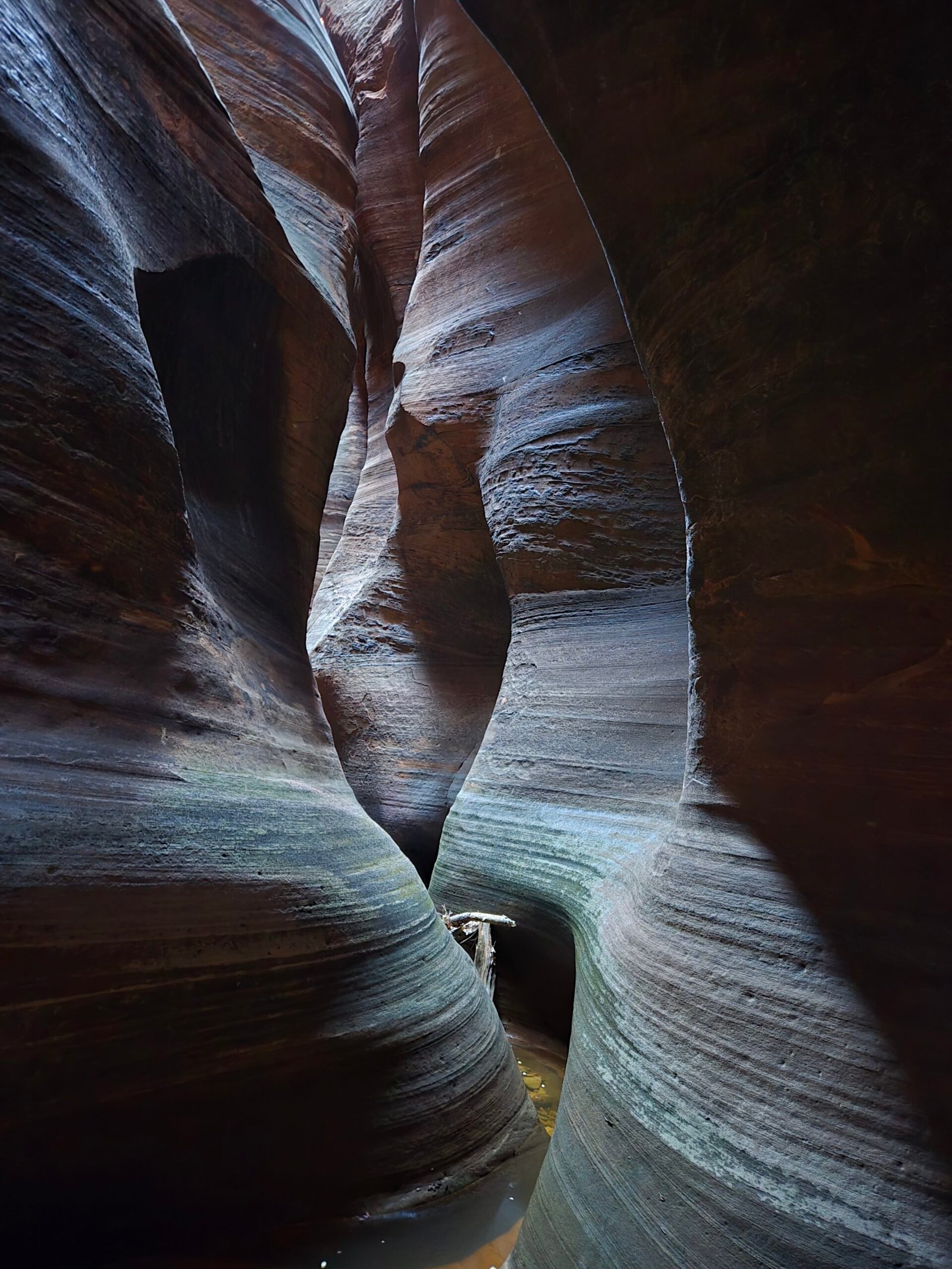
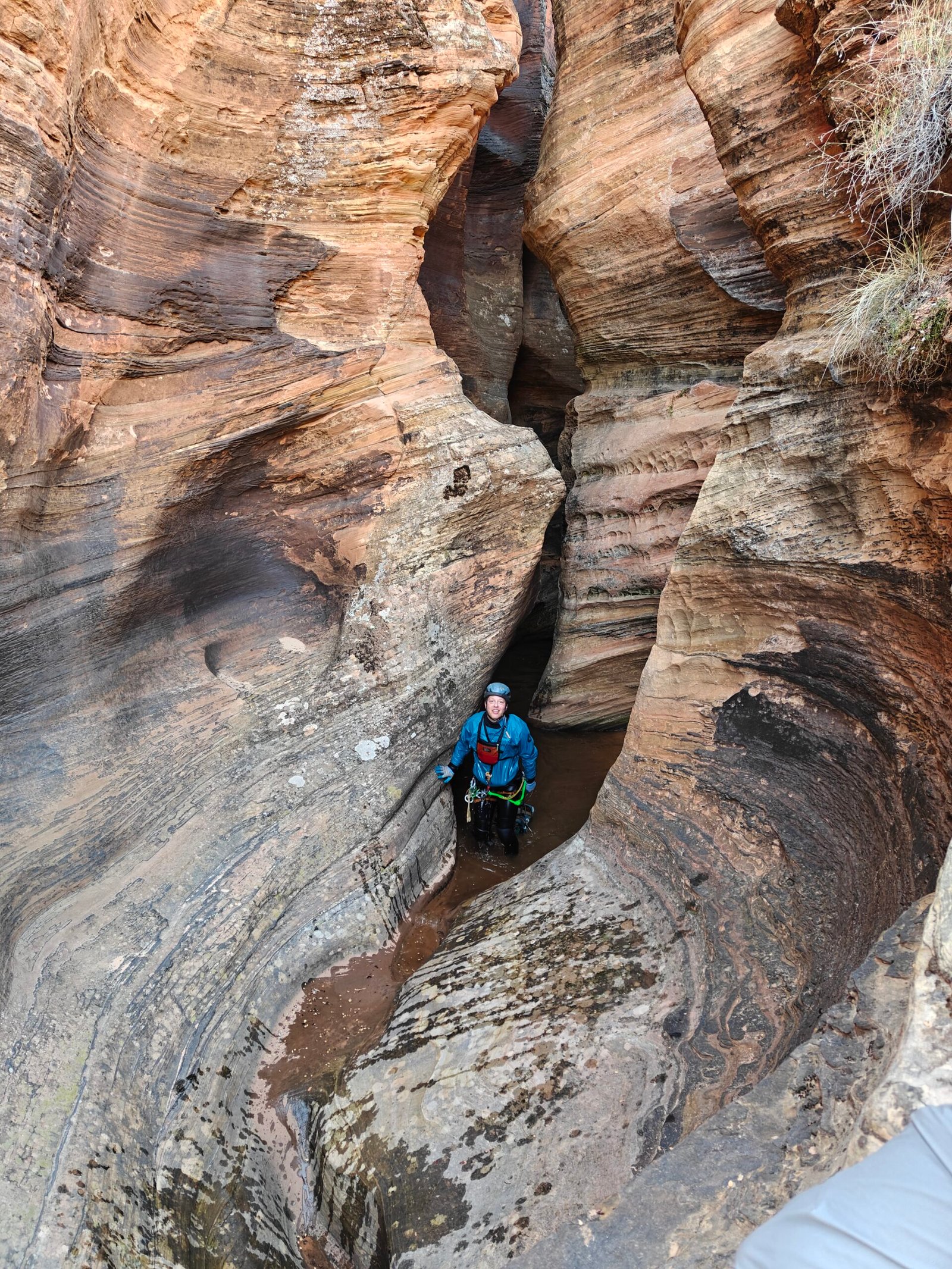
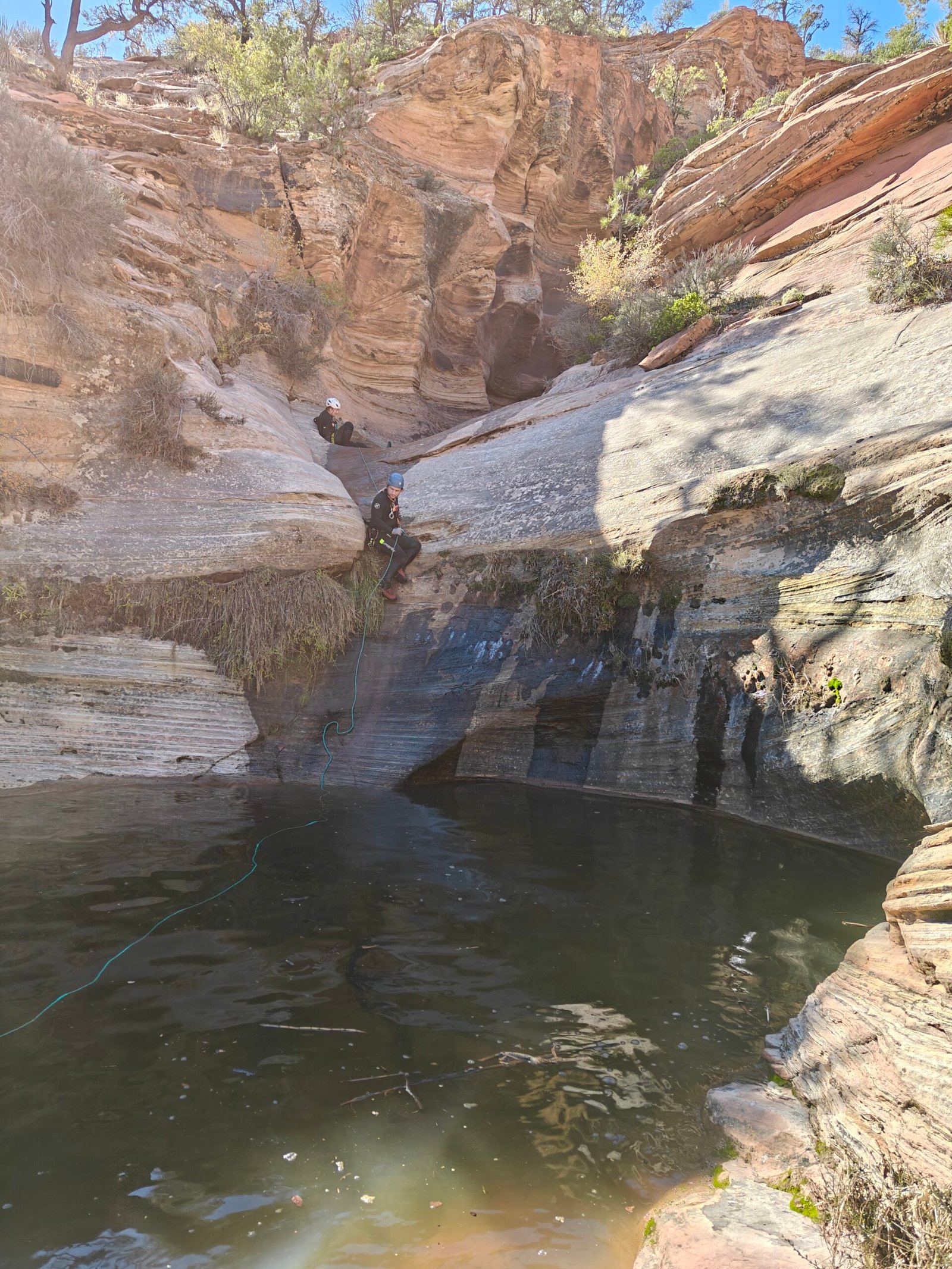
It was time to enter the last and final section of the canyon – another scenic narrows full of potholes that ends at a cliff hundreds of feet above a deep canyon. This section also contained deep water, so the wetsuit team stayed in the watercourse while Rick and I once again volunteered for rim team duty and found a way up steep sandstone slabs to the top of the rim. We met up at the top of a multi-stage drop leading to the end of the watercourse, which Rick also meat- anchored for the team. There are natural anchors, but also a lot of loose rock shelves in this section. The end of the canyon reaches a spectacular drop-off down into the deep river canyon, which we were able to exit by climbing up to the viewpoint slab we had visited earlier.
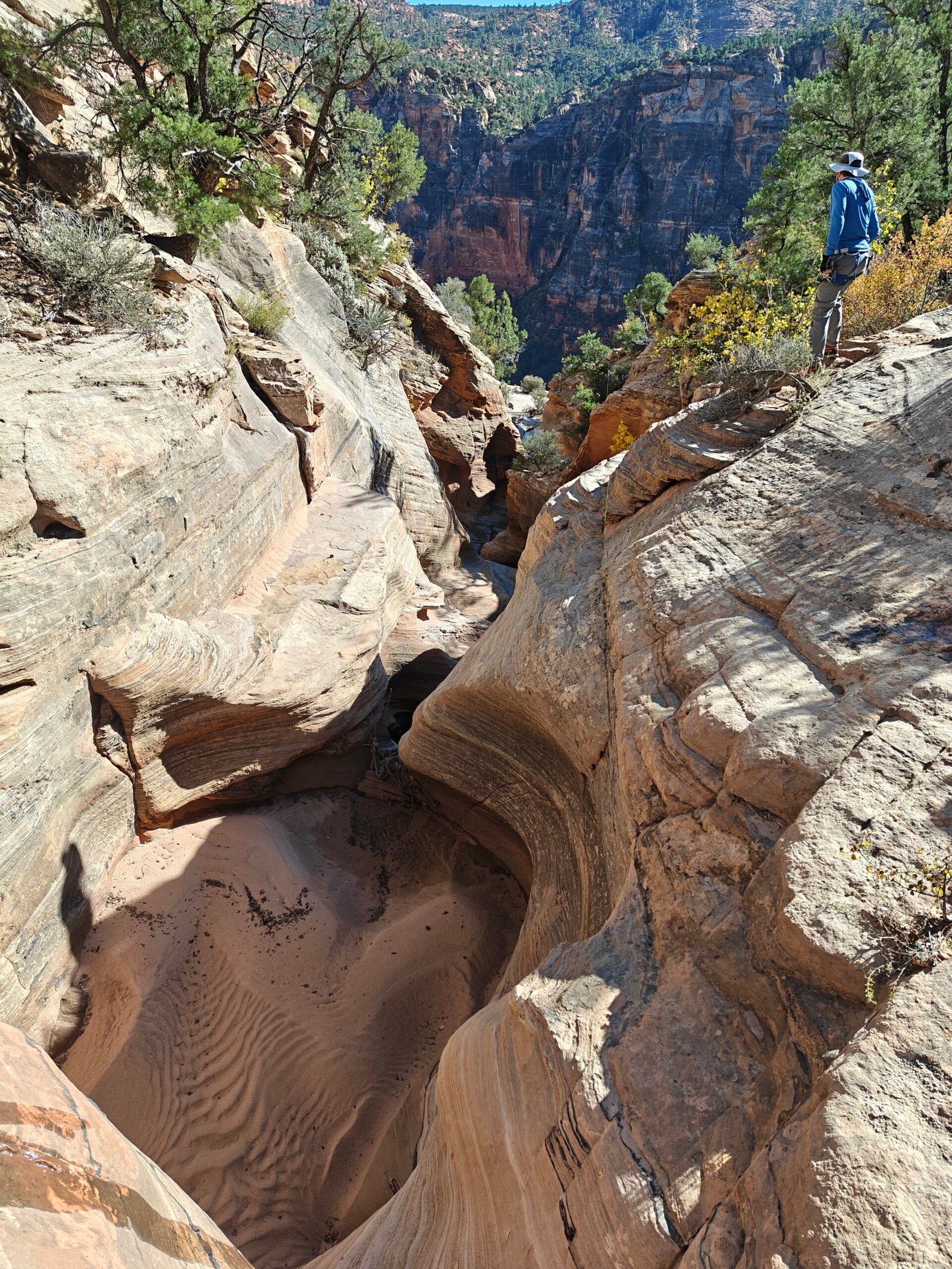
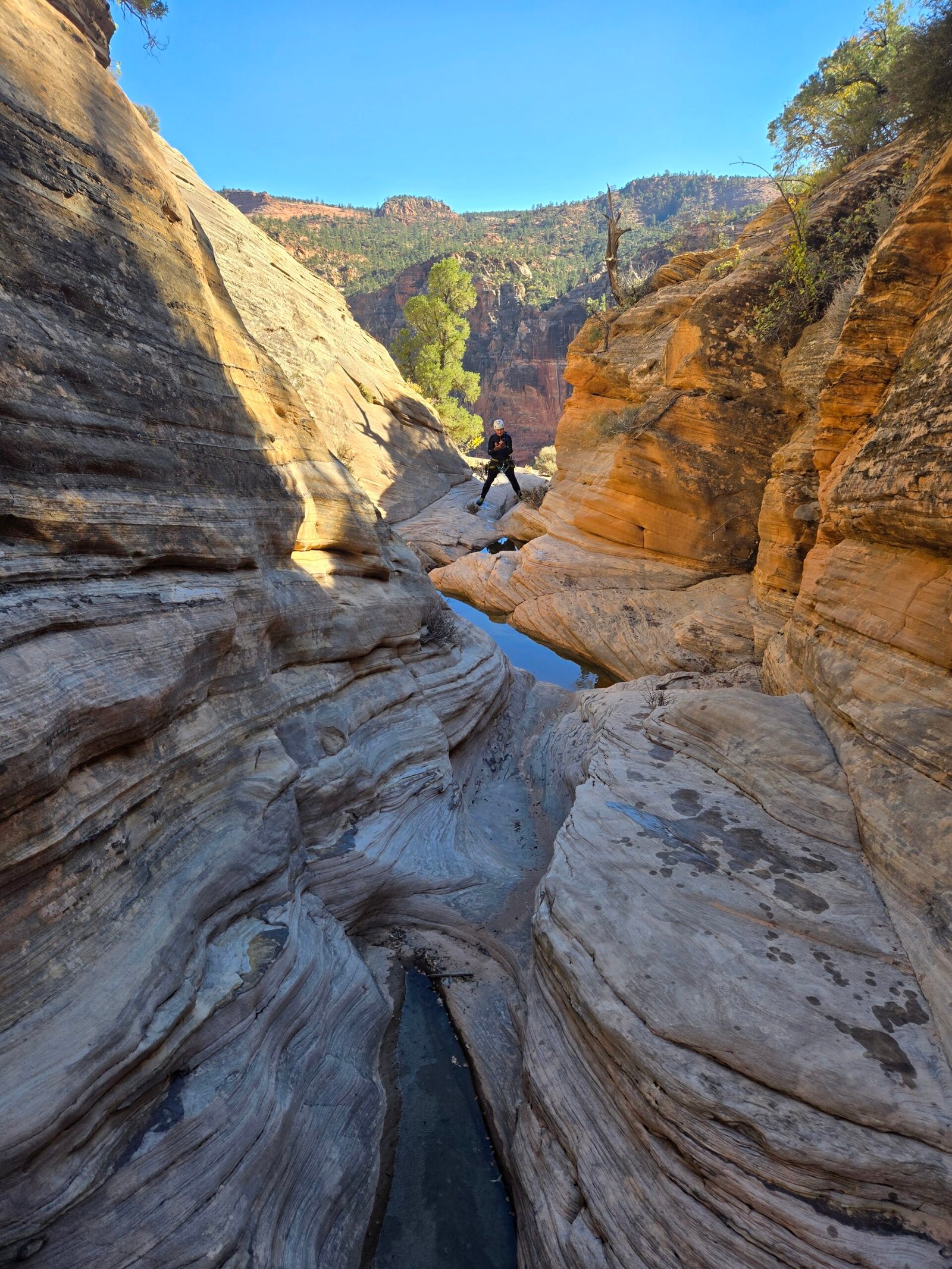

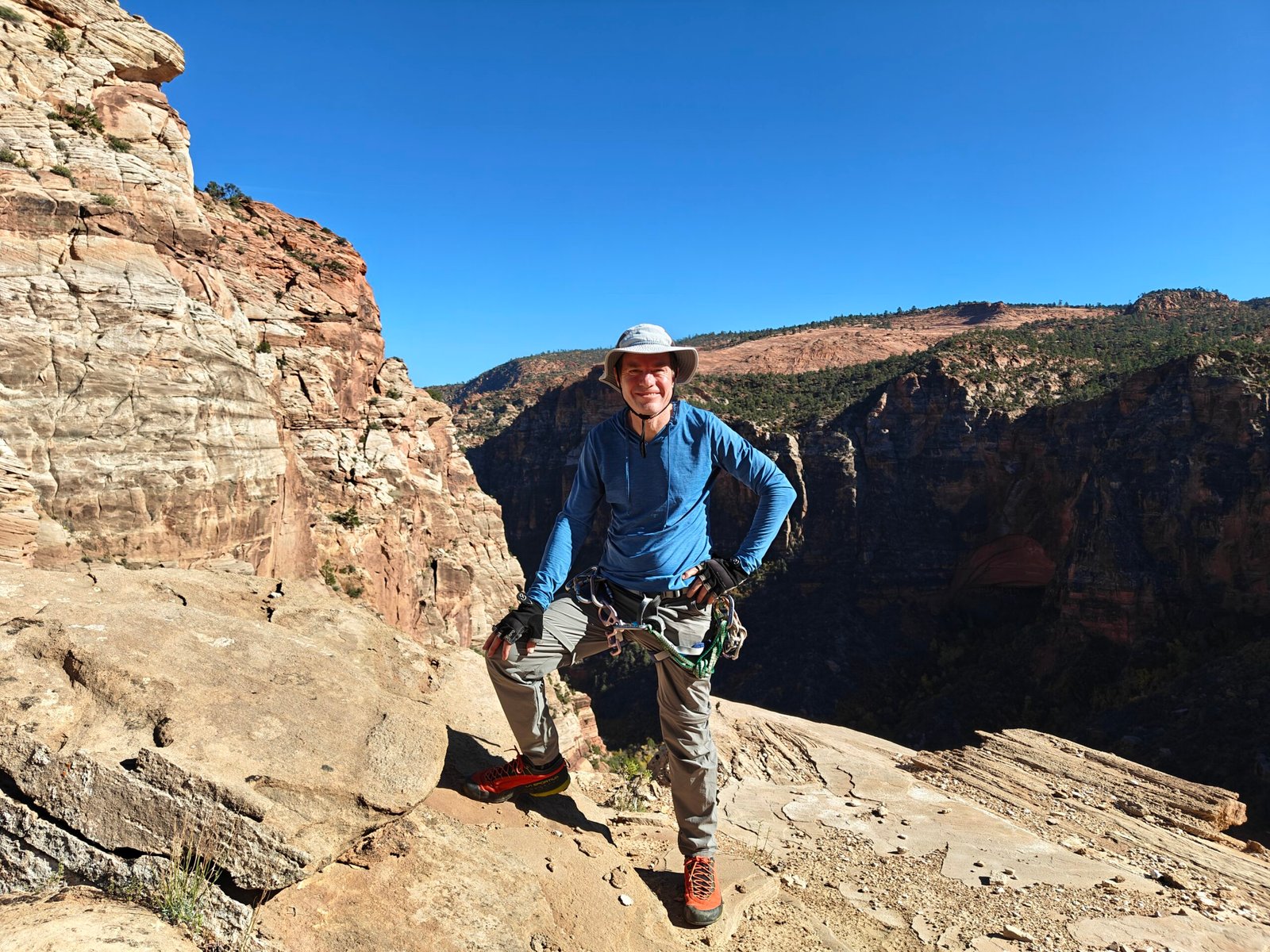
All told it was an amazing day of exploration, and somehow completely free of mountain lions.
In a subsequent exploration, we dropped into an earlier fork of the canyon and added another rappel and scenic section of the canyon to the itinerary. Forbidden was a big project that evolved over a full year into a route that we’re proud to take people into. It took effort, teamwork and contributions from many people to bring to fruition. And now we have quite a story to tell!