
Kolob Canyon is considered among the top five technical canyons in Zion NP, due to the nature of the canyon and the extremely long and arduous exit. Kolob sits below the Kolob Reservoir, which releases water into the canyon. Under some conditions, Kolob can be a swift water canyon. In 1993, Kolob gained notoriety due to a tragedy involving an LDS youth group consisting of five teenagers and three adults who entered the canyon when it was flowing above 25cfs. Two of the adults drowned, while the remaining six members of the group abandoned the descent and were stranded in the canyon for five days before they were rescued. Generally, a flow of 3cfs or below is considered to be safe for canyoneering, with an upper limit of 5cfs.
The approach to Kolob provides access to the creek that carries water into the canyon, allowing people to gauge the amount of water flowing into the canyon. It should not be a mystery to anyone who enters Kolob what conditions will be like, unless there is a surprise release from the reservoir. However, after this incident, the park implemented the current permit system that we have today. It has been very difficult to get a Kolob permit for the past several years that we have lived here. To obtain a permit, you must call the water district and find out what water discharge levels will be on the day you are planning to go. Sometimes you can get an answer and sometimes you can’t. If the answer is satisfactory, you then have to head to the Wilderness Desk in Zion and convince them that you know that you are doing in swift water (having a Washington state phone number was very helpful for us here), that the water discharge would be minimal, and that you have a plan for legally exiting the canyon (more on this later). Full beta and information can be found here: Canyoneering Kolob Canyon – Zion West Side – Road Trip Ryan
This summer, the water district stopped releasing water from the reservoir for a short window of time, and it seemed like everyone made a beeline for the canyon while there was still some flow to be had from natural spillover from the reservoir. For us, it was time to see if Kolob could live up to its outsized reputation.
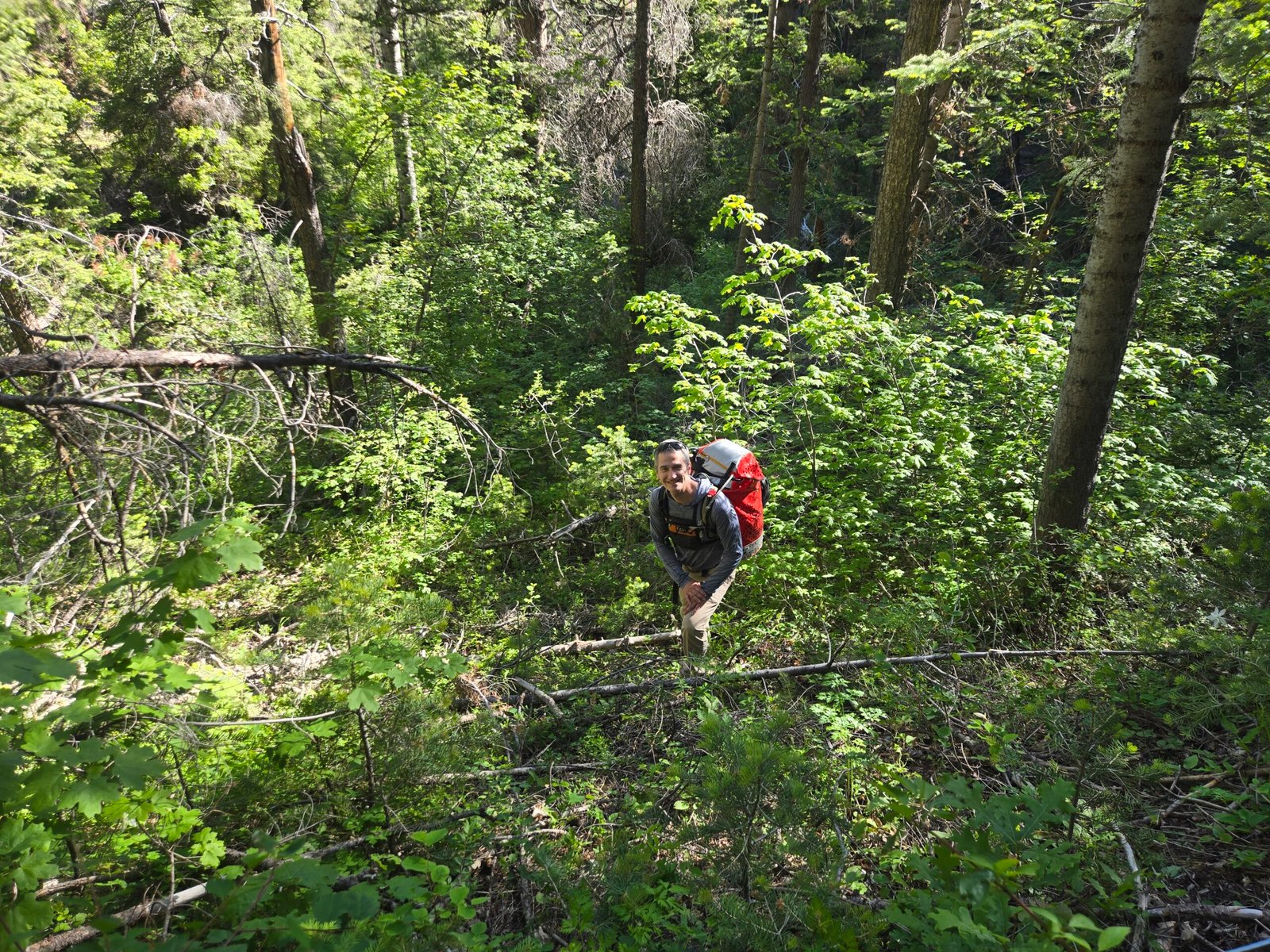
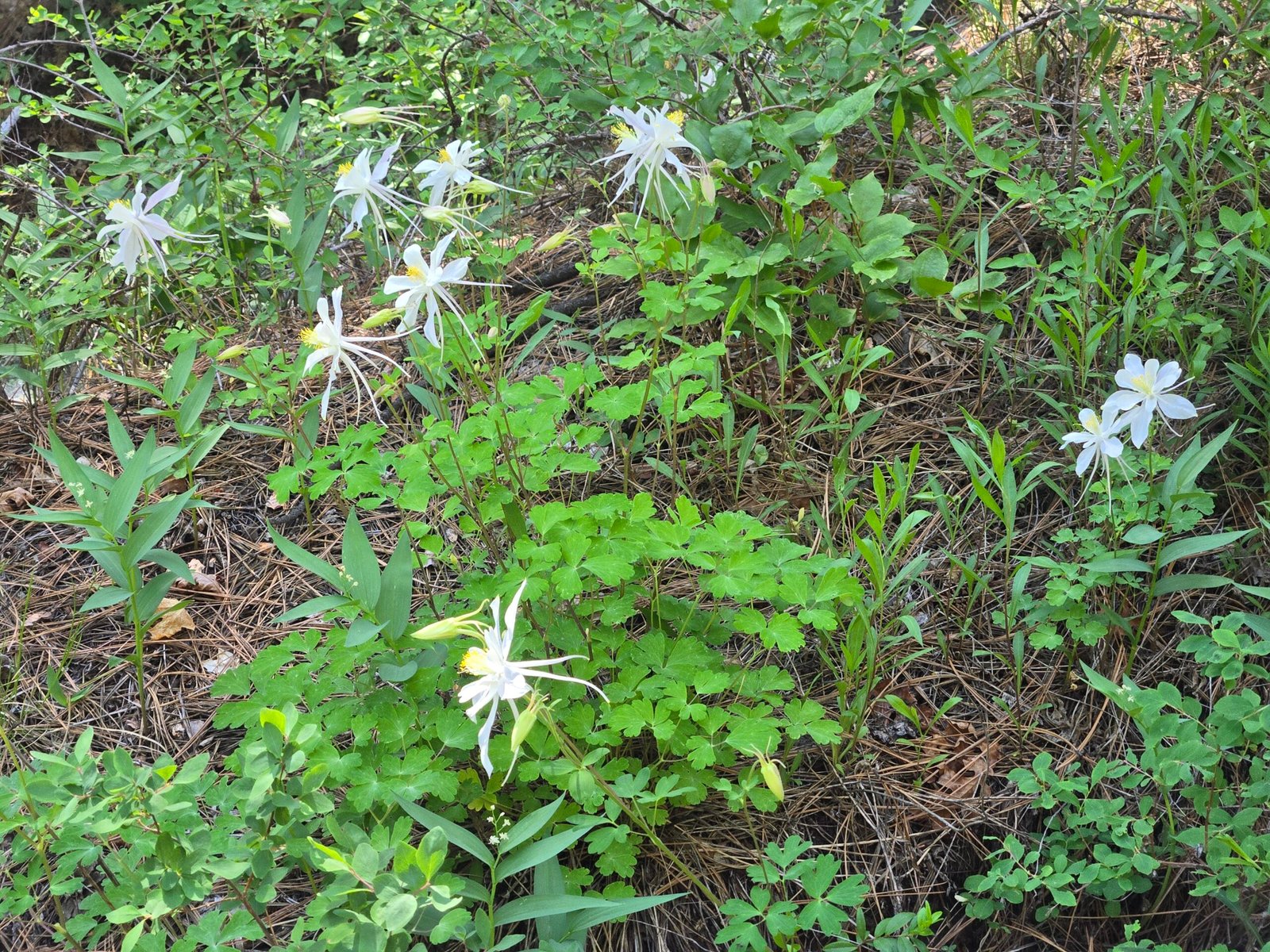
It was a hot day in the beginning of June when we met up at the West Rim Trailhead off Lava Point Road. With bulging packs full of neoprene and ropes, we started following a trail through aspen and fir forests. The woods were full of blooming white columbine, which is absolutely spectacular. Soon the trail degenerated into a full-out bushwhack down a steep slope. We carefully made our way down and across a steep hill, then down the creek bed leading to the first rappel. Water levels in the creek gave us our condition report for the day: gentle flow under 1cfs, meaning full pools and a little bit of dousing on rappels, but generally easy conditions. In what would be the first of many costume changes that day, we put on our wet and dry suits and descended into the canyon.
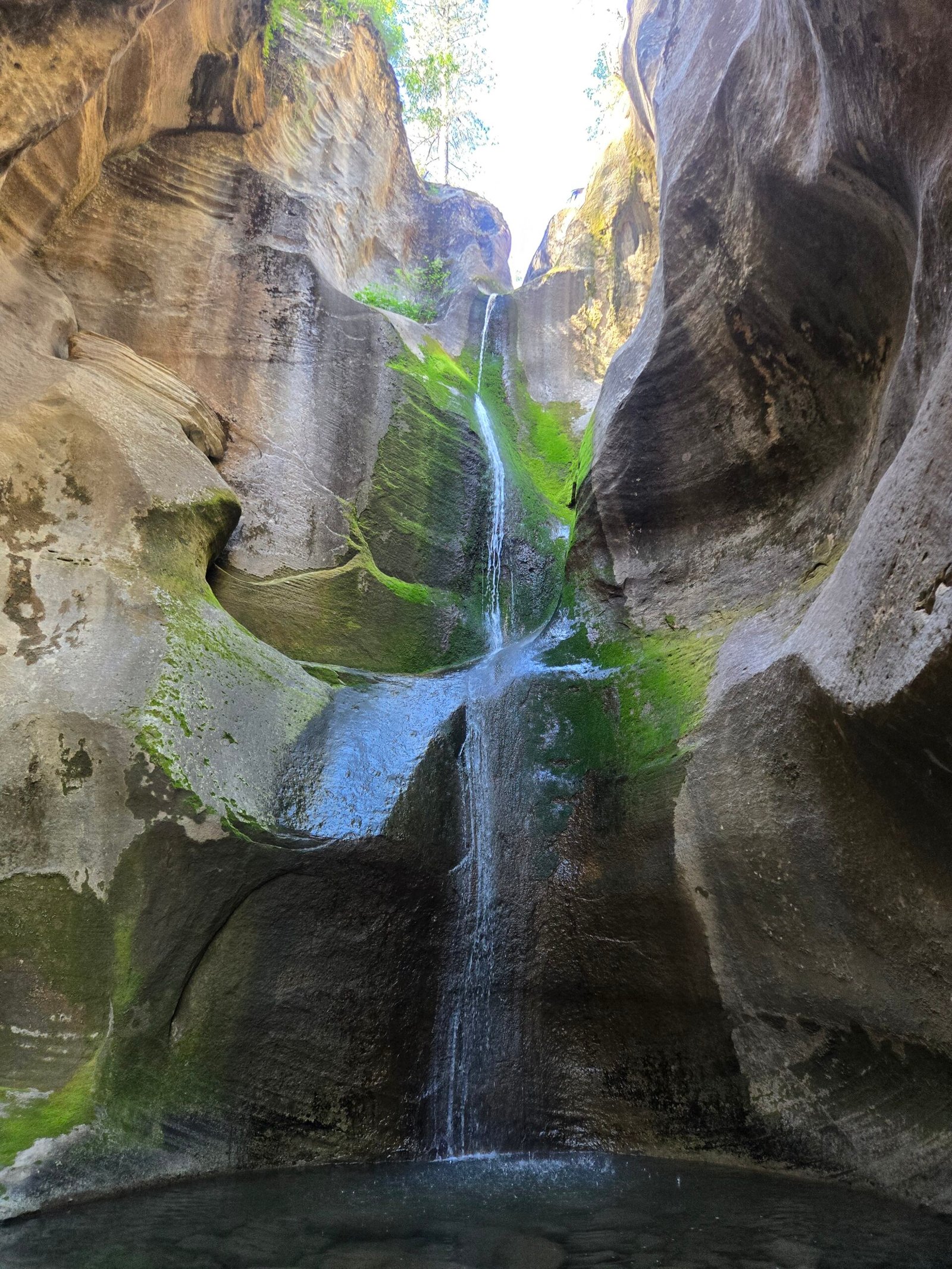
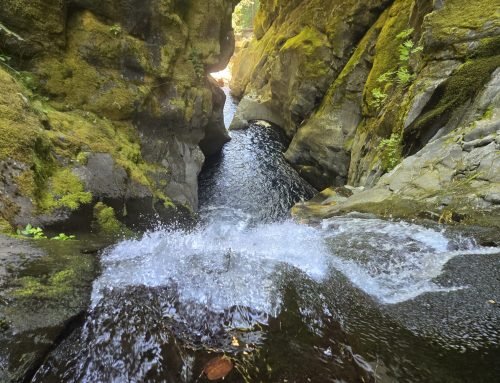
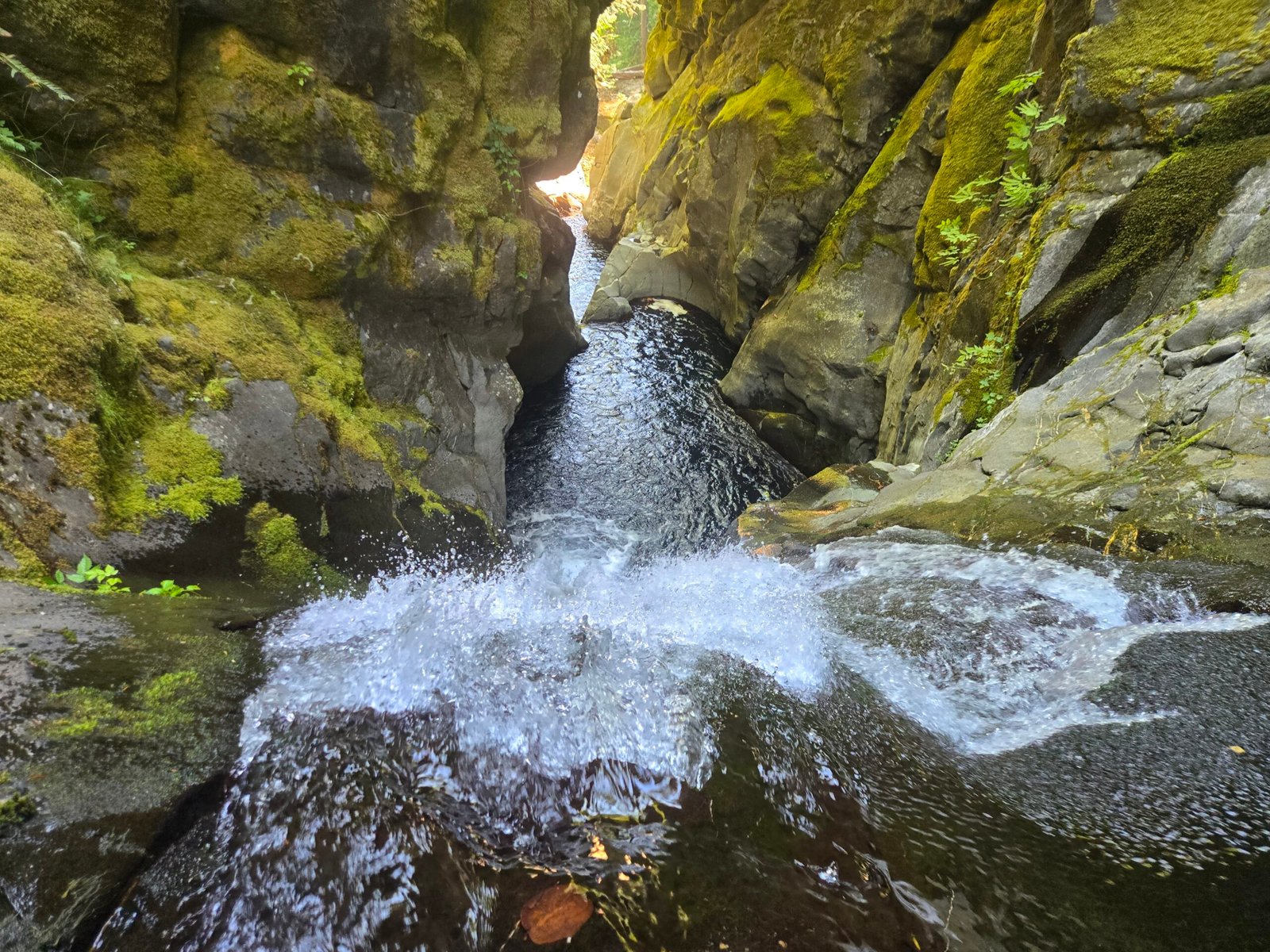
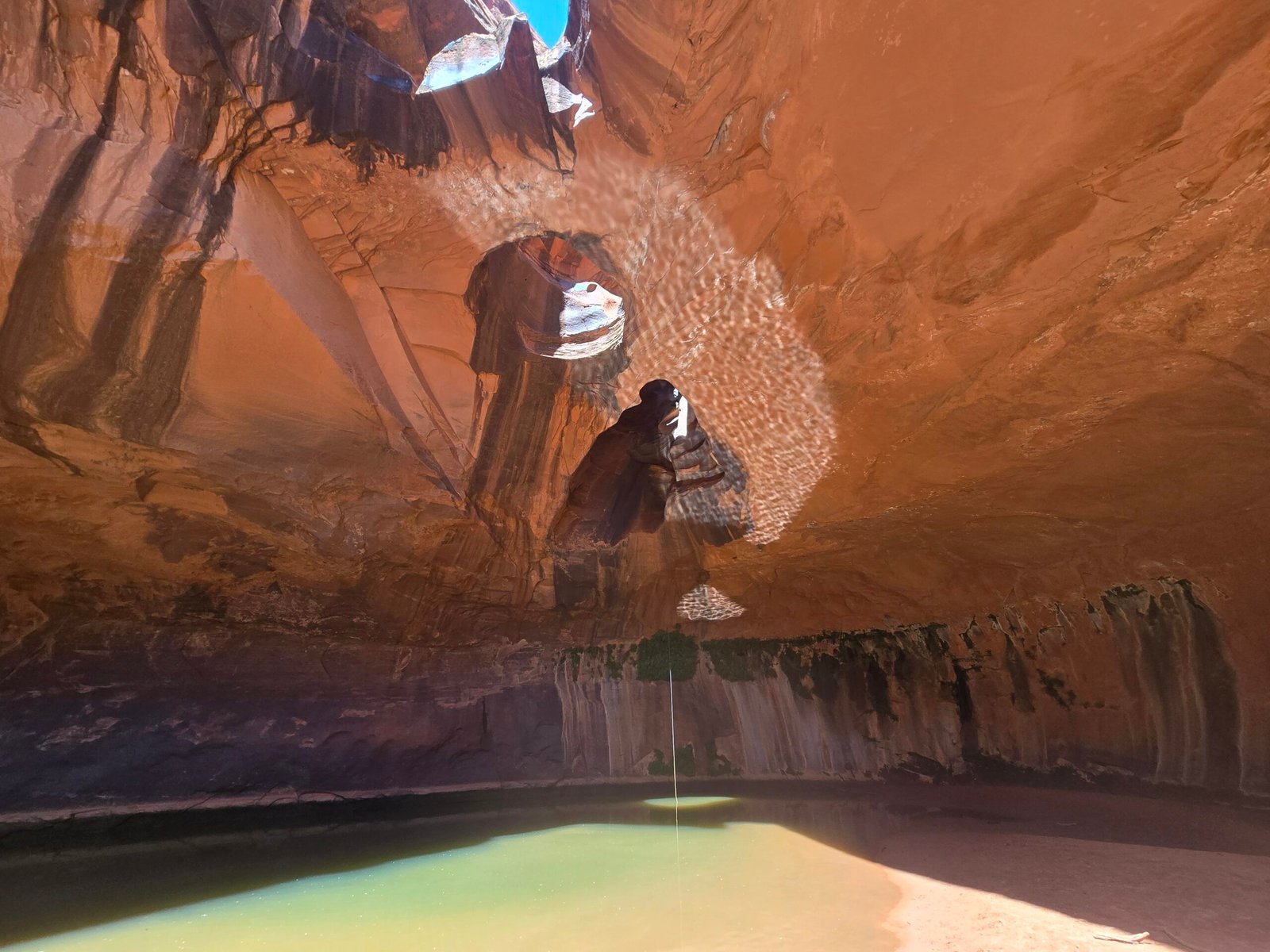
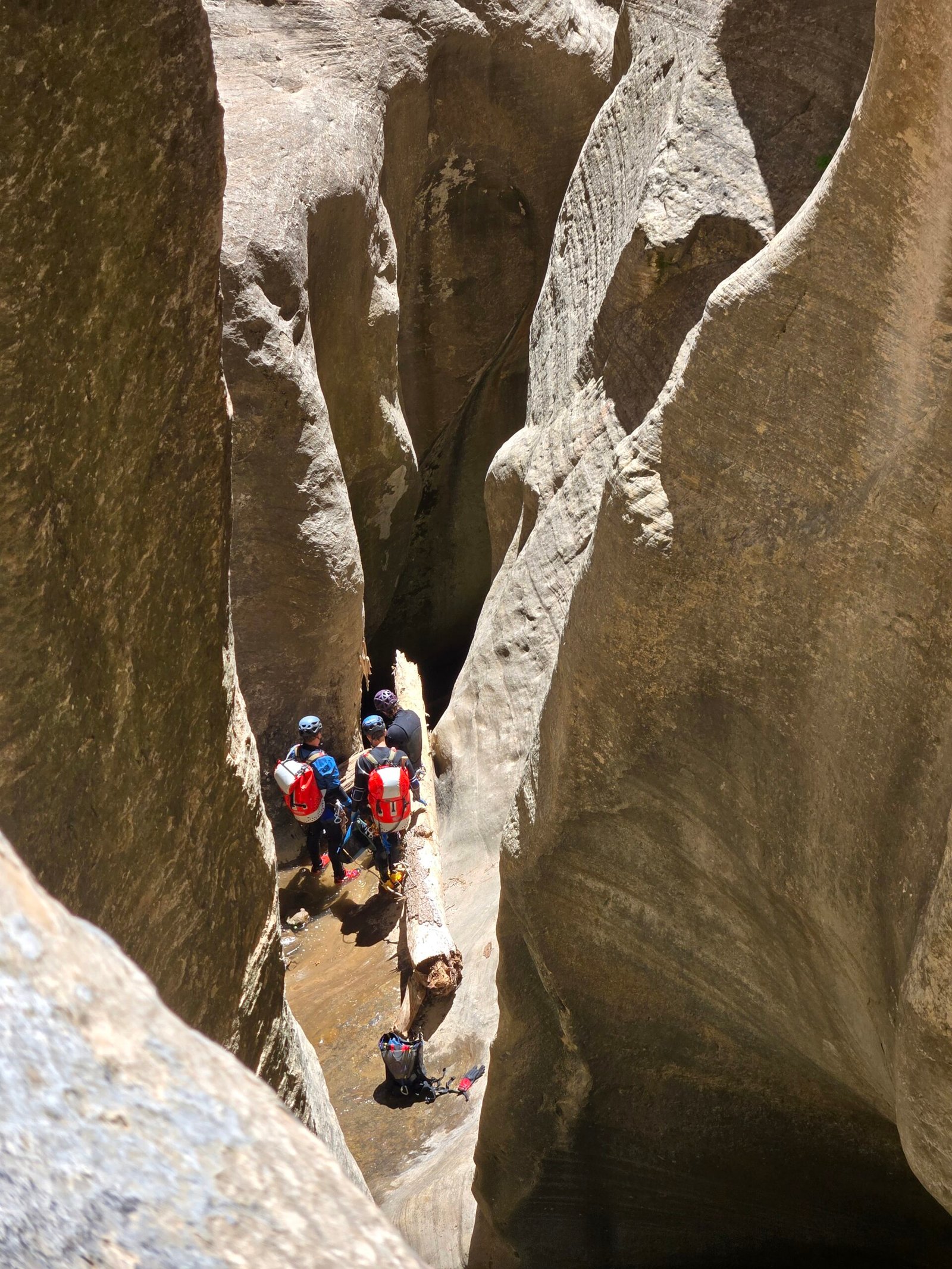
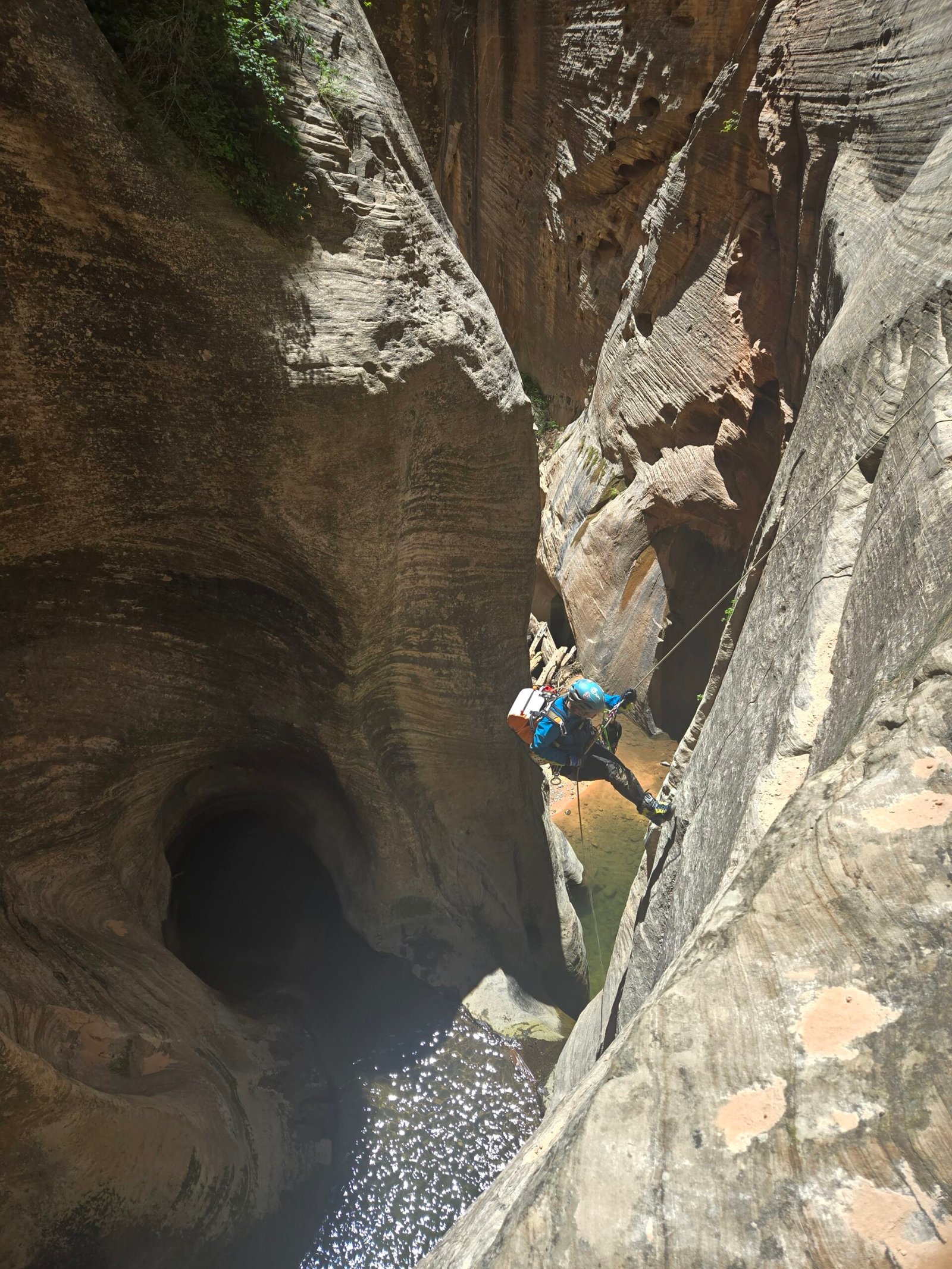
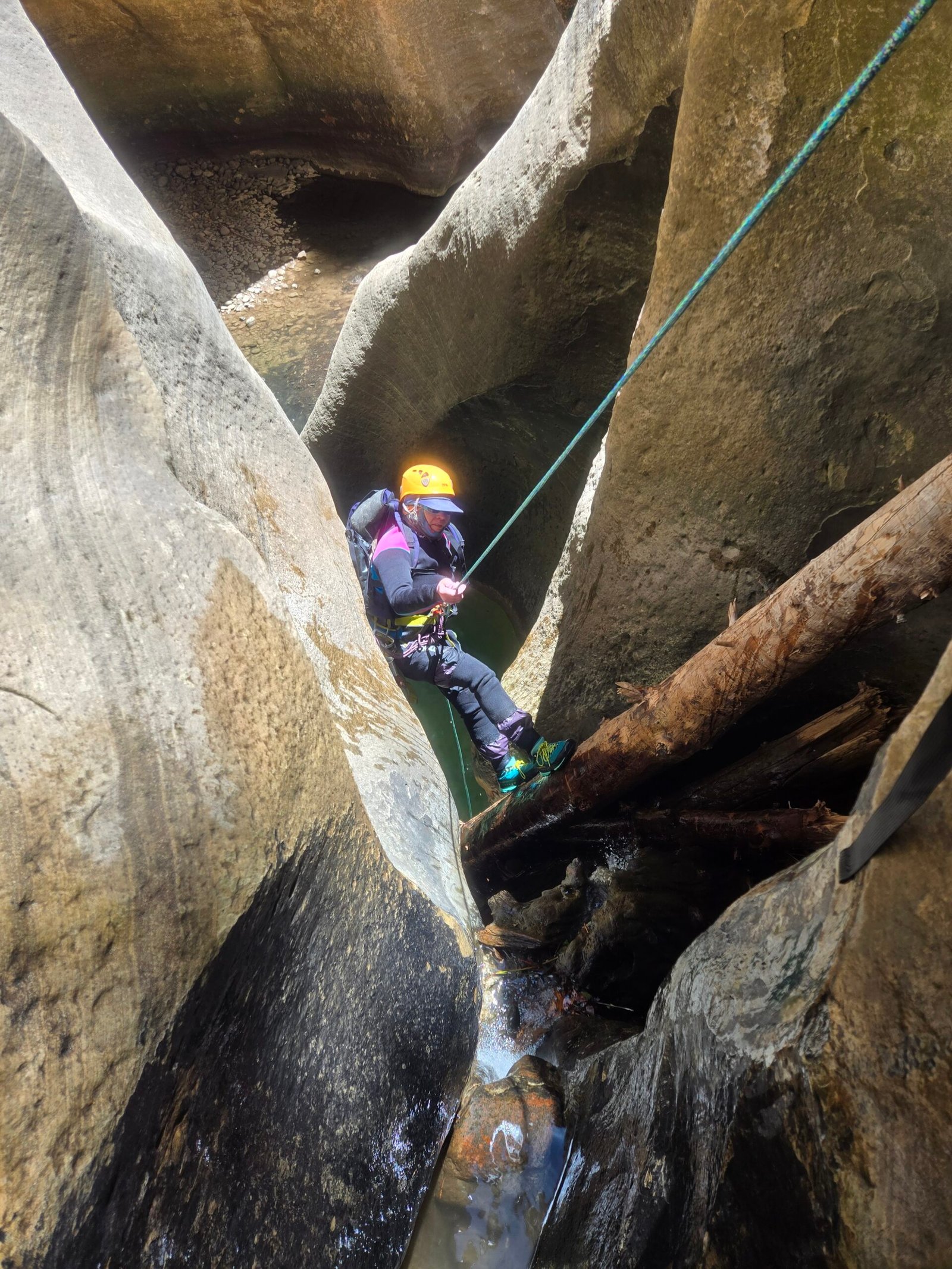
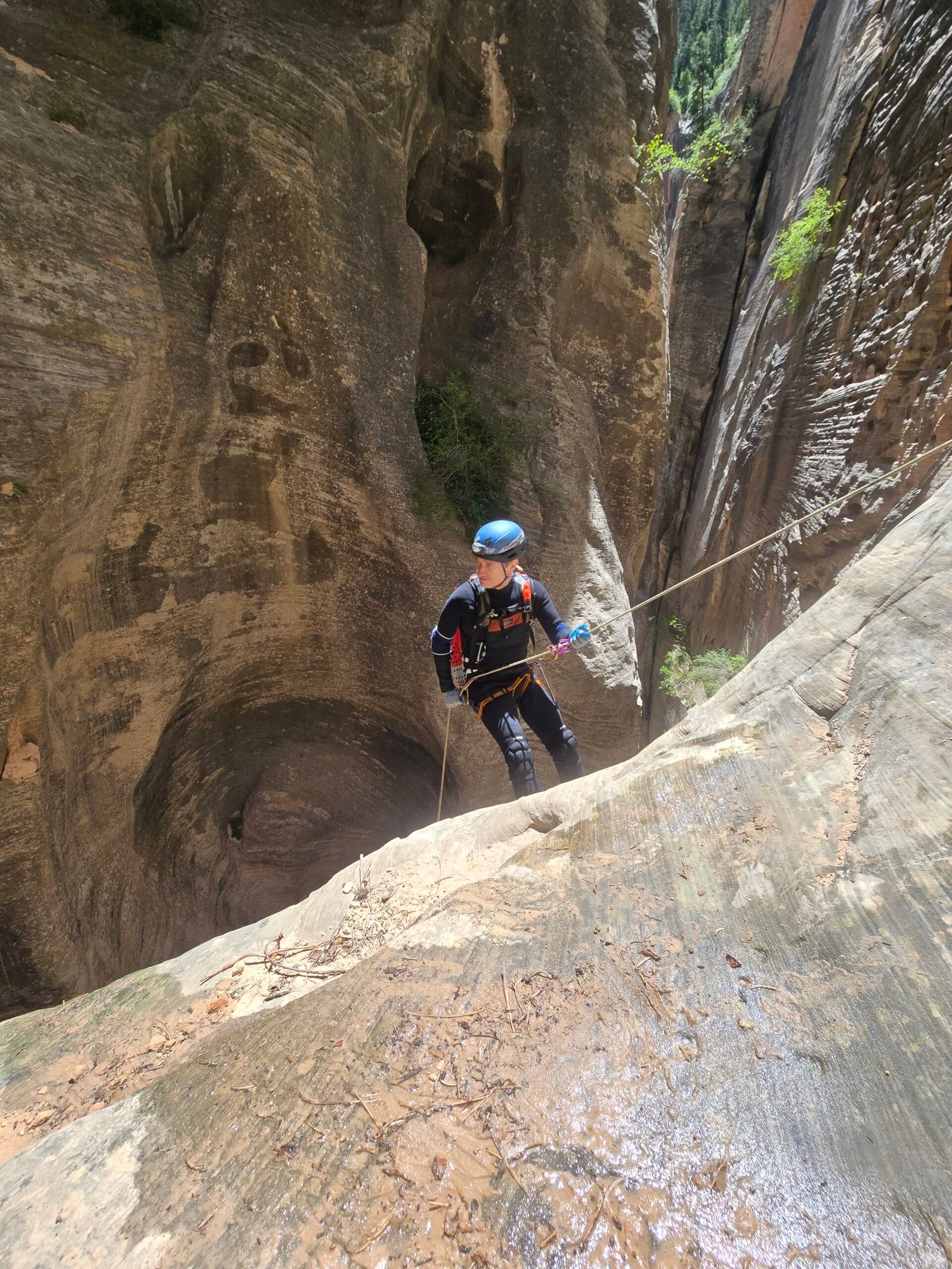
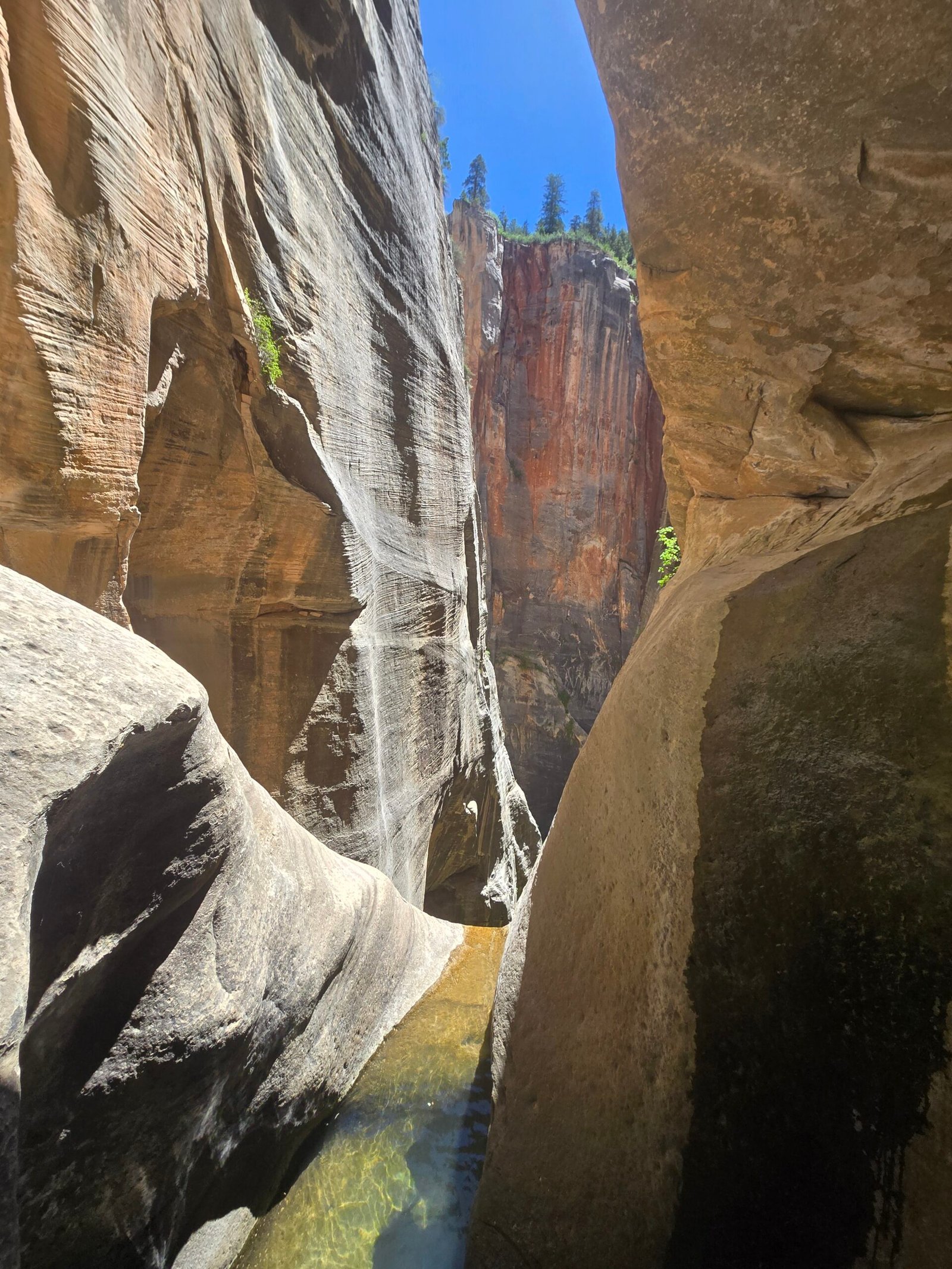
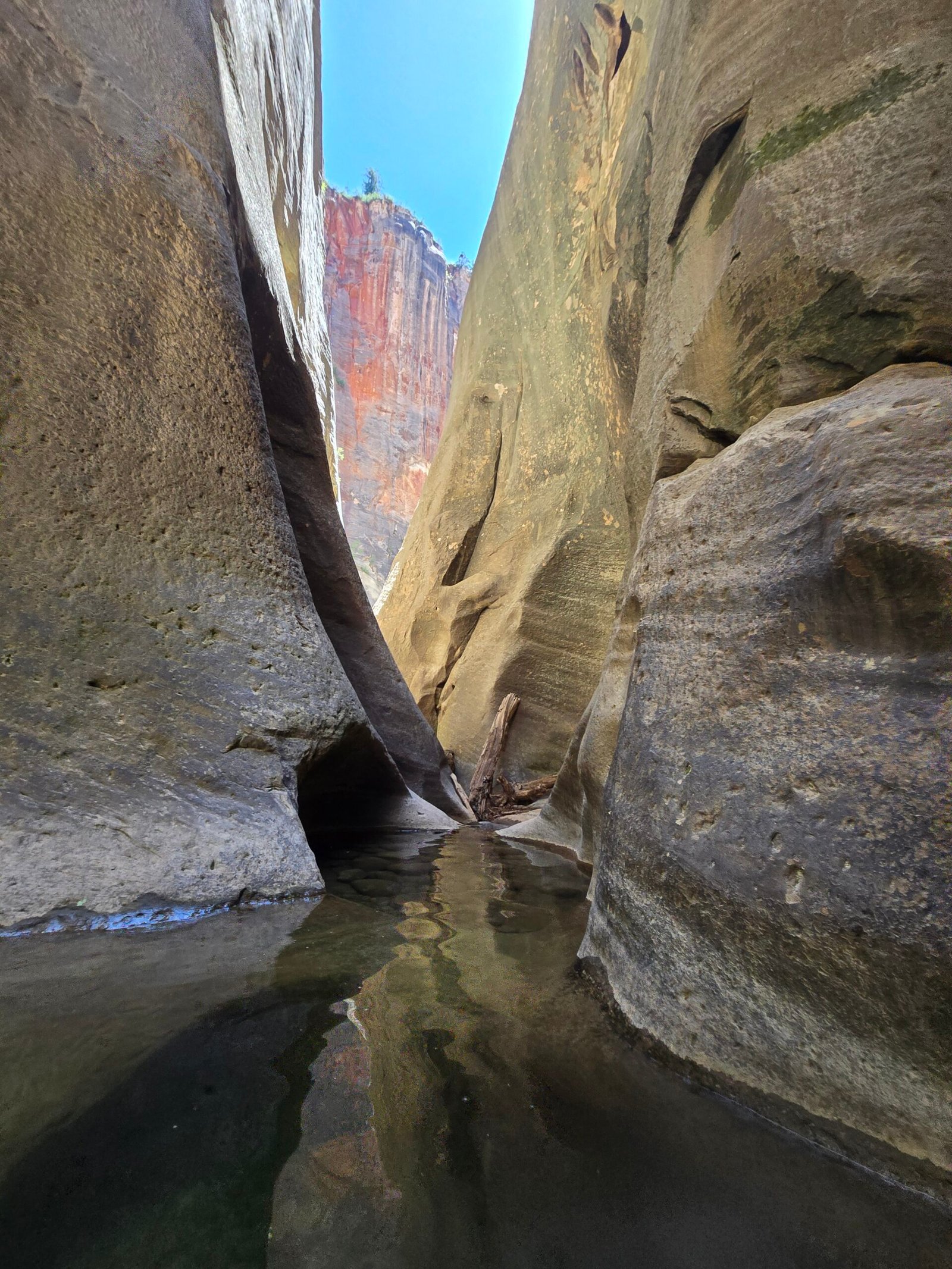
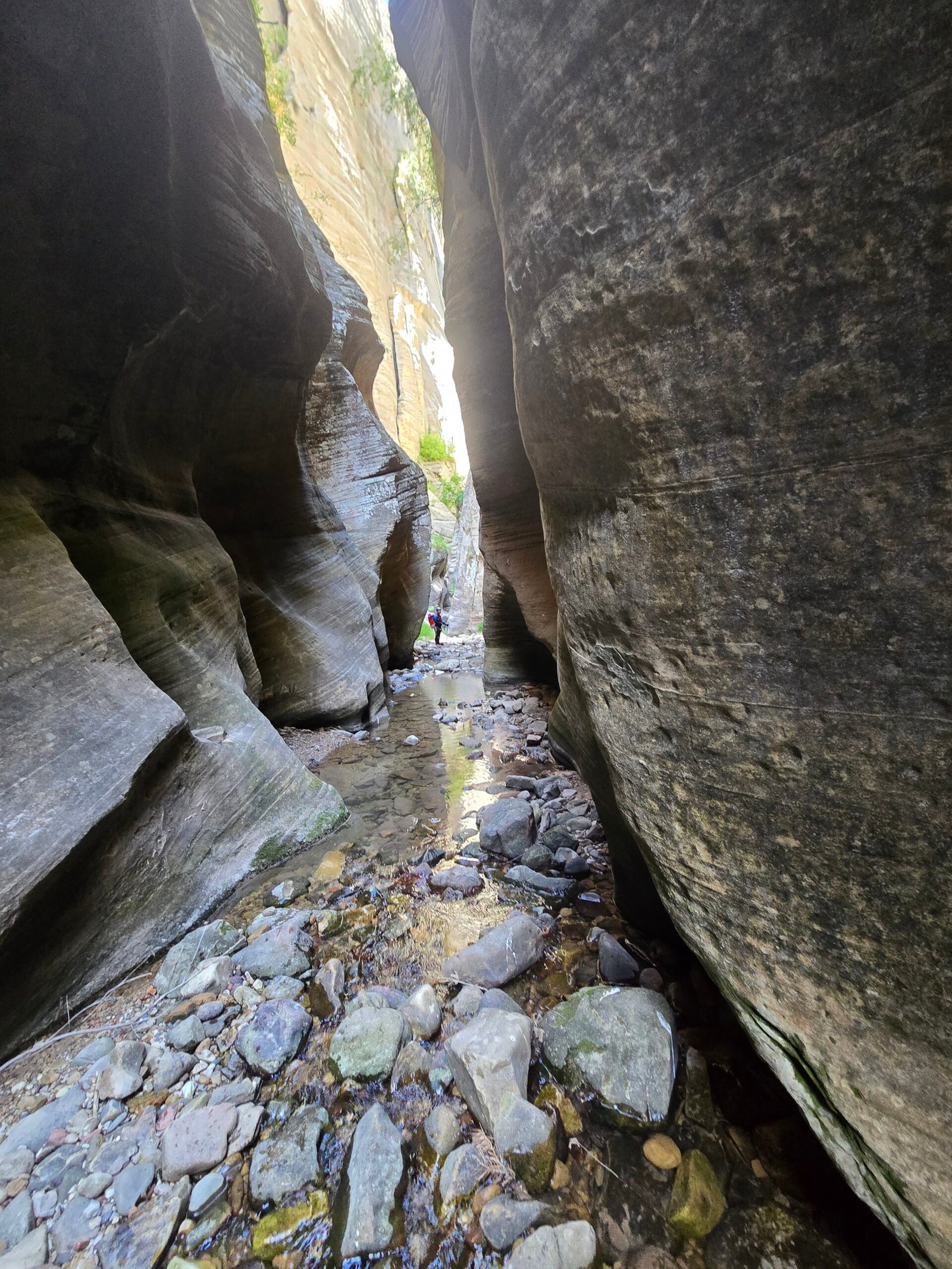
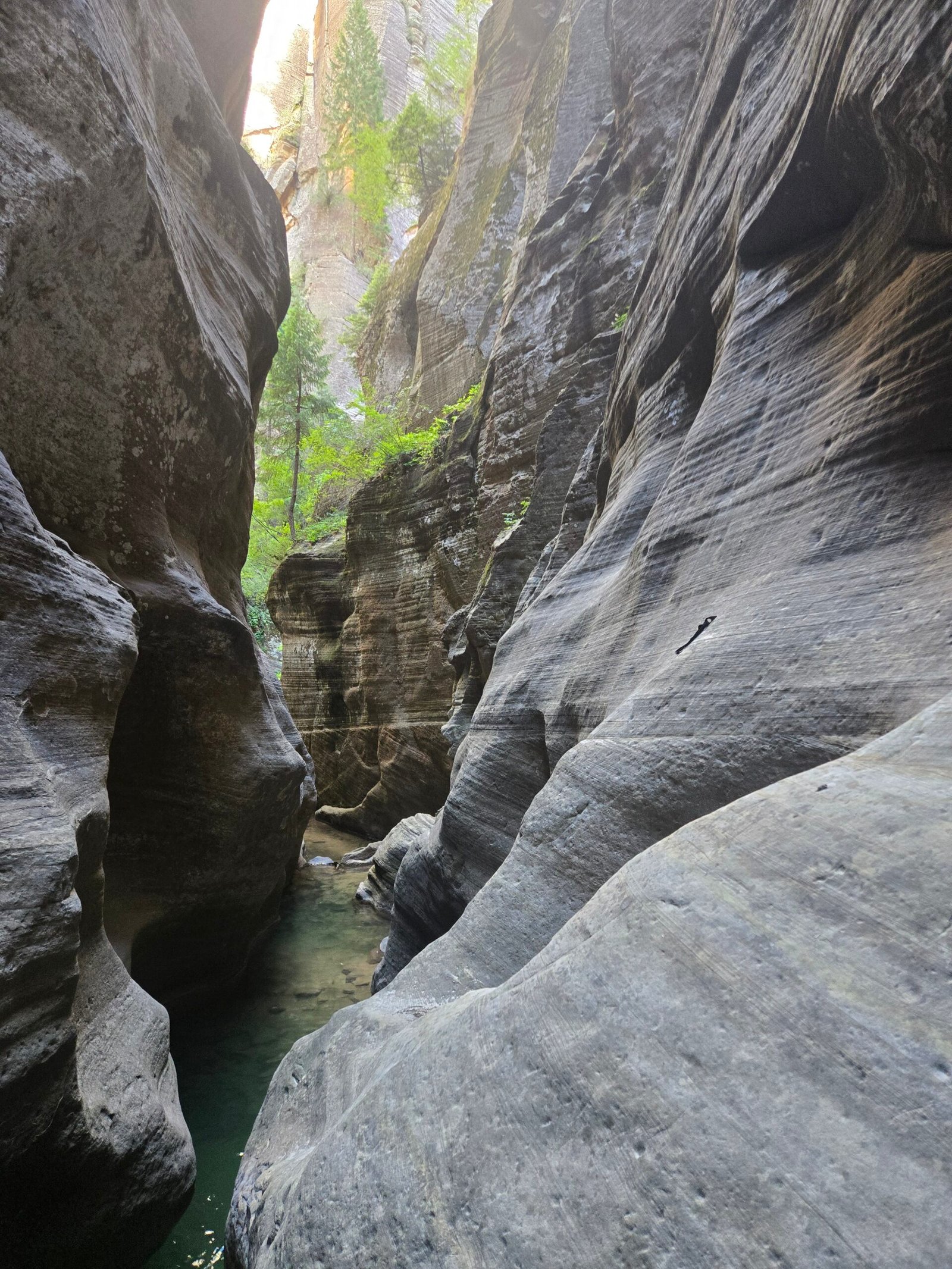
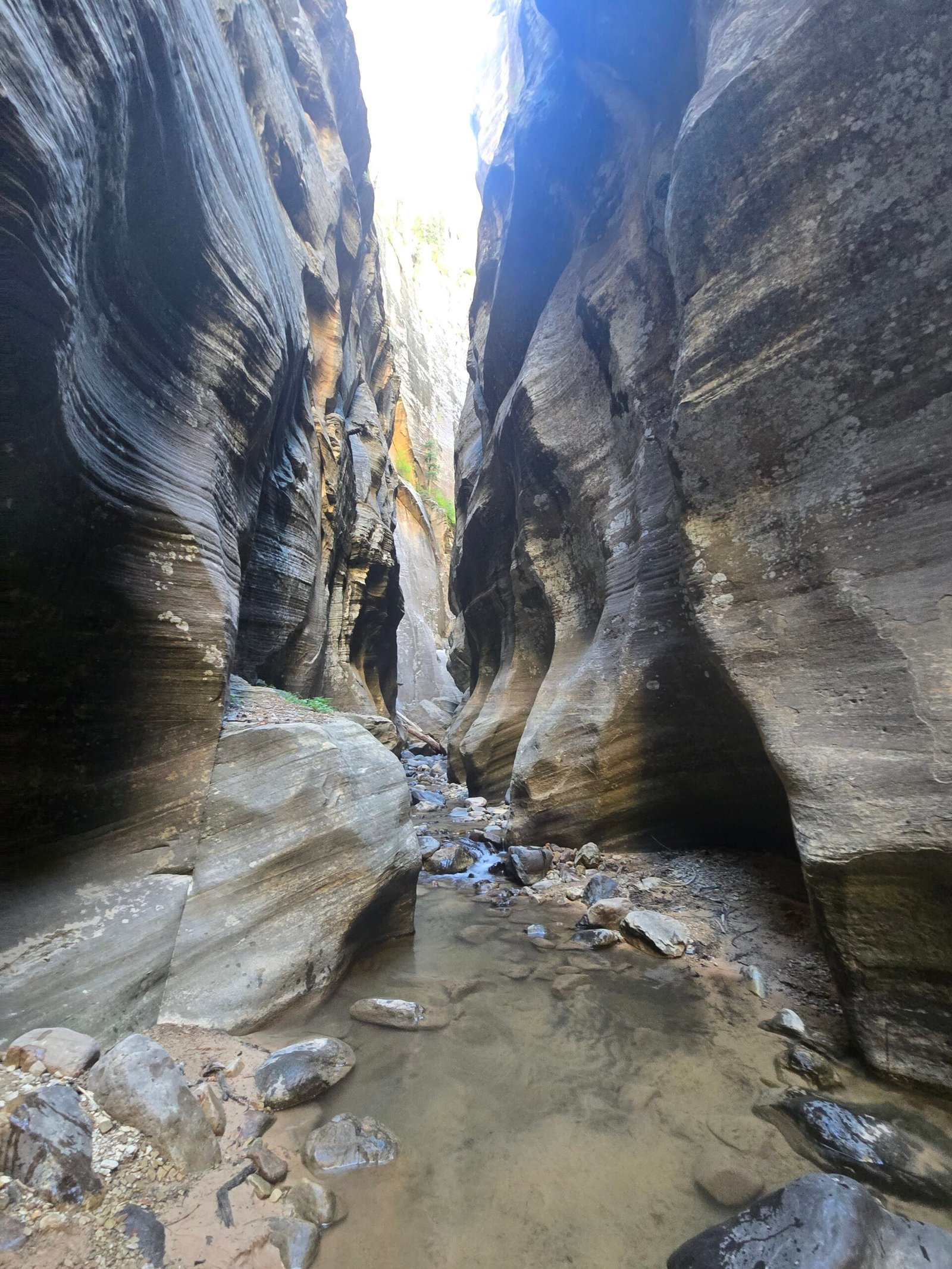
Kolob is a wonderland of breathtaking views, tall canyon walls draped with moss, spectacular narrows, downed logs, gently flowing water and very cold pools. Every chamber is a sculpted masterpiece of filtered light coming from above. With 11 rappels and several other obstacles, the canyon is engaging and technical. There are two long rappels that are over 150 feet, both spectacular. Many rappels in this canyon bring you to what feels like the edge of the world with magnificent views of the surrounding canyon walls but no view of the bottom from the anchor station. With the sound of flowing water drowning out human voices, communication with people 150 feet below is almost impossible, so whistle signals become very important just like in any swift water canyon.
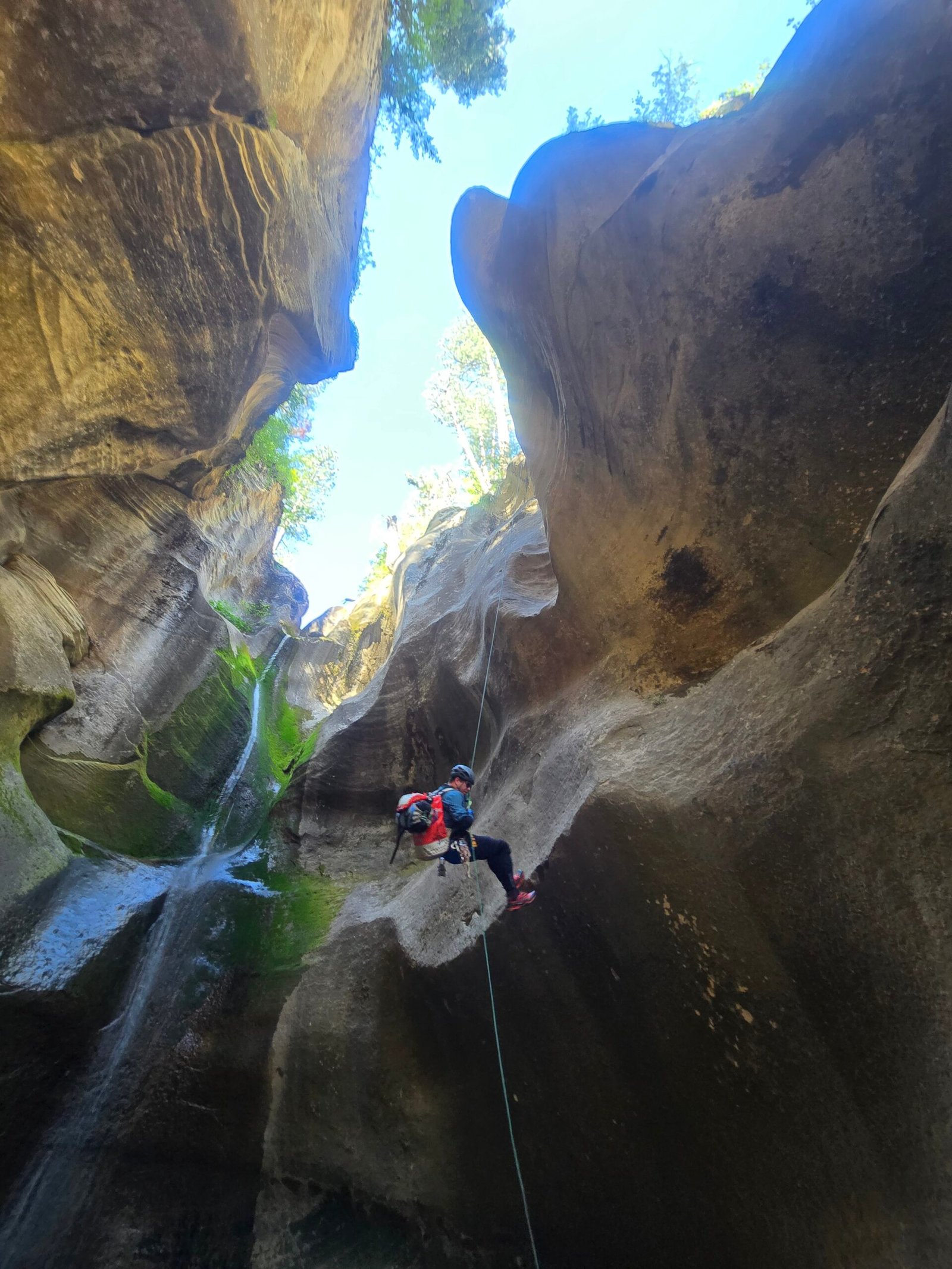
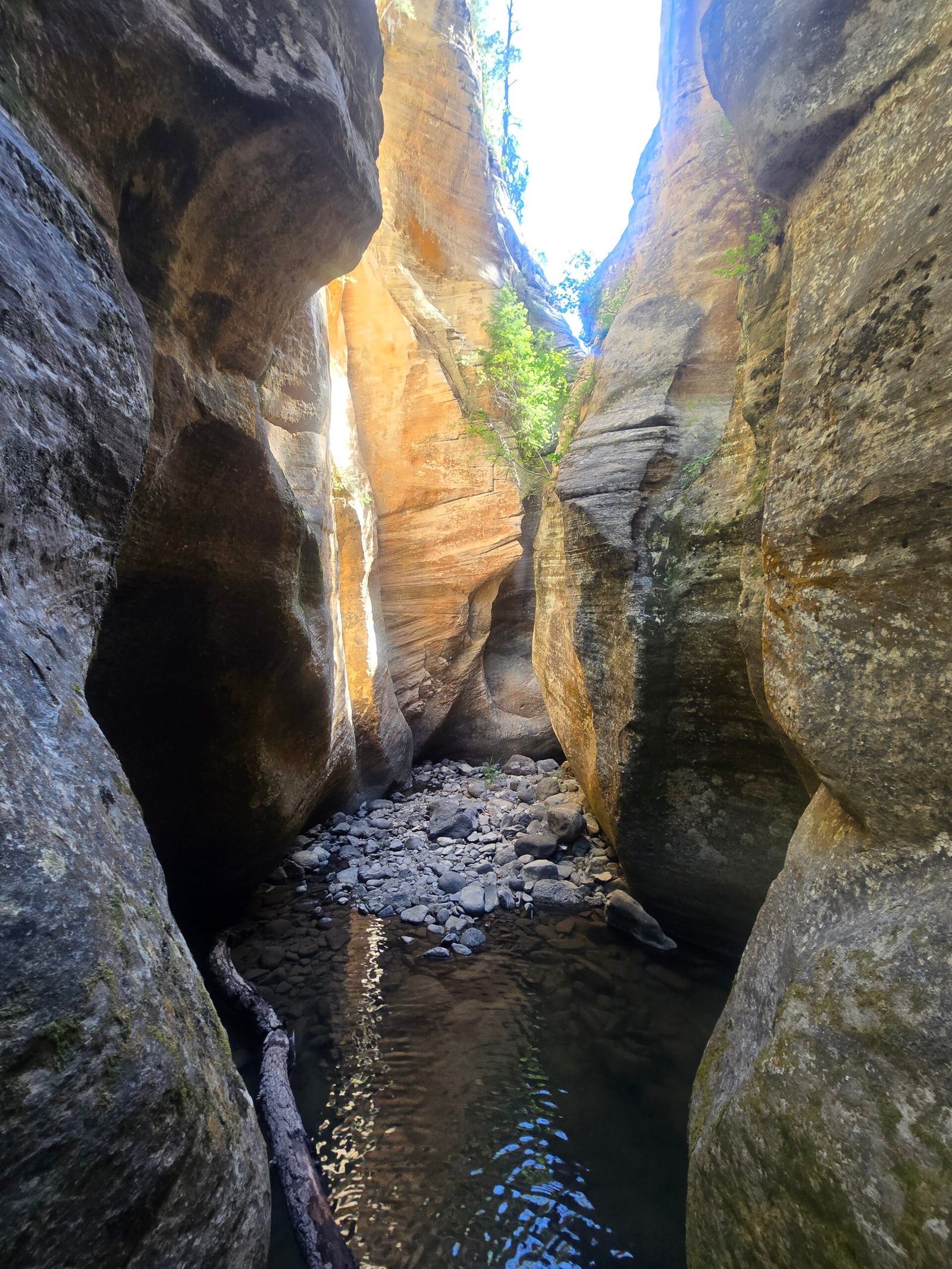
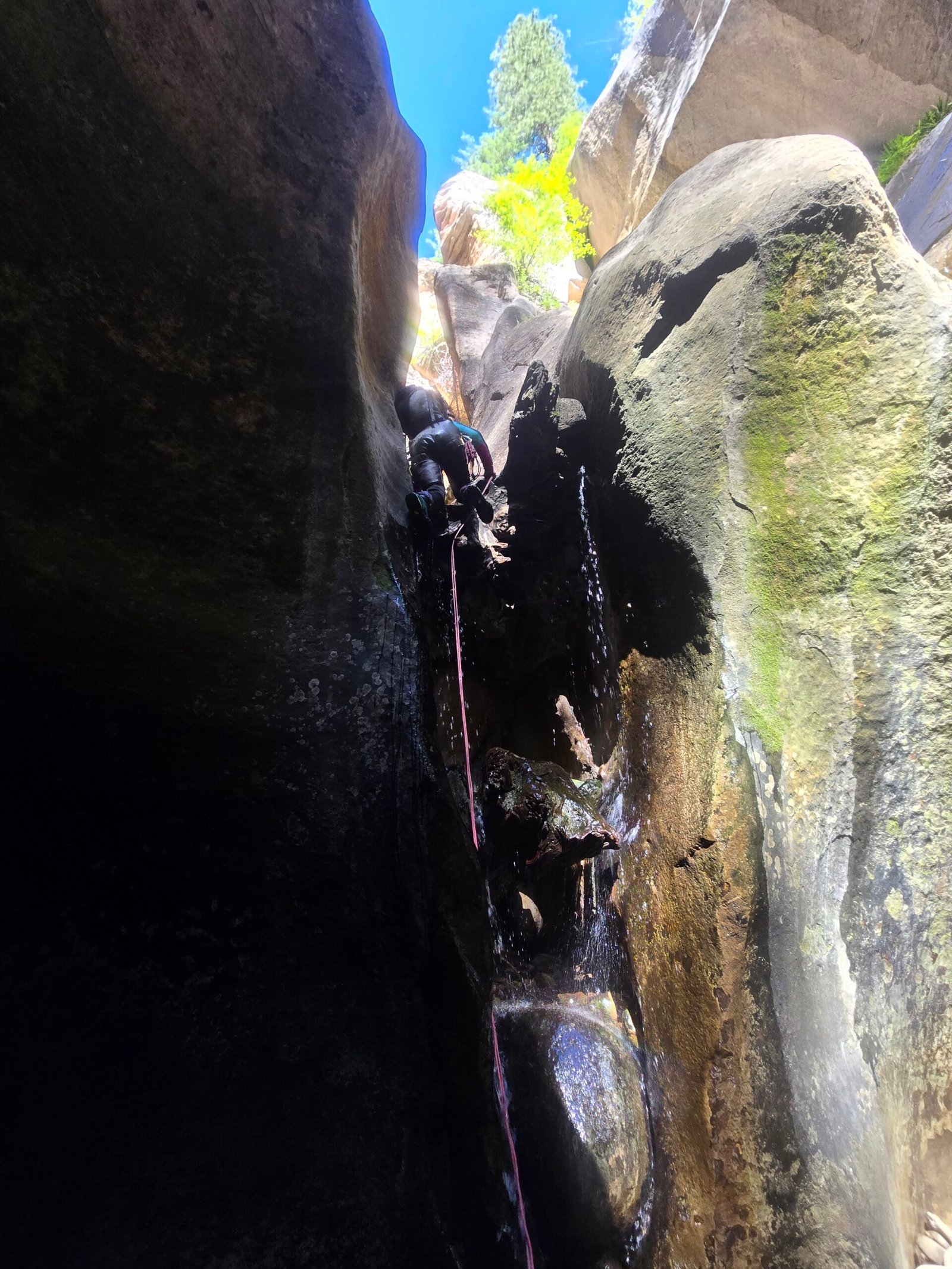
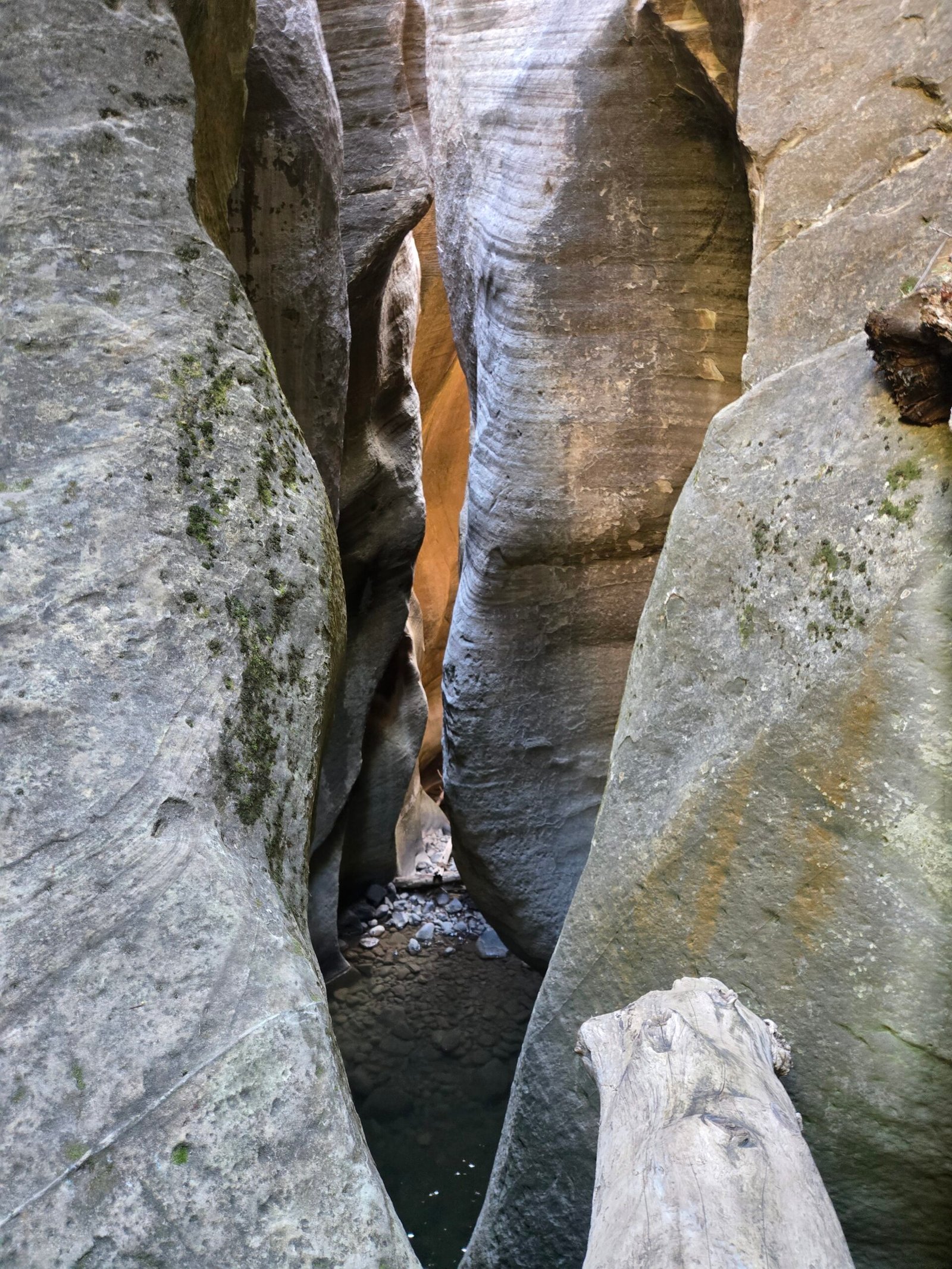
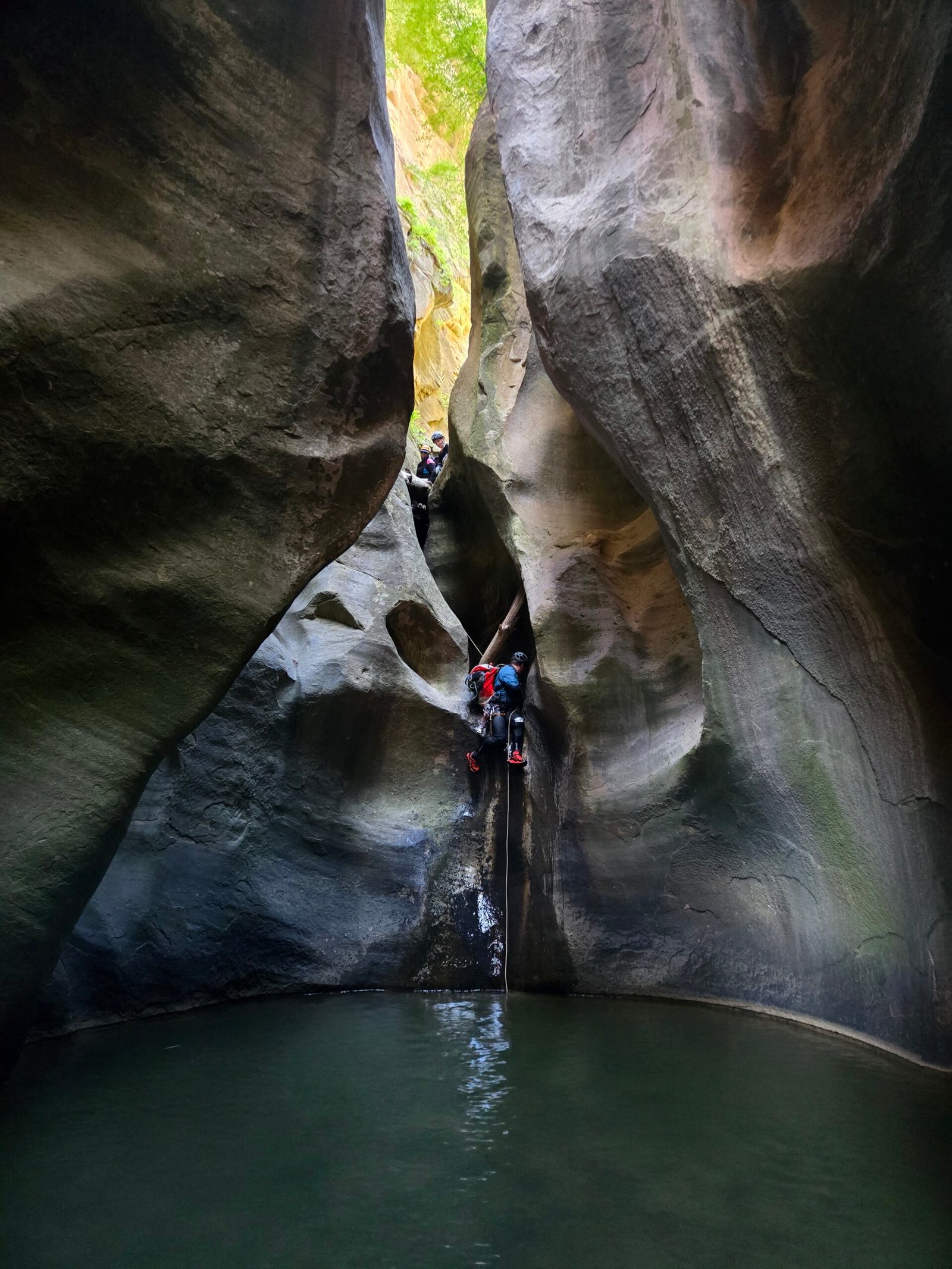
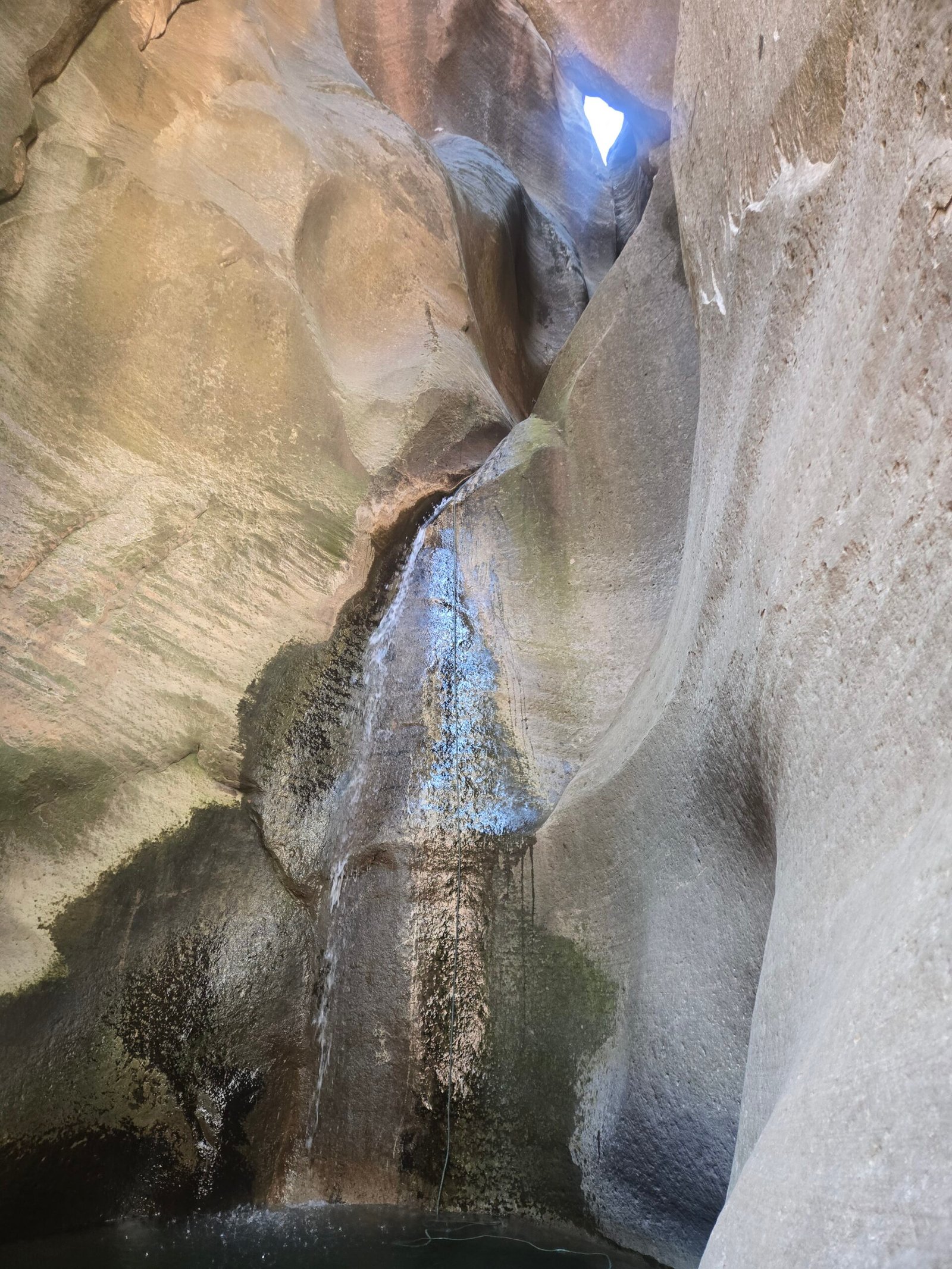
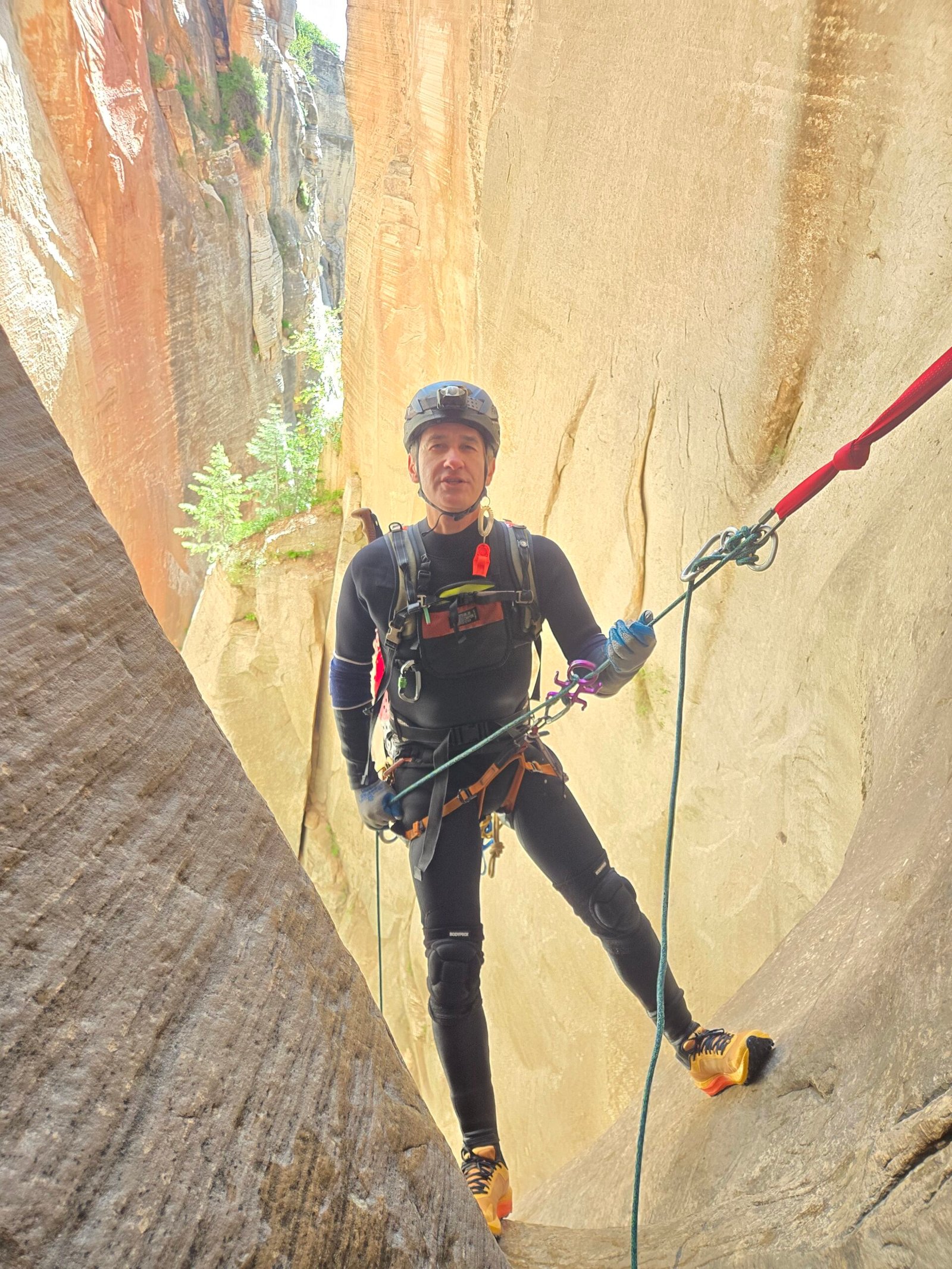
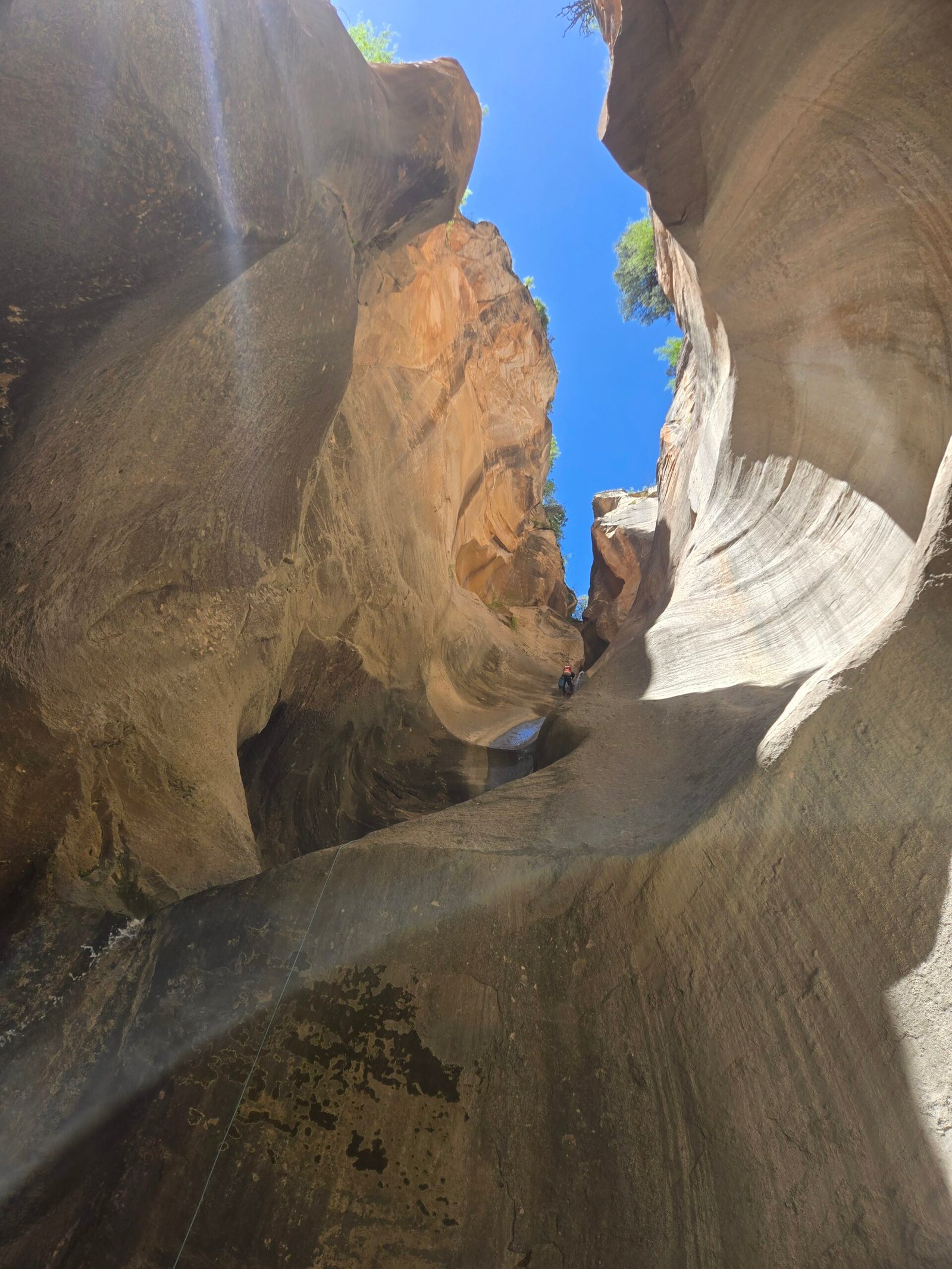
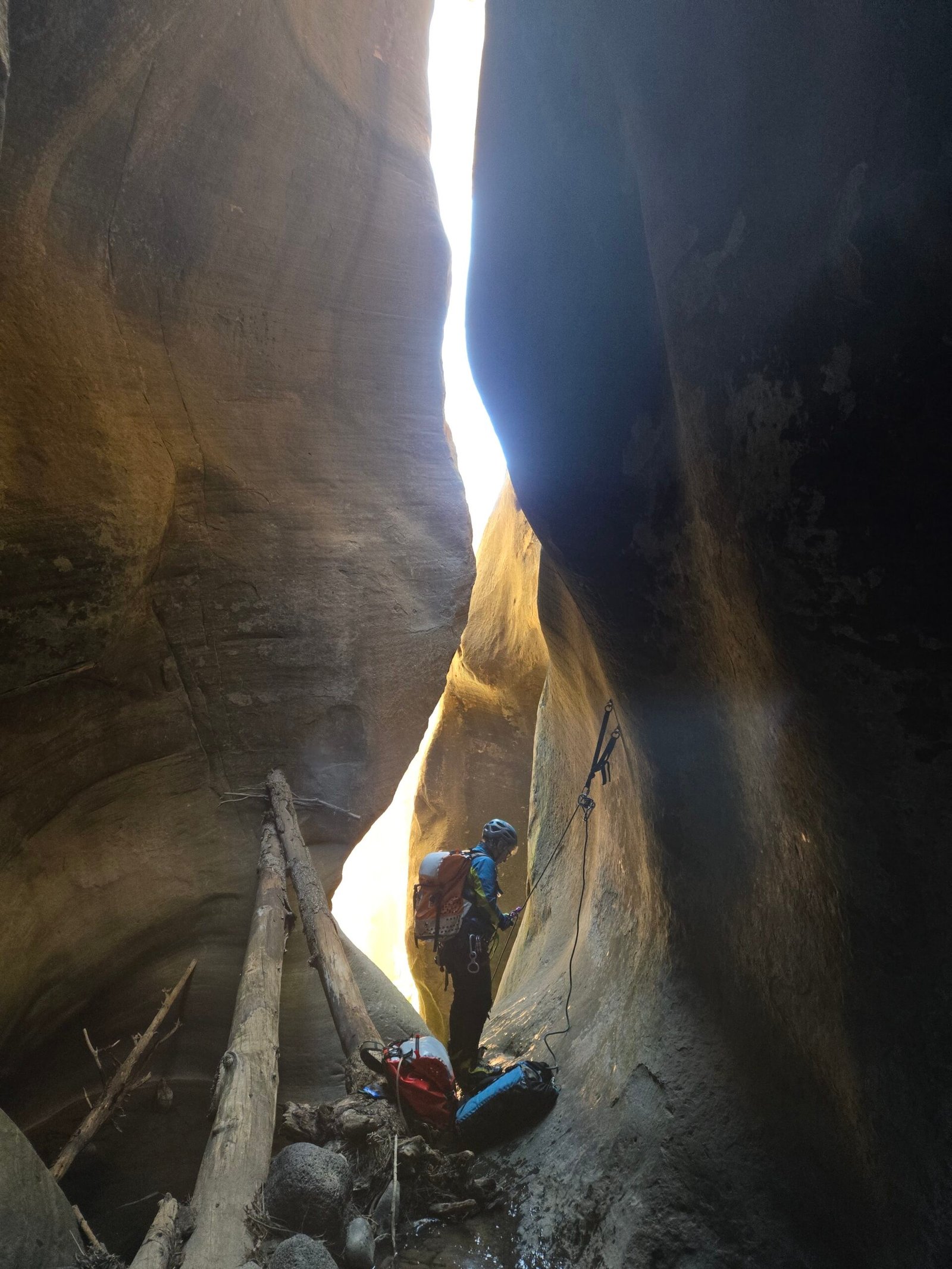
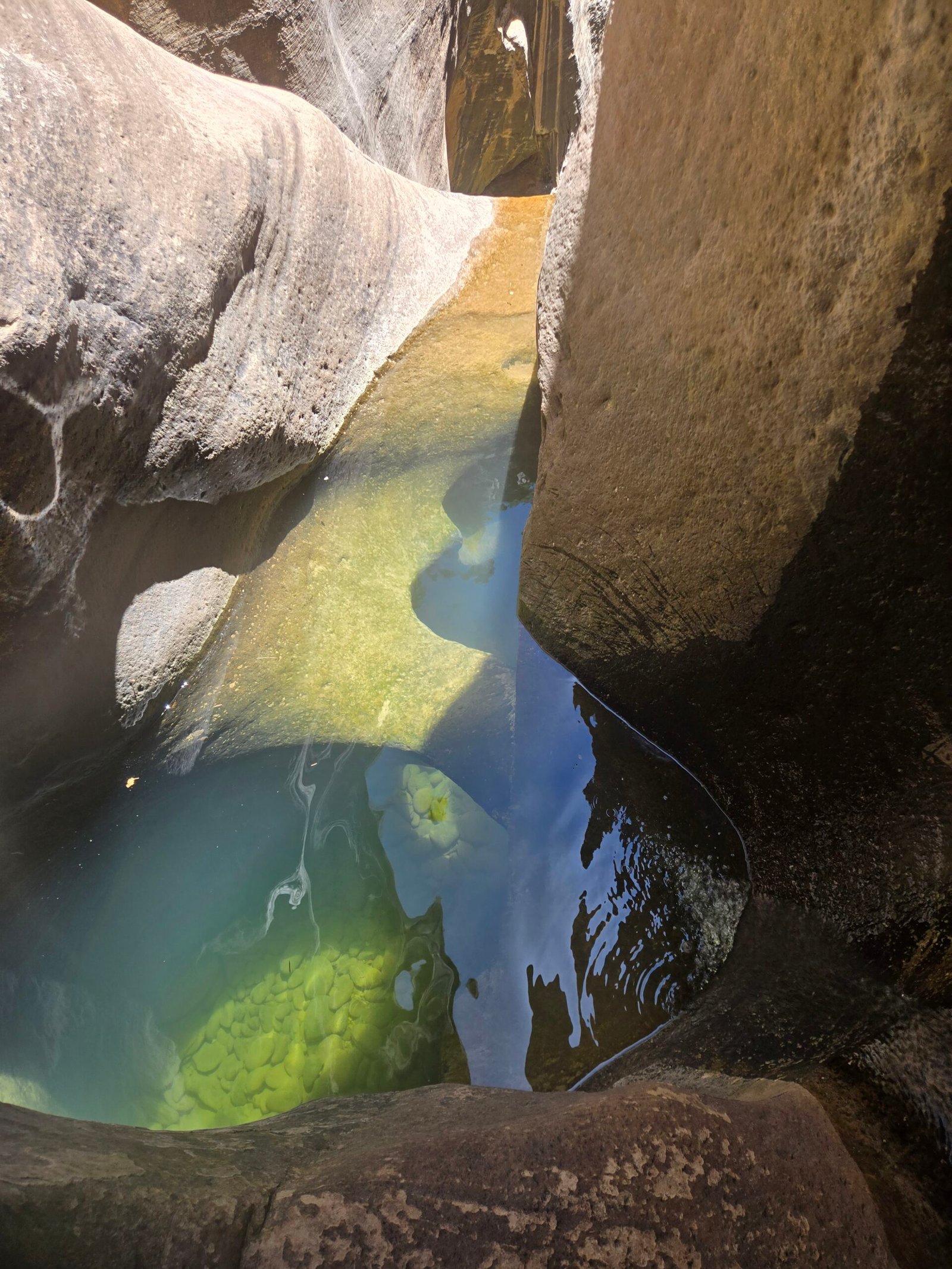
Even with little flow, Kolob’s technical section is extremely aquatic: deep green pools make every rappel a swim, sometimes with a minor pothole escape at the end. Our friend Carol, who was accompanying us, told tales of years ago when she and her friends would set up fixed ropes at each rappel, and then re-ascend all the rappels to get back up. With dry conditions, they’d be back in camp in time for dinner. As we were descending the canyon and encountering all the obstacles, swimming and beached-whaling out of potholes, we were trying to imagine how it would be possible to get back up the slippery logs and walls. Conditions make the canyon.
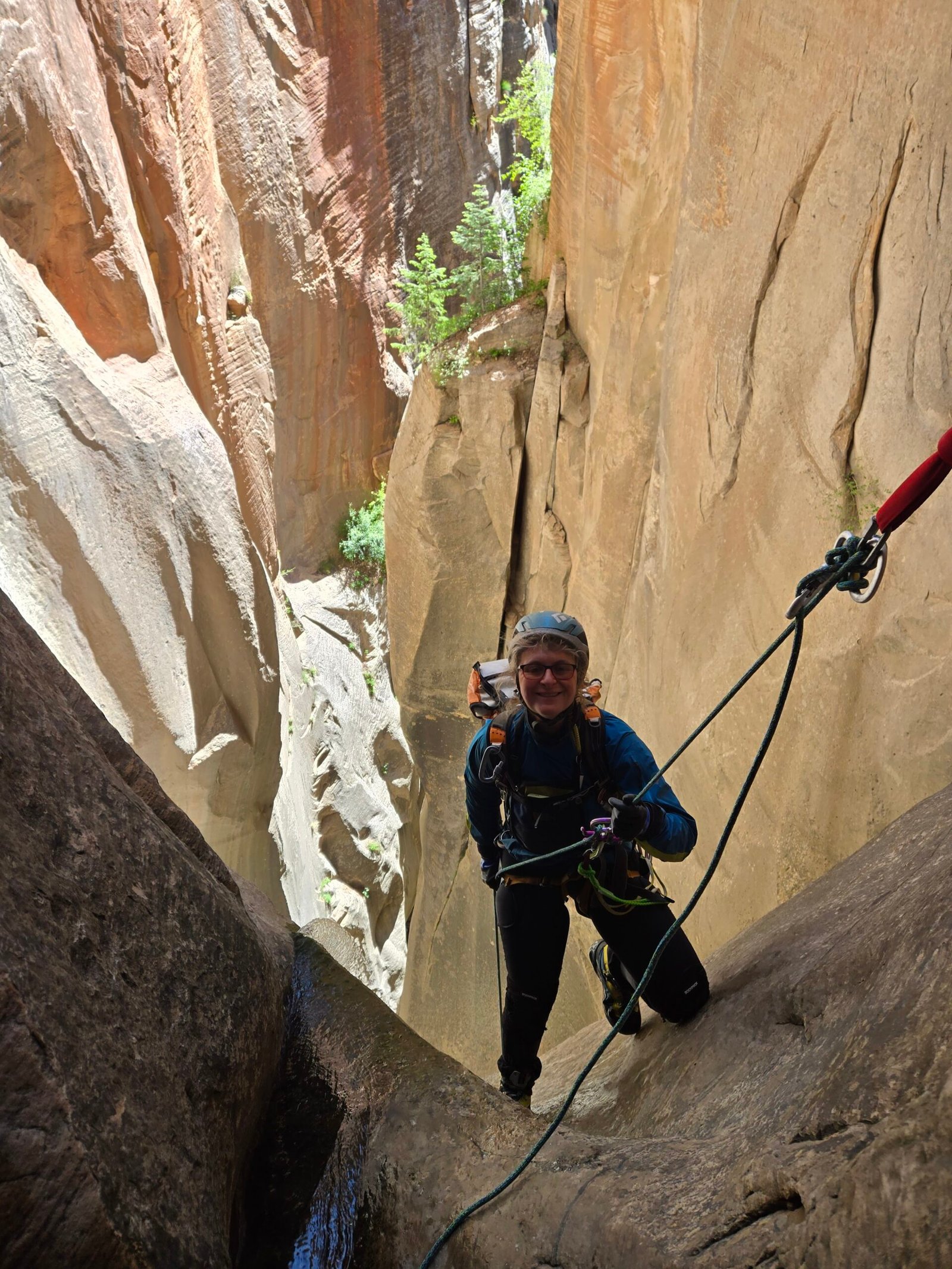
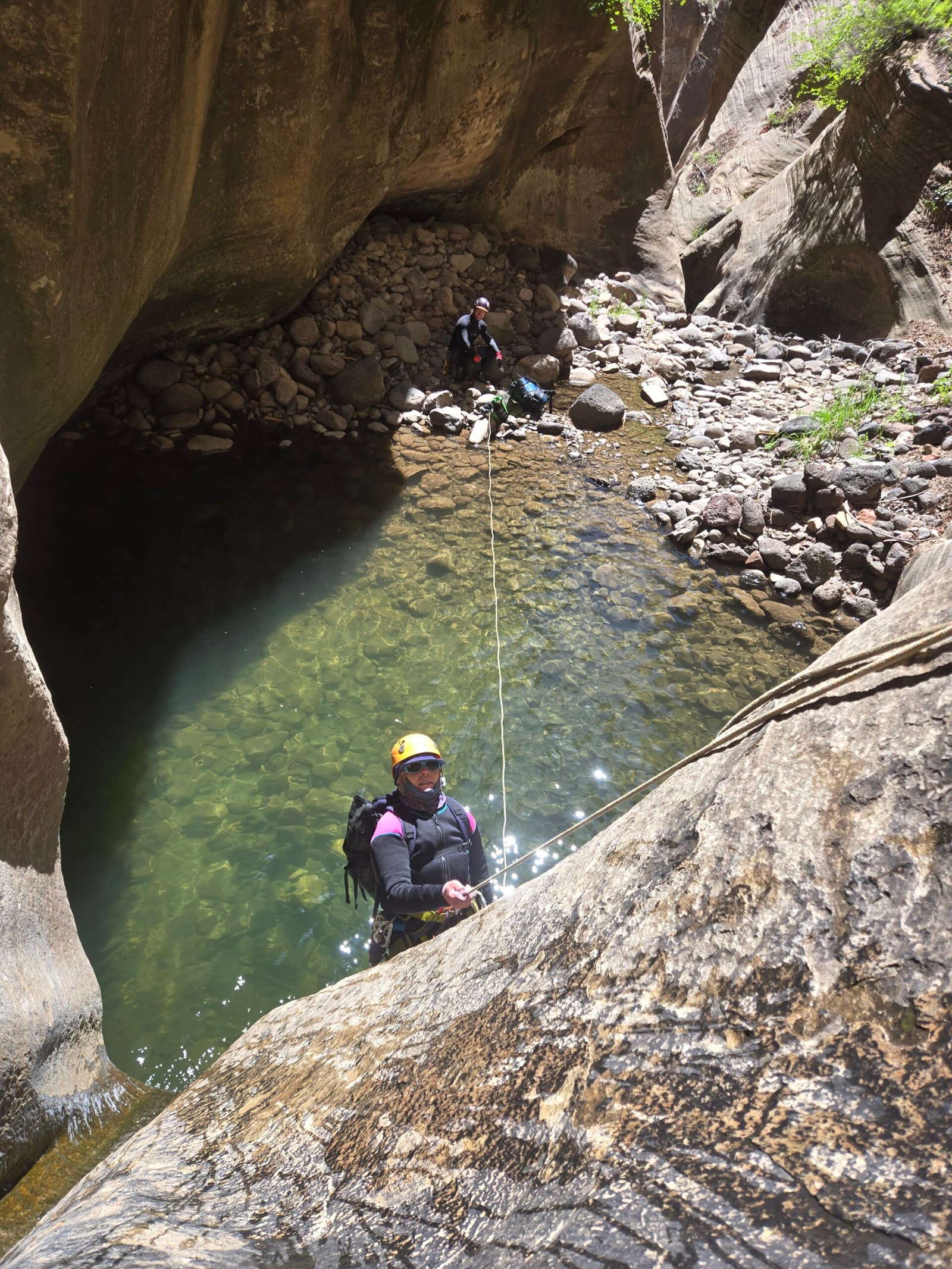
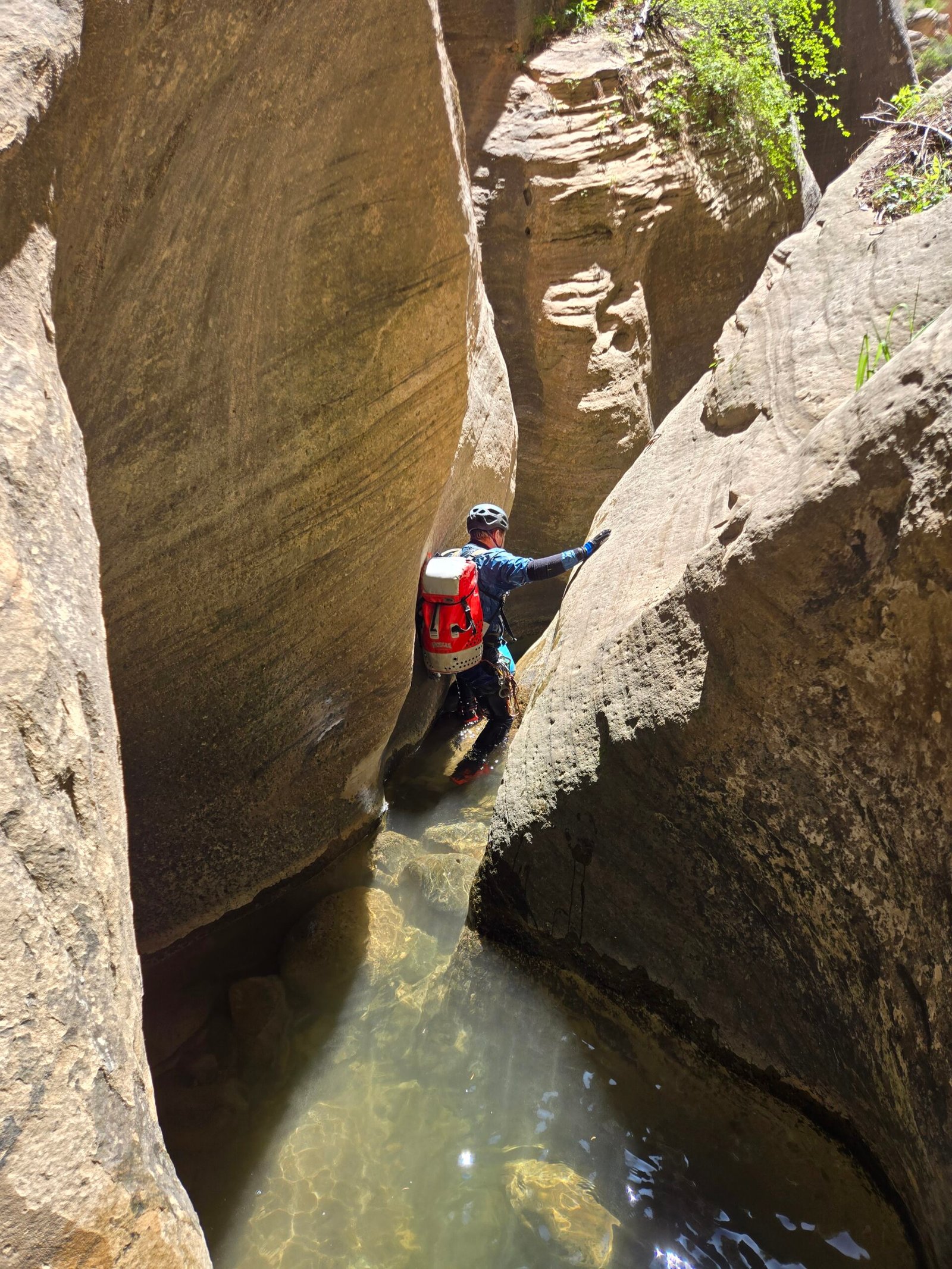
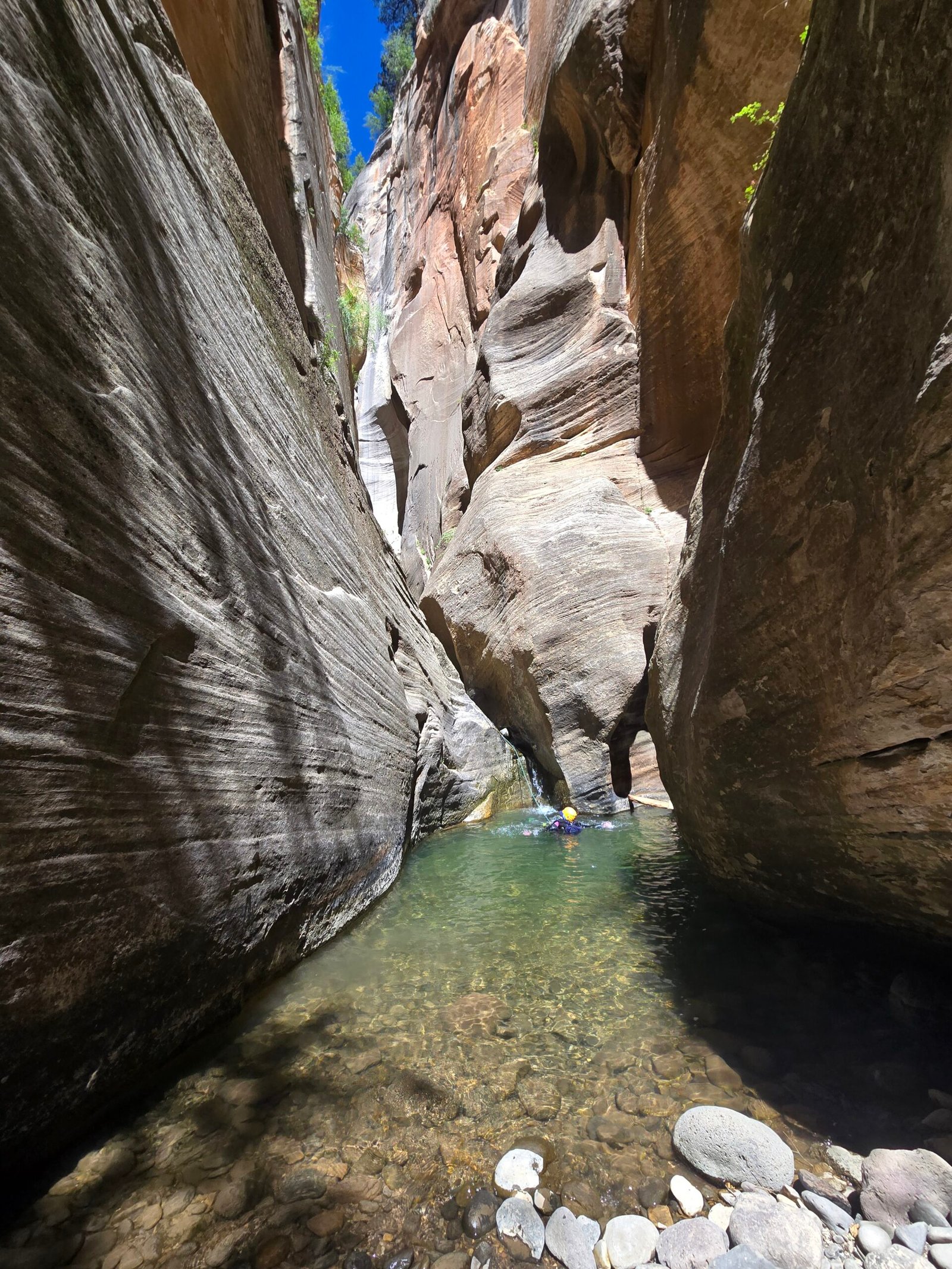
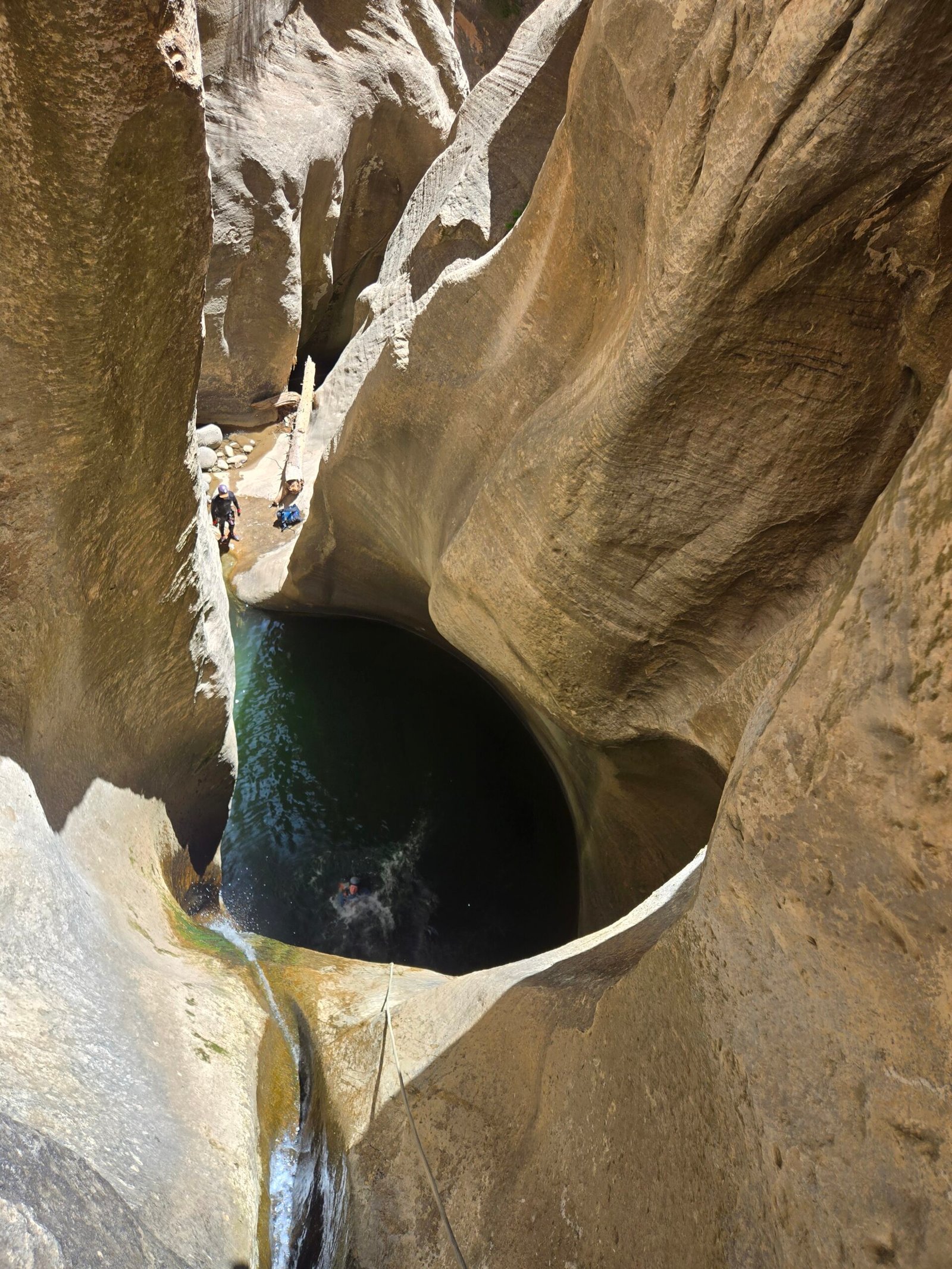
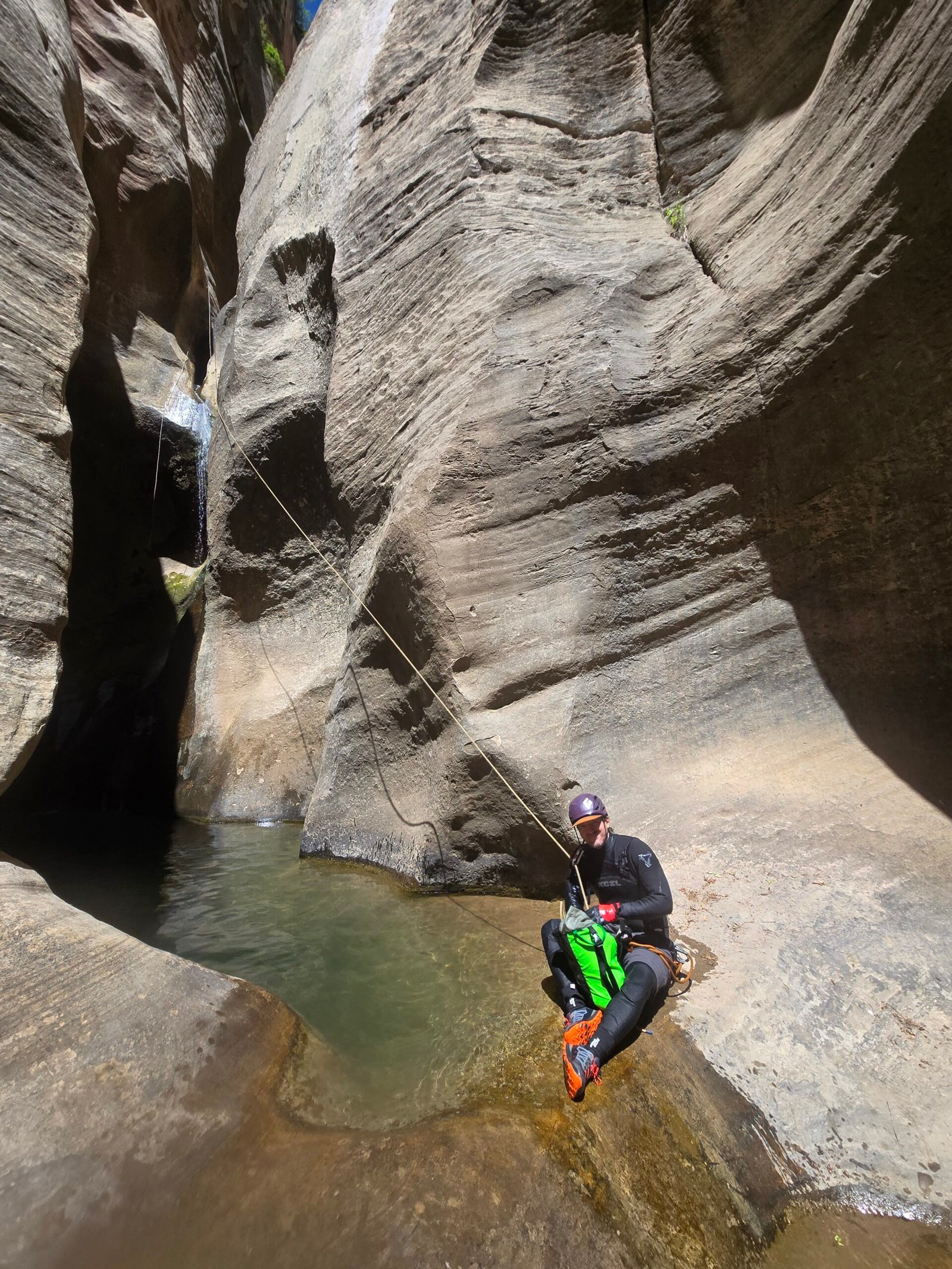
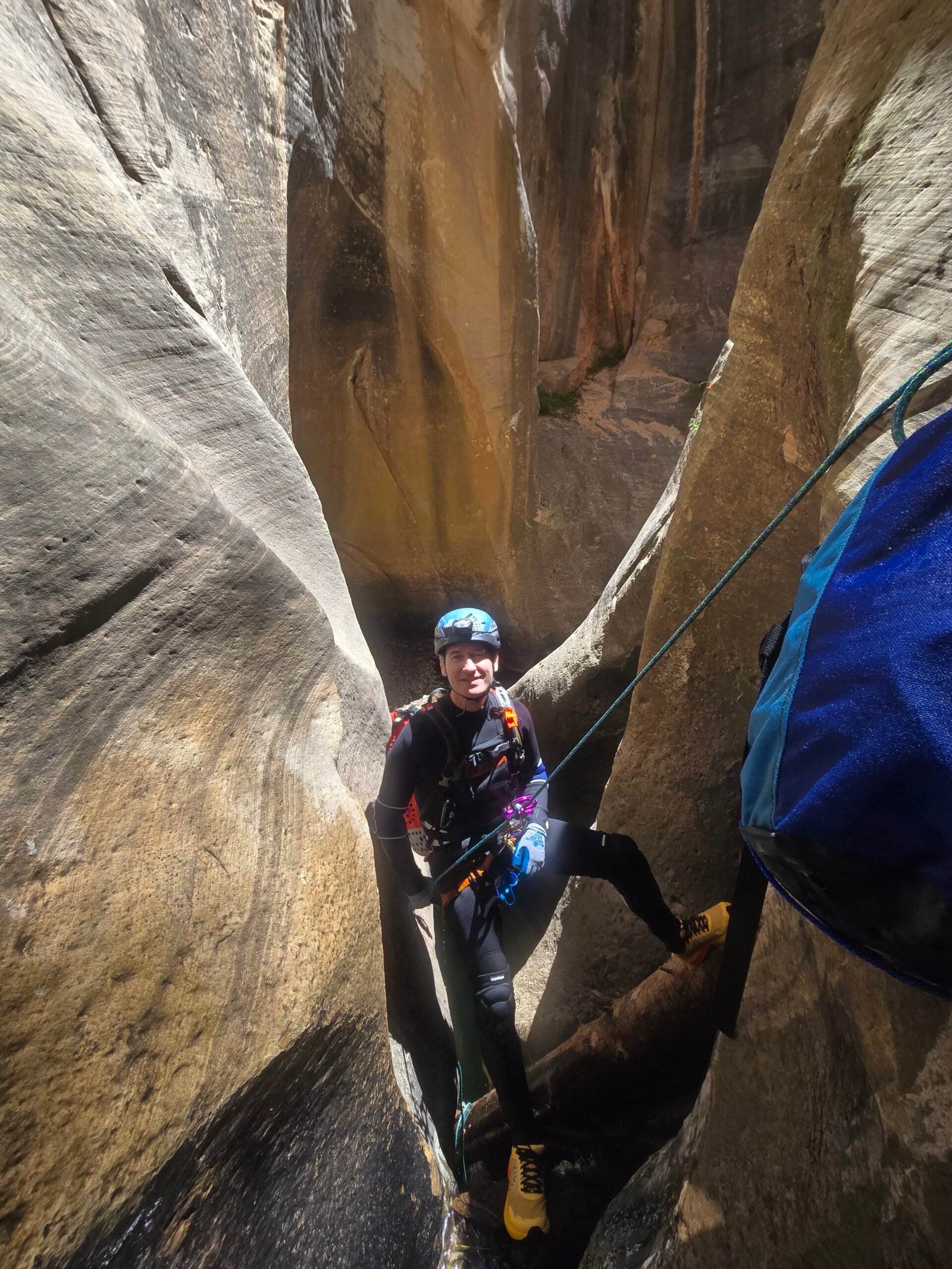
After several hours of being immersed in cold water, everyone was fairly chilly but the pools just kept coming. We started encountering small patches of sunlight to warm ourselves up briefly. Finally, we reached the last sequence. The downclimb to the last rappel station is very unique. There are several small potholes to traverse, with the top of the rappel station sitting on top of a completely submerged arch directly below. I had never seen anything like it. The last rappel was spectacular, 165 feet down a sculpted flute into yet another shady pool. From there, the exit to the canyon was a short swim away.
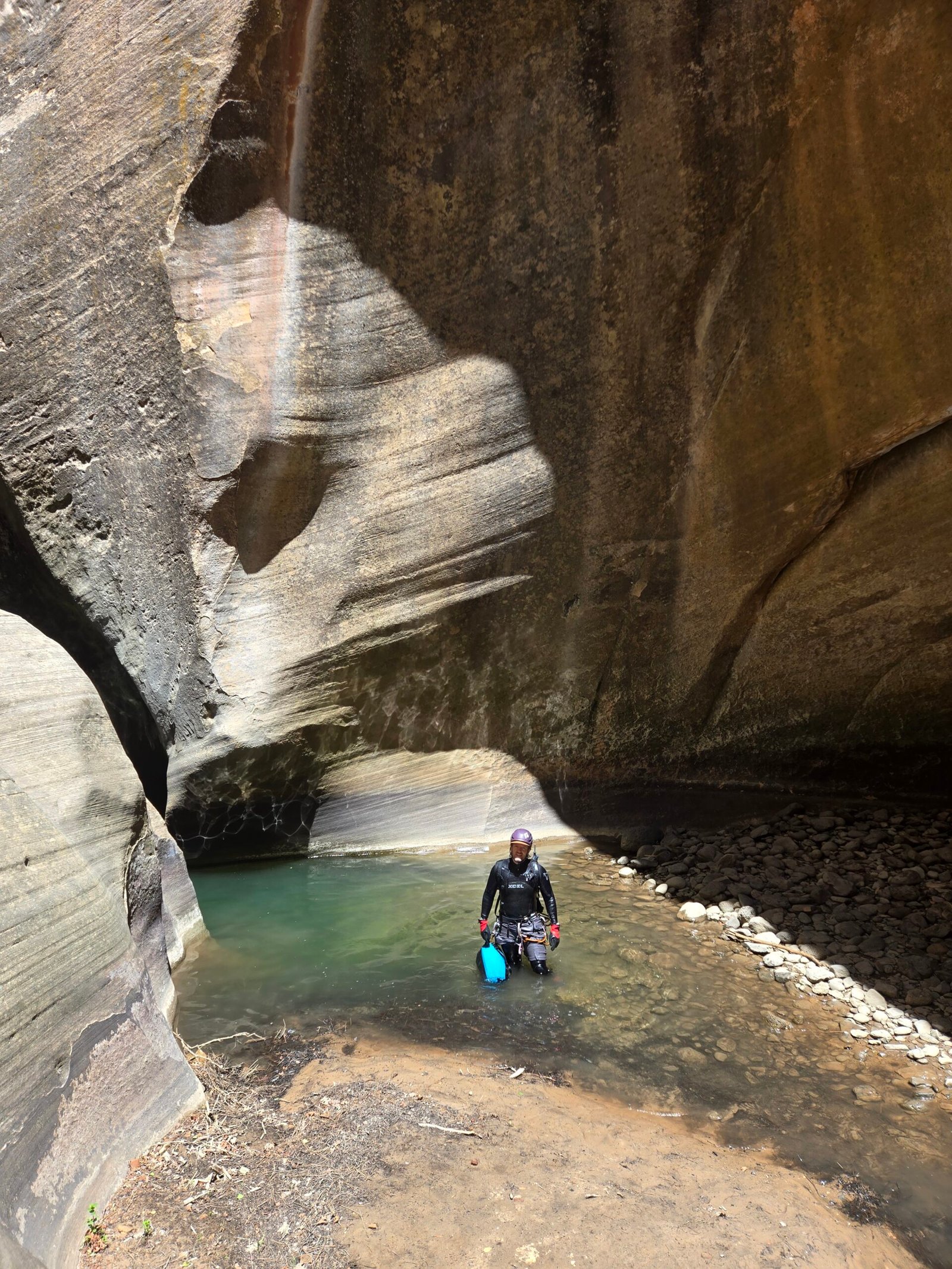
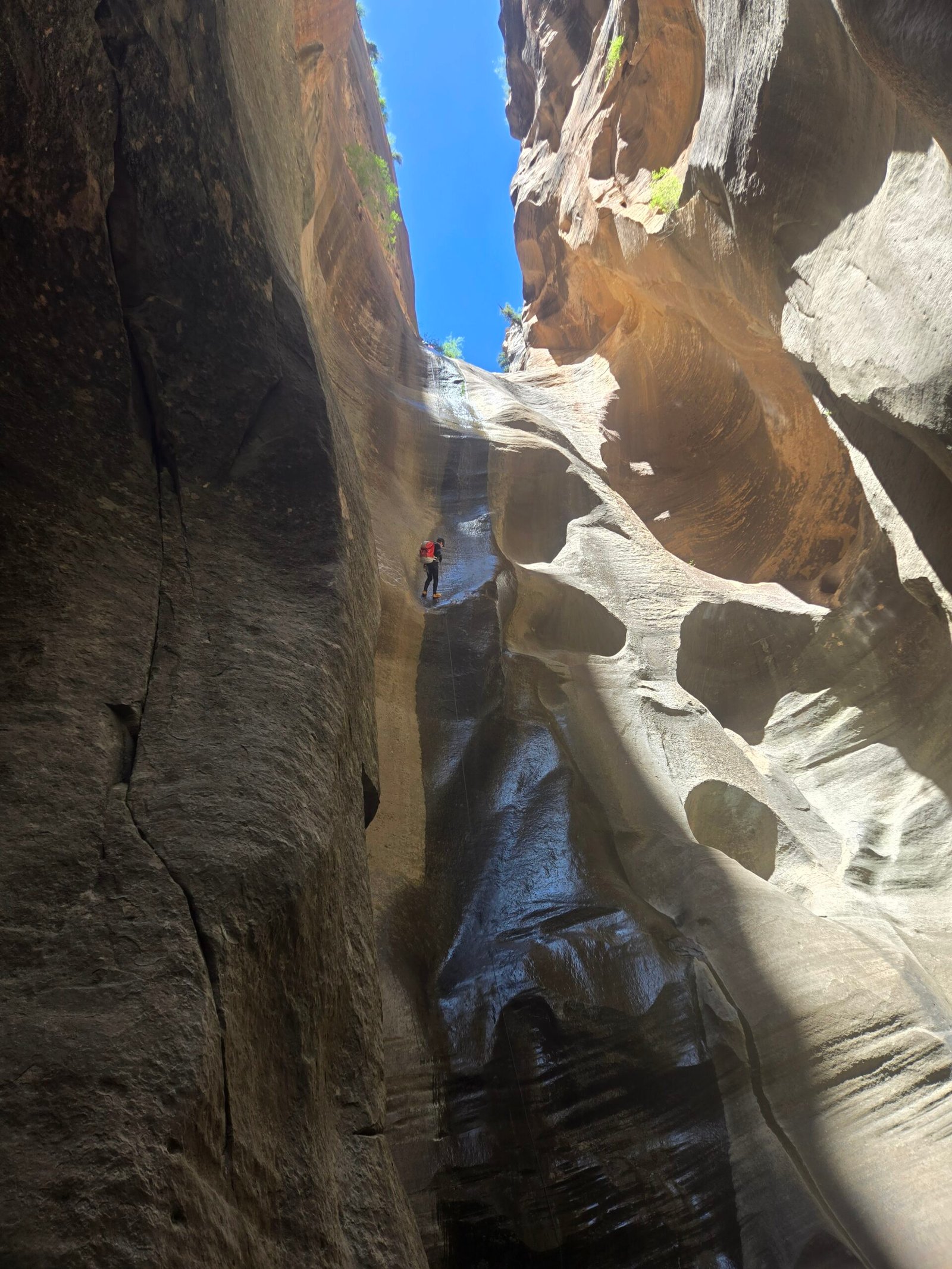
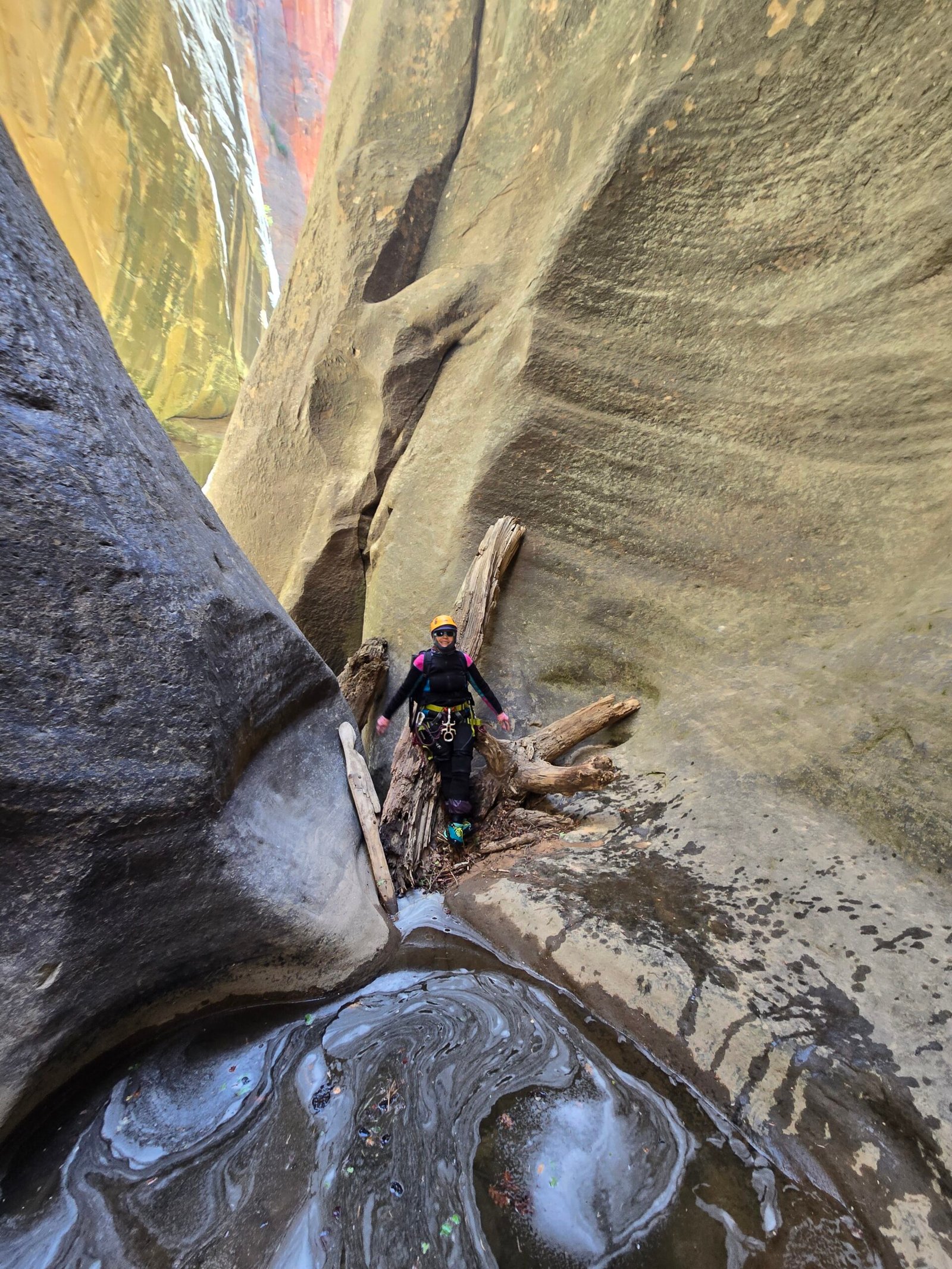
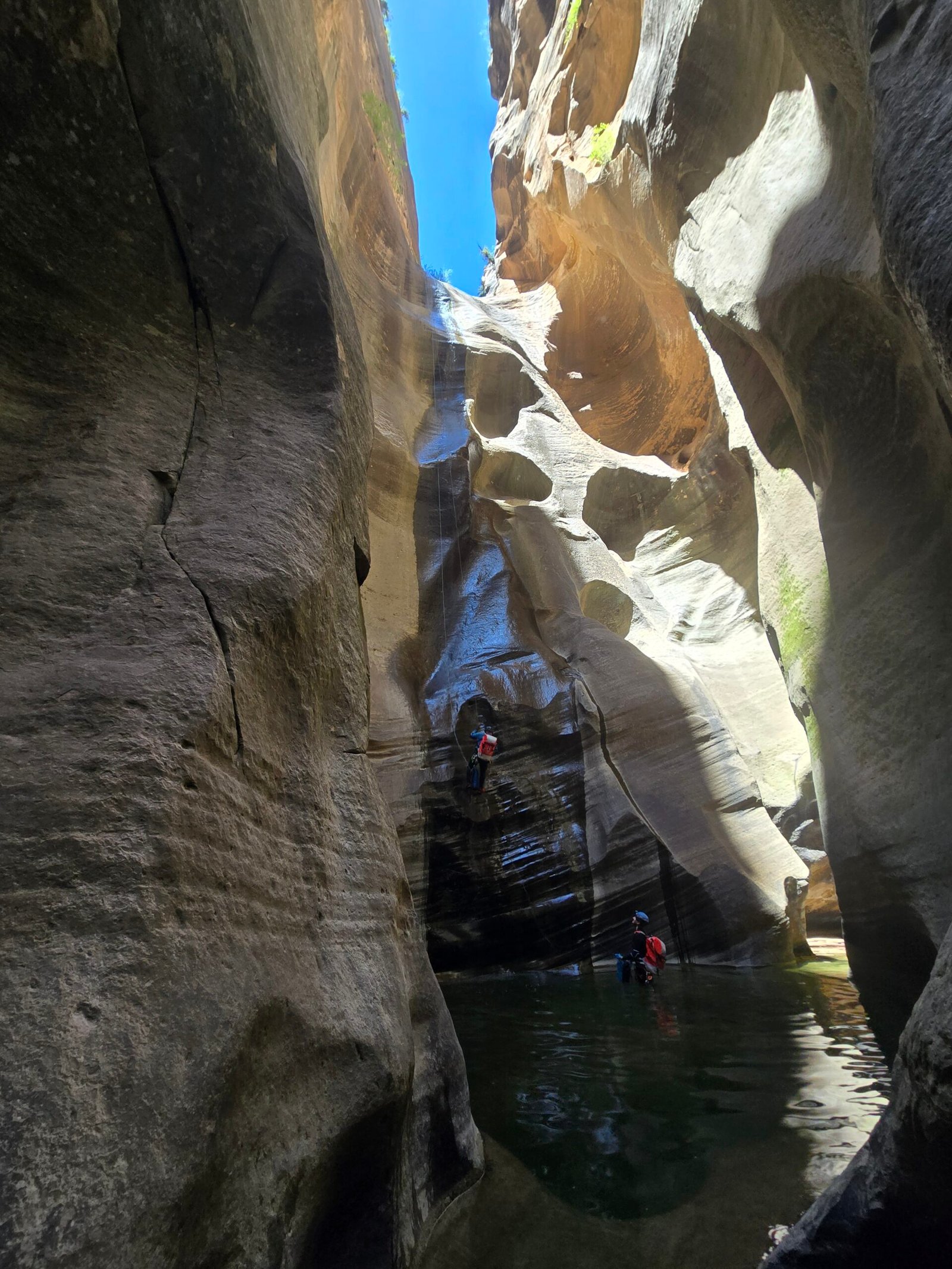
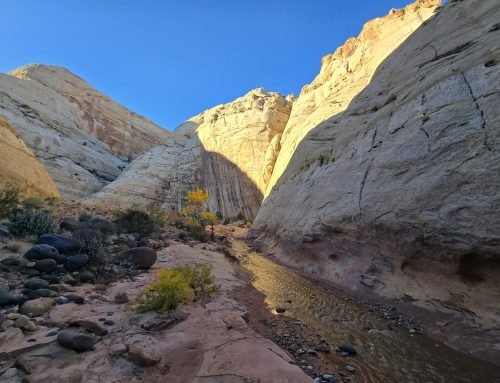
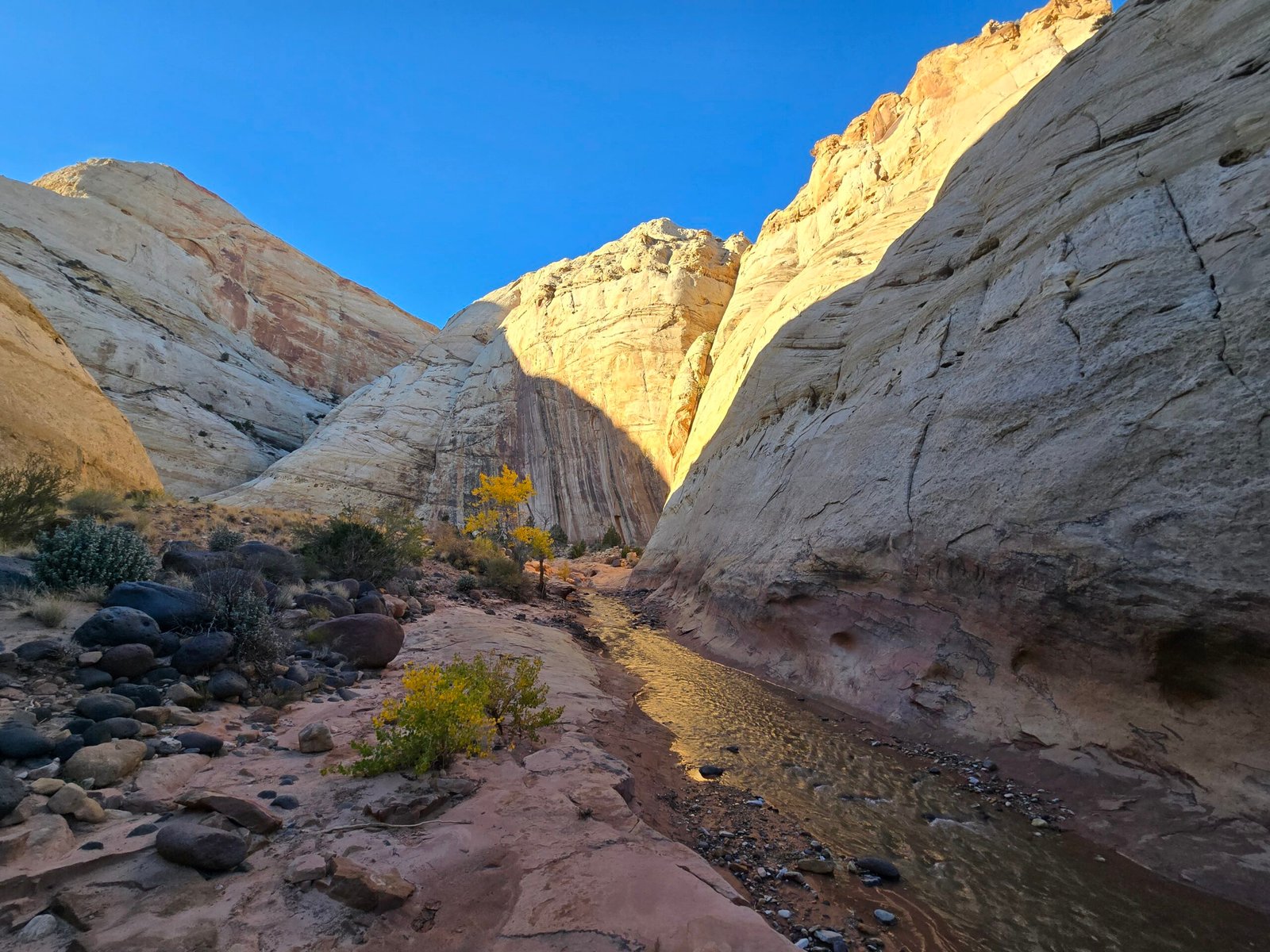
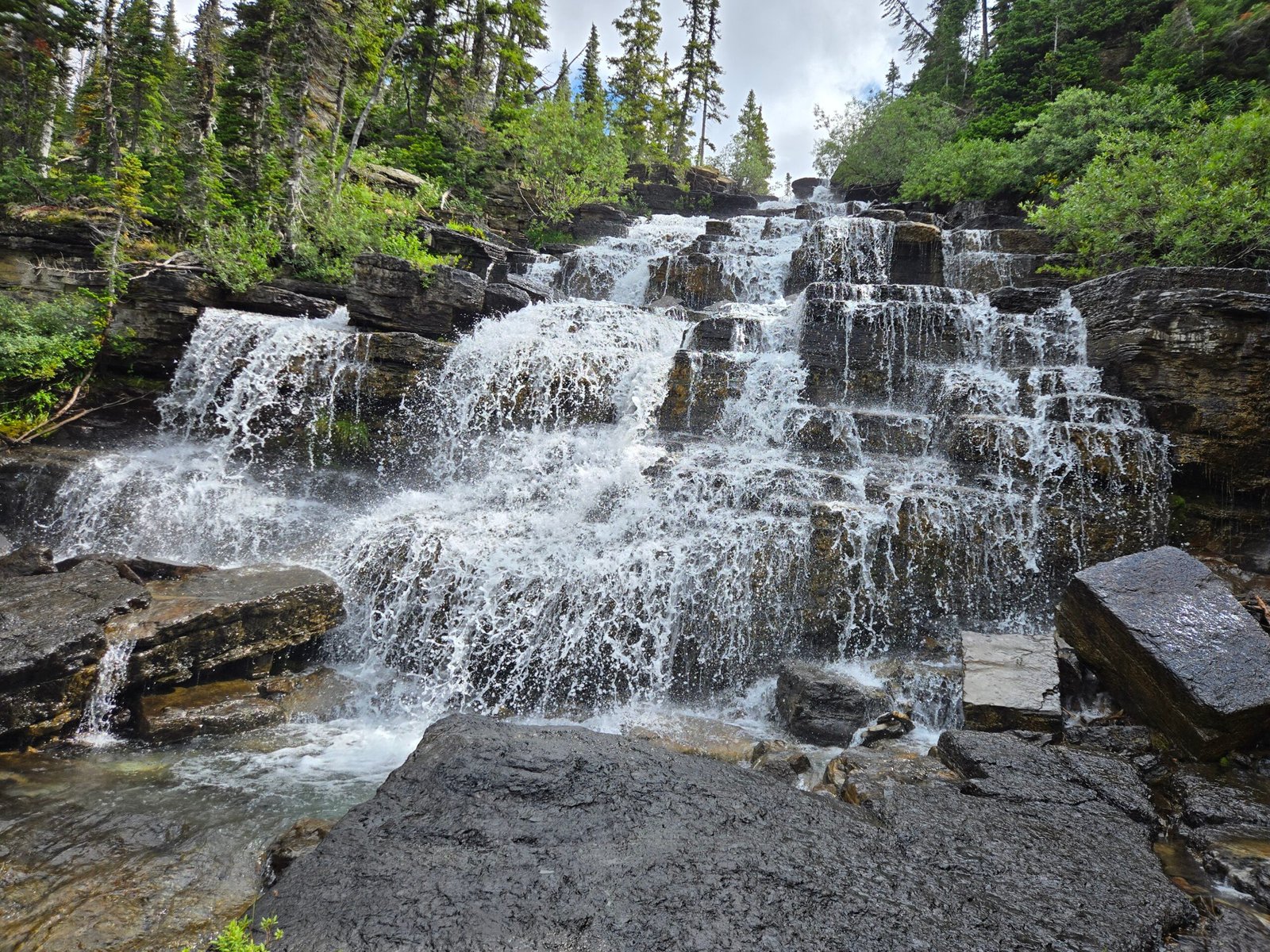
We emerged into the sunlight before 1pm, cold and hungry. Lush vegetation along a watercourse greeted us. We ate lunch, warmed up and discussed strategies for the remainder of our very long day. Recent condition reports suggested not taking off our wetsuits at this juncture because more deep pools were in our future. We followed this advice, which could not be further from the truth. It was a very hot day and as it turned out, there was very little water for several hours to come. We were essentially walking and bouldering down an extremely rocky watercourse that was completely dry for quite some distance. Not all was misery: part-way down the canyon, we observed a spectacular 500-foot waterfall coming down one of the canyon walls, something more out of Yosemite than Zion. Eventually, a small respite appeared, in the form of a shallow stream to splash through. Unfortunately, all of us were overheating in our wetsuits as we debated whether to remove them or not. We had to make a couple of stops to strip off layers and then eventually changed into dry clothes.
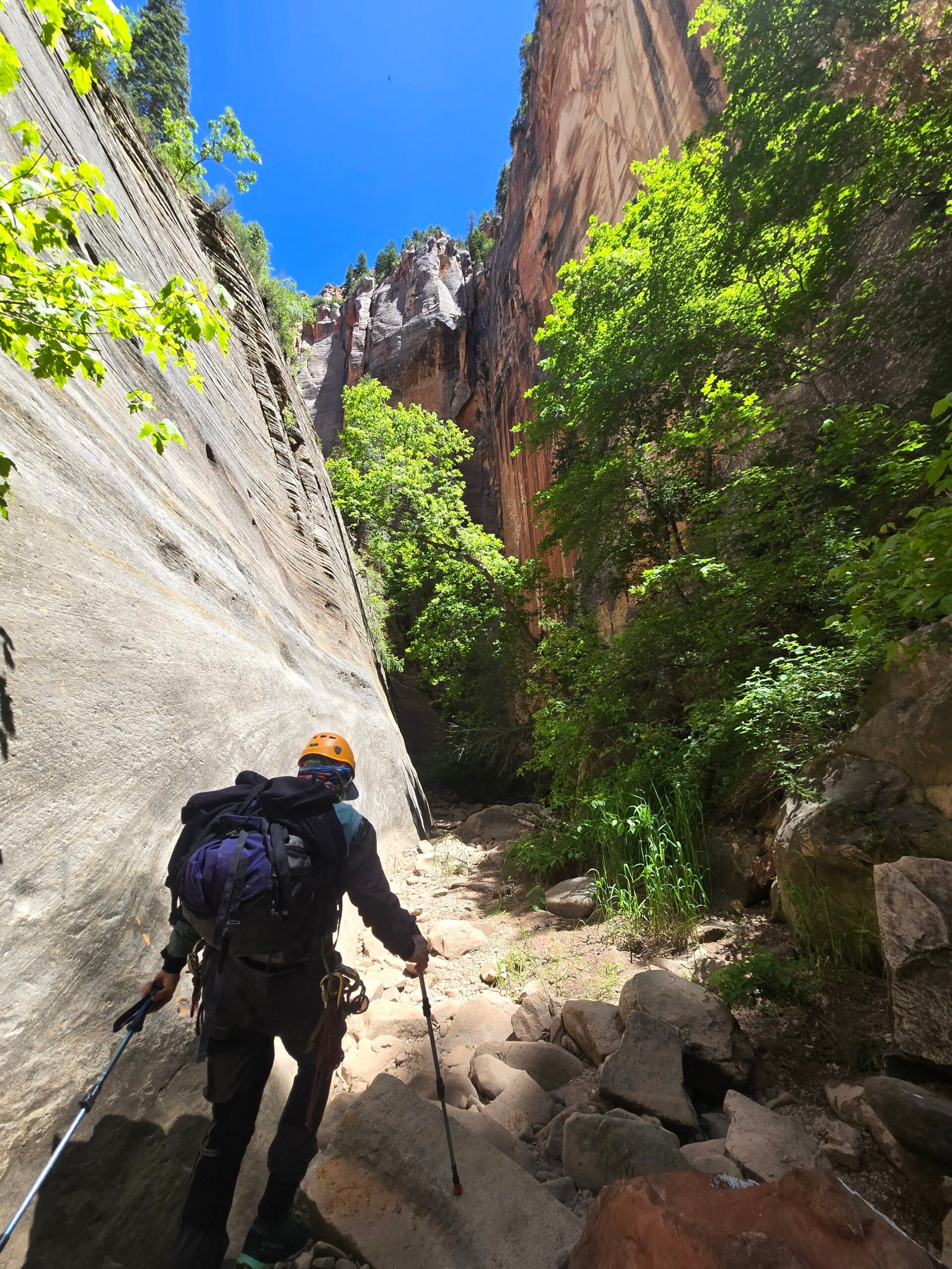
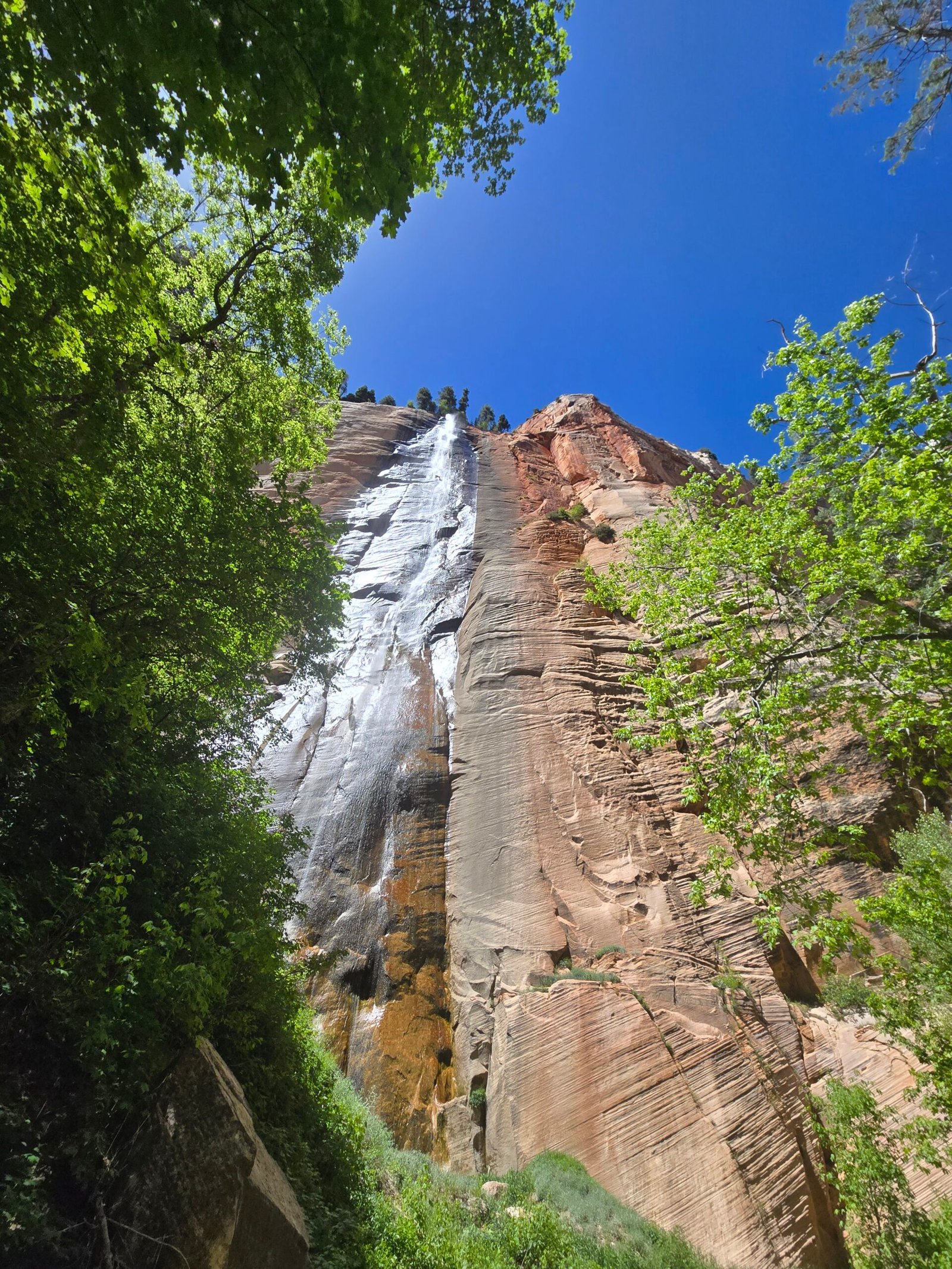
That was when the water appeared. The canyon narrowed and springs began to flow. First ankle deep, then knee deep, then a series of pools. Wetsuits back on again, as we entered a section of deep and beautiful narrows with, as it turned out, increasing amounts of water. This section of Kolob has a few short rappels before the confluence with Oak Creek, as well as many more pools to swim and wade through. With some similarity to Orderville Canyon, if this area were more accessible it would most likely be a very popular place to visit.
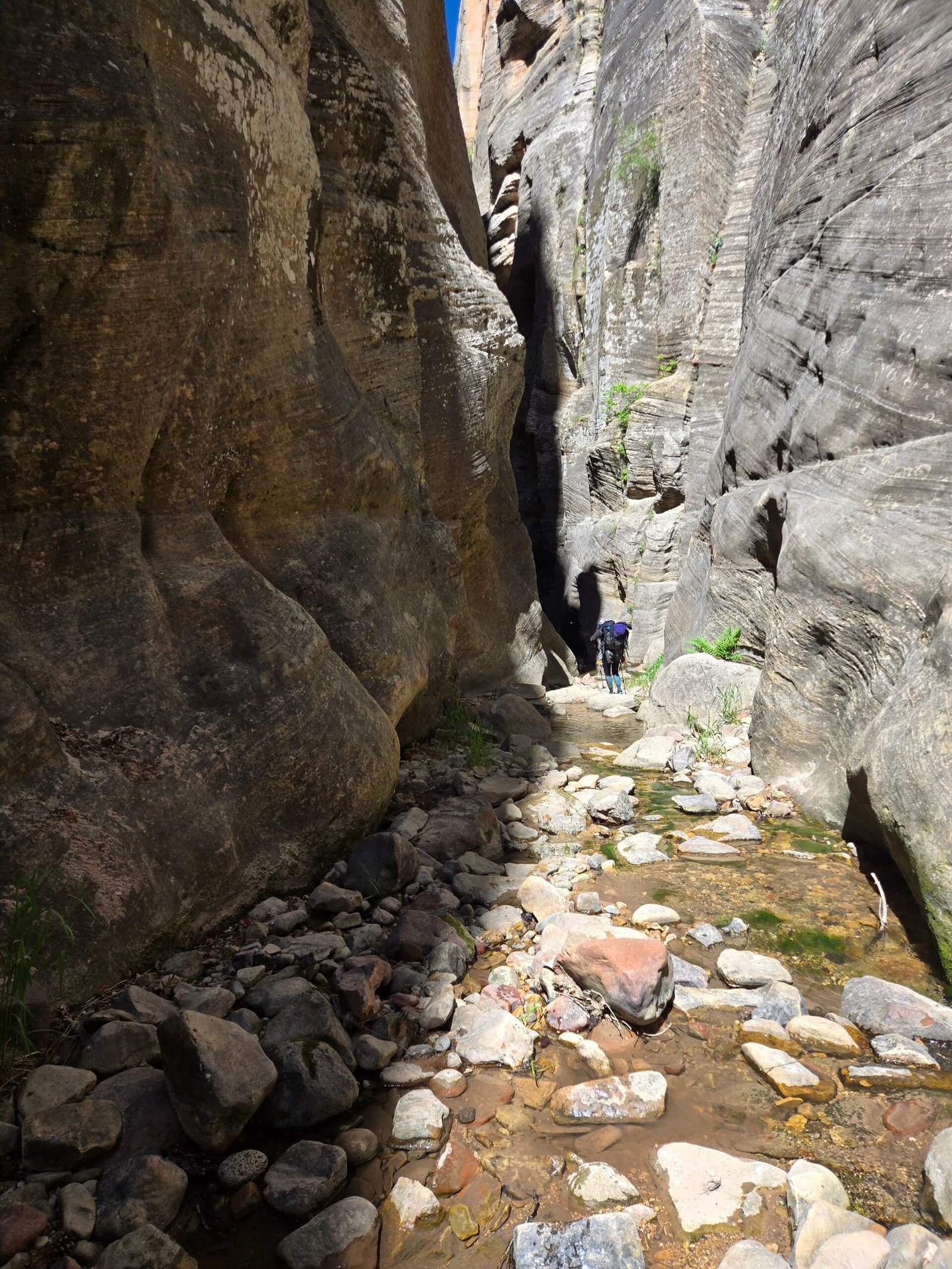
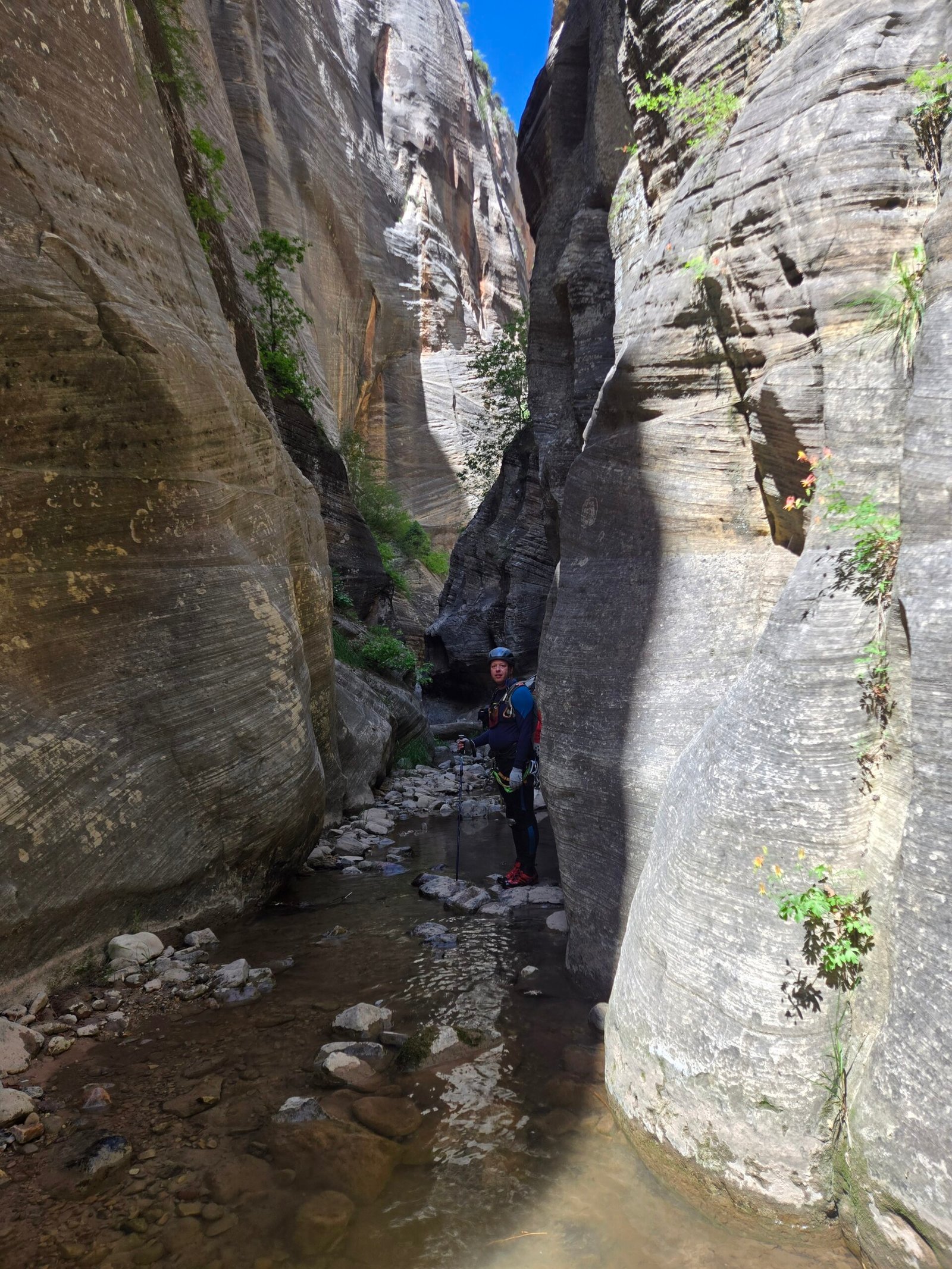
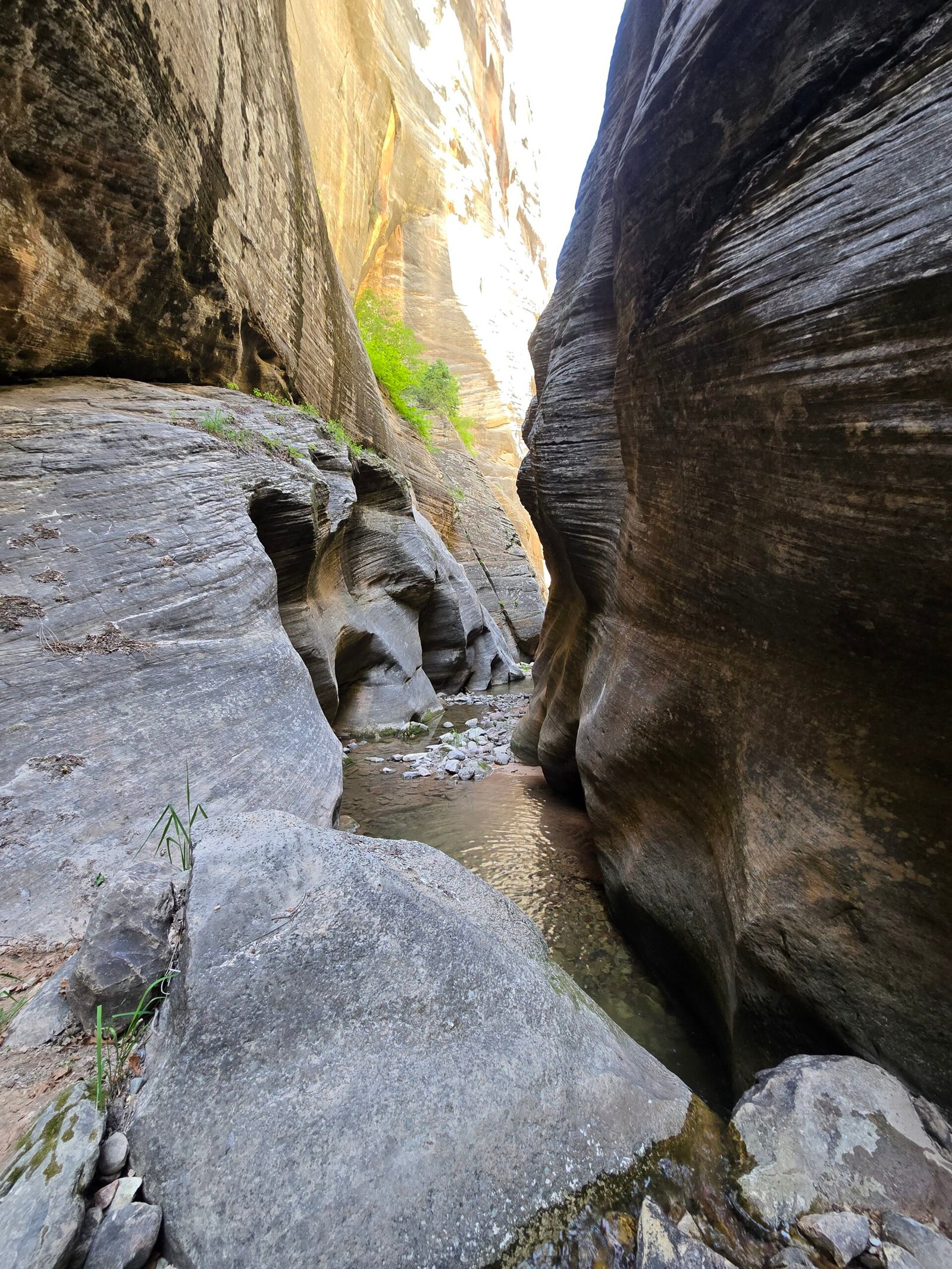
There are currently two ways to exit from this section of Kolob canyon. The original method up to a few years ago was to exit through a very steep and arduous trail called the MIA. The land on which this trail resides is owned by the LDS church, and permission must be obtained in advance from the church to use this exit. A few years ago, an alternate exit was established up a weakness in the walls of Boundary Canyon, which is in theory a much more direct and shorter route than the MIA. This exit is entirely on public lands but is incredibly steep and has fixed ropes that must be climbed to exit. It is necessary to have a rope grab or ascender to hold on to the rope as an extra measure of protection because there are two sections of class 5 rock climbing on exposed cliffs. We elected to do the Boundary sneak exit once again, as we had just descended Boundary Canyon a few weeks prior and we knew the ropes were in good condition.
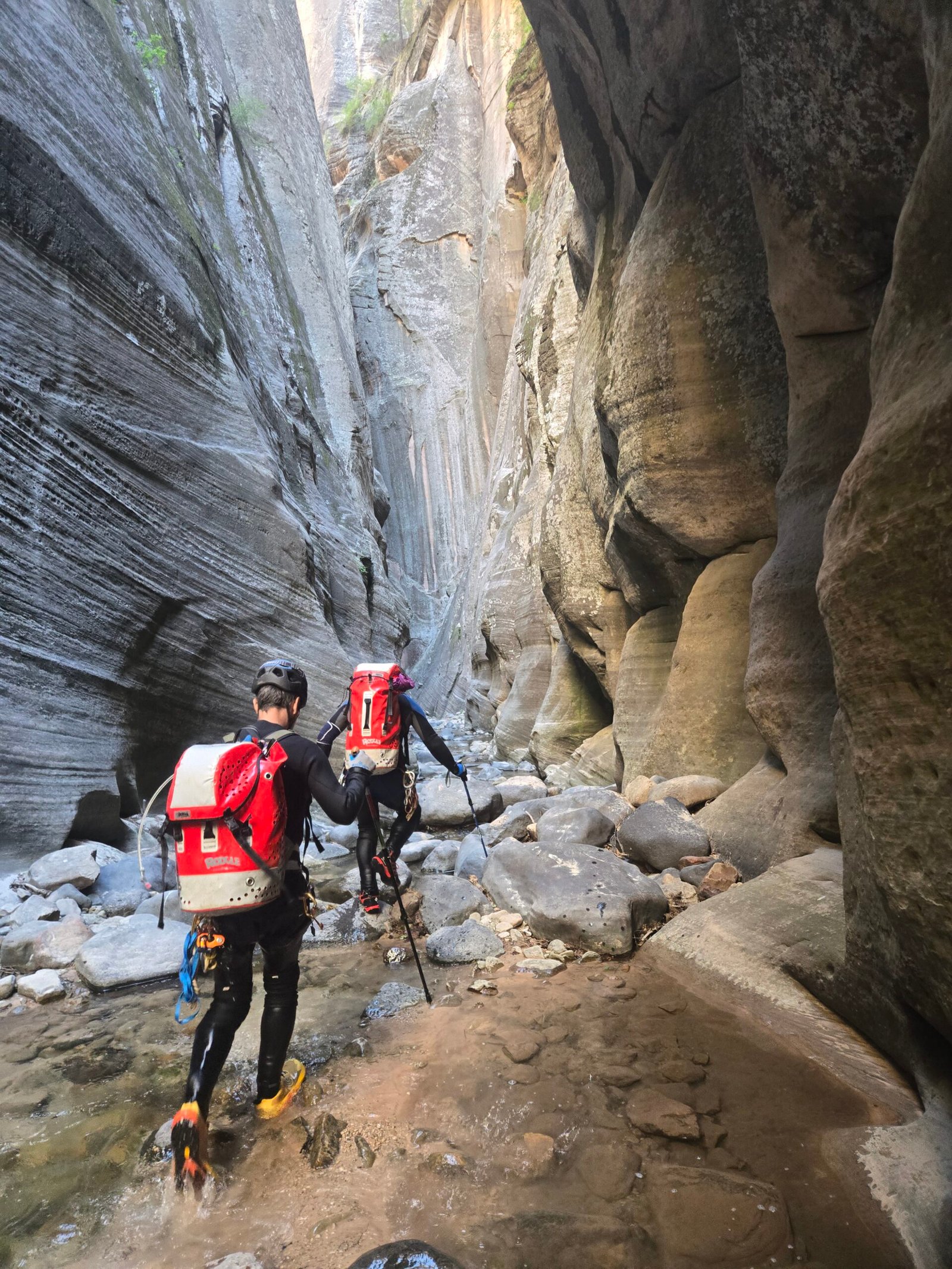
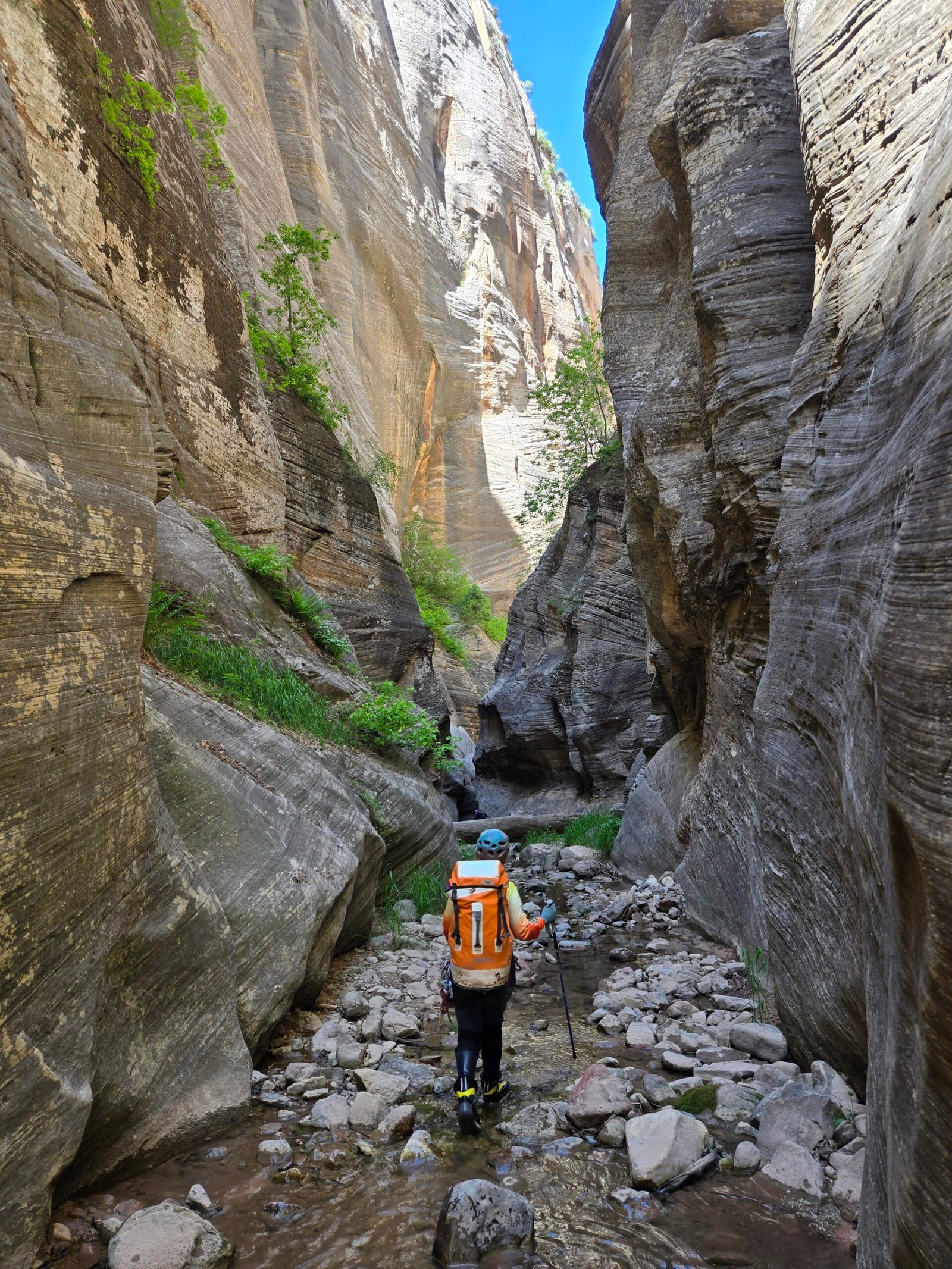
Let me set the scene here. It had been a very long and strenuous day with hours of swimming and walking in our wet and heavy wetsuits with wet and heavy ropes. As we headed up from the bottom of Boundary Canyon, we finally reached dry land and changed into dry clothes again. Unfortunately, our backpacks now weighed at least 30 pounds with all the wet gear. At this point, nearing dinner time, we were planning to climb up nearly 1,000 feet in about .6 of a mile, with the last 600 feet being mostly vertical. This is a fairly crazy thing to do at the end of a long day. Welcome to canyoneering 😊.
The first 80% of the climb went very smoothly. We were now three vertical pitches away from the top of Boundary Canyon, but unfortunately, they were the steepest. Carol decided that she would have to do these pitches without her backpack holding her down. I knew that I could make it up the first pitch with my bag but then would have to abandon it for the next and steepest pitch. The last time we did it, Max was at the top and was able to haul my pack up a few feet to the top of the steepest cliff. Unfortunately, this time, Carol and I were in the lead, which meant the rest of the team would have to haul or drag our packs up to the top. The process of getting everyone else up and hauling our bags took about an hour, and much of our remaining strength. A huge thank you to our team for hauling our bags up the cliffs.
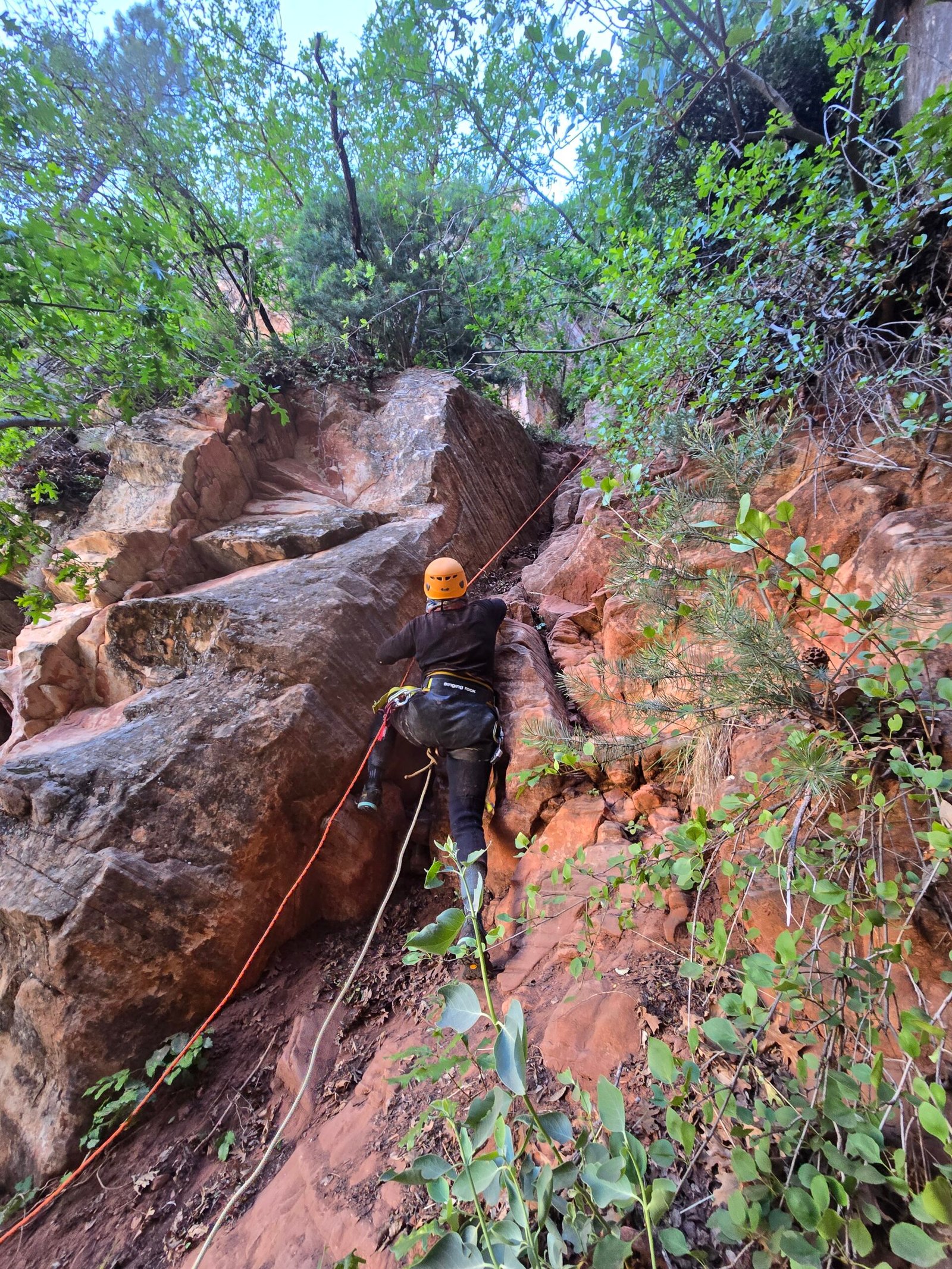
We still had about 2 ½ miles and 1,000 vertical feet to go to get to the cars. With fading light, we pushed to get to the trailhead before darkness fell, making it just in time. Our day wasn’t done yet! Most of our party still had a two-hour drive ahead of them to get home.
What an amazing and exhausting day full of adventure! I think that Kolob Canyon definitely lives up to its reputation, and then some.